
Navigating the shifting landscape of energy storage

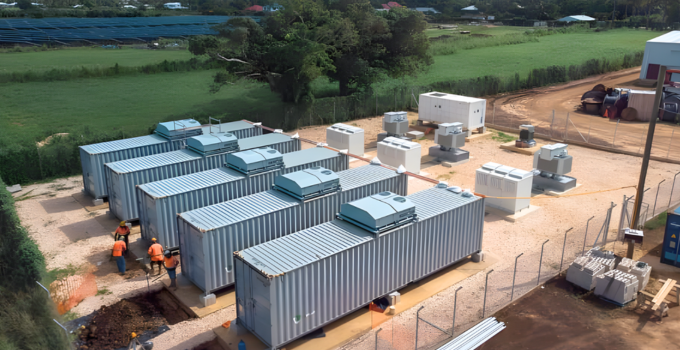
Developers of renewable energy and storage projects are facing some big dilemmas: what type and size/duration of energy storage to invest in, and how to futureproof investments in a changing market.
Long‑duration energy storage (LDES), formally defined as energy storage with more than 8 hours of capacity, is an integral part of the Australian Energy Market Operator’s Integrated System Plan (AEMO’s ISP) and an inevitable part of our future electricity system.
From a theoretical standpoint, LDES has always existed – it’s just that historically the storage came from organic matter over aeons in the form of fossil fuels, or from rainfall captured for hydropower.
What has changed is that LDES is now really about the need to store grid electricity itself due to the increase in wind and solar generation. That shift is driving the rapid ramp‑up of pumped hydro energy storage (PHES) and battery energy storage systems (BESS), and forcing developers to reassess what ‘long term’ really means in a rapidly evolving market.
The line blurs between short and long duration
To date, energy storage investment cases in the National Electricity Market (NEM) have largely fallen into two camps. On one side has been short‑duration lithium‑ion BESS, typically in the 2‑ to 4‑hour range. On the other has been long‑duration pumped hydro energy storage (PHES), generally offering 8 to 24 hours of storage, with Snowy 2.0’s 6‑day capacity being the obvious exception.
That distinction is now starting to blur.
Eight‑hour lithium‑ion BESS projects are increasingly creeping into what would traditionally be considered the LDES range. At the same time, other technologies including flow batteries, air-iron batteries and others are either maturing or beginning to align with emerging niche market opportunities.
A changing equation
One reason non‑lithium battery technologies have matured slower is their significantly lower round‑trip efficiency. This has long been a consideration for PHES as well. However, the near‑daily occurrence of zero or negative pricing across parts of the NEM changes that equation fundamentally. In a market increasingly characterised by excess generation (particularly solar), efficiency advantages begin to fade and may even conceptually become a disadvantage. That is, the more electricity it takes to charge your relatively inefficient LDES during negative price events, the more revenue you might make.
Moderate over‑installation of solar PV, and to a lesser extent wind, can be a cost‑effective mitigation against very long‑term storage requirements on weekly, monthly and even seasonal timescales. Over‑installation also helps reduce short‑term variability through higher DC‑to‑AC ratios. Even setting aside the extraordinary growth of domestic solar, it seems increasingly likely there will be an abundance of excess solar generation most days for the foreseeable future. From that perspective, bulk (potentially low‑efficiency) long‑duration storage begins to make much more sense.
If round‑trip efficiency is no longer a defining constraint, and the LDES business case is starting to stack up even for lithium‑ion BESS, there emerges a strong driver for ramp‑up of other technologies that offer significantly lower mature costs.
Combining technologies to manage risk and value
One logical response to this shifting landscape is to stop thinking about storage projects as single‑technology assets. Conceptually, new developments may instead consider combined plants behind a shared connection.
A project might pair a fast‑responding 100 MW 4‑hour lithium‑ion BESS with very long‑duration, low‑cost storage such as a 4 MW 100-hour iron‑air battery, allowing the asset to take advantage of excess solar generation, meet deep storage needs cheaply, while still delivering rapid response and low degradation.
Even simpler approaches, such as planning for the later addition of LDES behind the connection of a more typical BESS, may be sufficient to preserve optionality while markets continue to evolve.
What matters is recognising that storage requirements will not stand still, and that portfolios blending duration, technology and commercial exposure are likely to be more resilient than single‑solution investments.
The rise of residential storage
A subtle but increasingly important entrant to the LDES market is home energy storage. The federal government’s Cheaper Home Batteries Program (CHBP) has been associated with a huge growth in household batteries, along with a noticeable increase in the typical size of installations. Advertisements for 50 kWh home batteries at remarkably low prices have become commonplace (though the market is adjusting to the revised structure of the CHBP, with discounts reduced on larger systems). Less obvious is that inverter sizes often remain in the 5–7 kW range, effectively turning many of these systems into long‑duration storage assets.
It could be argued that the growth of home storage, when utilised through aggregators and virtual power plants, may offset the need for utility‑scale LDES. However, history suggests otherwise. Rather than reducing the requirement for larger‑scale storage, distributed energy resources have tended to accelerate confidence in renewable‑dominated systems and hasten the decline of fossil fuel generation. At the very least, they reduce any need to prolong fossil fuel assets in the face of growing electric vehicle uptake and expanding data‑centre loads.
What should developers be doing now?
For developers, the task now is to navigate an increasingly complex landscape of options. The challenge is not a lack of technologies, but understanding their technical and techno‑commercial performance across different roles and timeframes to enable negotiation of aligned offtake agreements and inputs to financial modelling. This is where experience across generation, storage and power systems becomes critical.
We help developers sort through this complexity – testing assumptions, exploring combinations of technologies and durations, and aligning storage strategies with the realities of the future power system. In doing so, we help clients move beyond narrow definitions of storage and towards portfolios designed for longevity, flexibility and value in an increasingly dynamic market.
ABOUT THE AUTHOR
Dr Chris Blanksby is Entura’s lead battery specialist and has been technical lead on several key projects in the Australian battery industry over the past years. Chris leads multidisciplinary teams in feasibility, design and construction supervision for utility-scale solar, battery, and hybrid integration projects. Projects Chris has led include Owner’s Engineer and independent engineer, feasibility studies, construction supervision, tariff reform and power purchase agreements, resource and energy yield analysis, project technical specification and principal’s project requirements, technical due diligence, model and control system development and network integration.
25 June, 2026


 0400 940 589