
THOUGHT LEADERSHIP
Dam decommissioning: old dams, new opportunities

While many dams have very long lives, and could in theory operate for centuries, some dams reach a point at which decommissioning becomes a realistic final phase of the dam life cycle.
Decommissioning is not something that happens very often, given the significant value of dams and their functions, which are often multiple. Maintaining and upgrading dams, rather than decommissioning, can sometimes also be a more sustainable solution if this extracts more economic, social and environmental value to offset the initial impacts that the dam may have caused when originally constructed.
However, decommissioning may be the best option if the dam is no longer needed to deliver its original purpose, if it is no longer providing commercial or societal benefits, or if it is considered too costly to continue maintaining the dam or to undertake the necessary upgrades to stay compliant with contemporary regulations and standards.
How is a decision to decommission made?
The decision to decommission a dam is usually based on a comprehensive risk assessment. Risk assessments play a critical role in managing dams throughout their life cycle. They primarily focus on ensuring safety and minimising risks associated with dam operation, failure and decommissioning.
Risk assessments estimate risks, identify hazards and failure modes, evaluate the tolerability of the risk, compare potential risk reduction measures if needed, and establish a risk reduction strategy.
If the risk is not tolerable, risk reduction measures will be recommended, and a risk reduction strategy will be established to reduce the risk. The risk reduction measures will generally involve upgrade works. When the option to undertake dam upgrade works is considered, the option to decommission the dam is often also included. The dam owner can then undertake a cost–benefit analysis to determine the most viable option, understand the level of risk reduction achieved, and consider less tangible aspects such as community concerns.
What’s involved in decommissioning a dam?
Decommissioning a dam requires considerable planning to minimise environmental impacts and reduce the chance of leaving any residual hazards in the long term. A thorough assessment of the site conditions and downstream environment is a crucial first step towards identifying the appropriate decommissioning actions.
The location of the dam and the details of the dam works will determine the planning requirements, which often include:
- engineering design – taking breach width and batters into account to remove the possibility of retaining water, and assessing the impact on flooding downstream (as dams frequently provide flood mitigation even when this is not their primary function)
- sediment and erosion control planning – as sediment release can cause significant water quality issues and harm to habitats downstream. It is important to note that the reservoir area will initially be unvegetated and will not have any topsoil that can be used to support vegetation growth to control erosion. Additionally, sediments will typically have been deposited in the dam reservoir and are generally very easily remobilised, so this needs special attention from the designers
- flora, fauna and cultural heritage studies – as decommissioning can dramatically alter ecosystems both upstream and downstream, and heritage features can often be highlighted improving the amenity of the new asset. Ecological studies such as flora and fauna assessments are important to identify any threatened species that need to be considered in the decommissioning plans, such as through exclusion zones or timing the works to minimise impacts (e.g. conducting work outside of breeding seasons)
- fluvial geomorphology assessment – which identifies how rivers interact with their landscapes and how they change over time. It is important to understand this given that the decommissioned dam will have water flowing through it rather than retaining water, changing the balance of erosion and sedimentation processes
- dam safety emergency plan for decommissioning works – to protect communities from flooding during the decommissioning works
- regulatory approvals – a dam decommissioning permit will be needed, which will include managing any specific regulatory requirements such as issuing a notice of intent prior to commencing works and providing work-as-executed reports and drawings at the completion of the works to confirm all conditions have been successfully met.
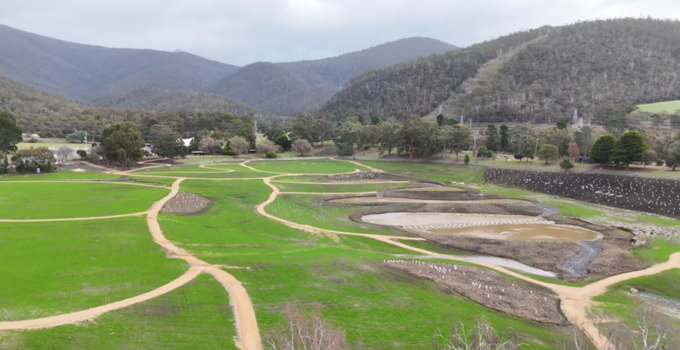
- Depending on the use and location of the dam, it is recommended to consult with a range of stakeholders, including the local community and council, during the planning process to ensure that their perspectives and concerns are considered early. If the dam is located near to residences, public spaces or other civic amenities, extensive consultation is likely to be needed due to the potential nuisance from the works (e.g. noise, dust and additional traffic in the local area). A masterplan can be developed through this process of consultation, outlining potential options for remediating and repurposing the area based on the community’s priorities, such as creating potential new community assets such as wetlands, parks or sporting facilities.
The work involved in decommissioning a dam will depend on the type of dam and the surrounding environment but commonly involves:
- re-routing inflow away from the reservoir or past the dam
- removing all or part of the dam wall
- modifying or removing the outlet works
- lowering the spillway crest level or removing the spillway control gates or stop-boards
- treating retained liquid prior to discharging it in a safe condition
- stockpiling and stabilising accumulated sediments from within the reservoir
- removing or encapsulating impounded material, such as trees and vegetation
- revegetating the reservoir area and rehabilitating the site to perform its new purpose.
Doing it safely
Decommissioning a dam is a very complex matter involving many stakeholders and often taking some time to reach its conclusion, so it is prudent for dam owners to embark early on some interim measures to rapidly reduce any identified dam safety risks. The simplest and most cost-effective risk reduction measure is usually to lower the level of the reservoir.
The next stage is identifying the planning requirements and works involved with decommissioning and developing a decommissioning plan. The engineering design, included in the decommissioning plan, will consider the necessary environmental assessments and ensure adherence to appropriate guidelines.
Common considerations when developing the engineering design include:
- hydrological and hydraulic assessment of conditions before and after decommissioning
- the necessary breach width and batters to make the site safe
- safely discharging or removing retained water and material
- the volume of any attenuated water remaining after decommissioning
- gradient of the land if the reservoir is being completely drained
- erosion and sediment control during and after decommissioning
- managing inflows and floods during the decommissioning
- careful consideration of the final land use after decommissioning including the ecological restoration and community uses.
Achieving success
For decommissioning to be considered successful, it’s crucial that the decommissioning plan and engineering design take account of the priorities that emerge from stakeholder consultation. Many communities become attached to a dam as part of their local landscape, especially if the dam is very old. They may wish for some of the dam’s heritage to be retained or acknowledged in some way, such as retaining and integrating parts of the abutment into the future form or land use where it is safe to do so, or echoing the past by incorporating smaller water features into the resulting site.
Another major consideration for successful decommissioning is controlling erosion and sediment. Reservoirs typically have a low point that can function as a temporary sediment basin once the water level is substantially lowered. Rainfall and inflows can be channelled with small bunds and hessian silt rolls to the sediment basin. Turbid water can then settle or be treated, if necessary, before being pumped out. After decommissioning, erosion and sediment can be managed by revegetating exposed areas with native plants, creating habitat features such as wetlands or log jams, and managing and monitoring wildlife to ensure their adaptation to the changing environment. Simple solutions can be implemented to achieve positive – or at least neutral – outcomes for biodiversity.
Right process, right people
Decommissioning dams takes a wide range of skills to deliver a successful outcome – from hydrology and hydraulics, environmental and heritage assessments, through to detailed construction planning and a vision for the repurposed land. With the right people and process, decommissioning can reduce safety risks to the community, protect the environment during the works, and ultimately create new, sustainable assets enhancing the amenity of the area for the benefit of communities now and long into the future.
Entura has been involved in a number of dam decommissioning projects including Waratah Dam and Tolosa Dam. To talk with Entura’s specialists about a dam decommissioning project, contact Richard Herweynen or Phillip Ellerton.
ABOUT THE AUTHOR
Joey Scicluna is a civil engineer, who began his career managing commercial and subdivision projects. Since joining Entura’s dams and geotechnical team in 2022, he has undertaken a wide range of dam safety surveillance inspections and reporting, dam safety modelling and analysis and risk assessments. Joey has been the lead author for a number of intermediate and comprehensive dam safety reviews, and has developed design concepts and conducted feasibility studies for existing and new dams projects. Joey enjoys problem solving and working with stakeholders to achieve the best outcome for every project.
10 December, 2025


 +61 439 010 172