
THOUGHT LEADERSHIP
Poutès Dam – a model of sustainable dam redevelopment

Having been named as the Planning Institute of Australia’s Young Planner of the Year for 2023 and awarded a bursary, Entura’s Bunfu Yu travelled through Switzerland and France to study hydropower and energy innovation. Her tour to Poutès Dam in France made a powerful impression. Here she reflects on what Poutès Dam demonstrates about environmentally driven engineering design and how genuine engagement with stakeholders in a design process can lead to balanced outcomes …
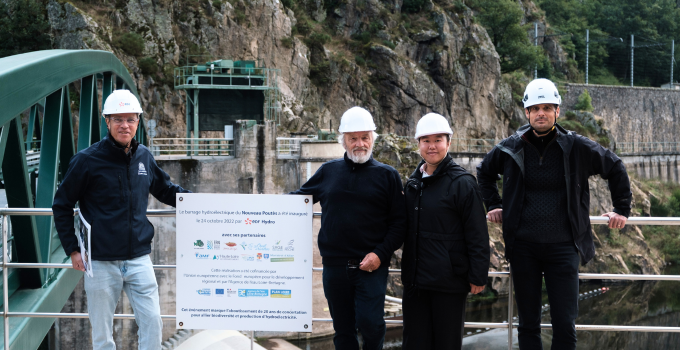
The Poutès Dam, located on the upper Allier River, a tributary of the Loire River in central France, has become a landmark case study of how to reconcile renewable energy production with environmental restoration. It’s a project that benefitted from genuine engagement, environmental-led engineering design principles, and future-conscious leadership by its operator, Electricité de France (EDF).
The dam was built during World War II without the usual approval processes. It has long been an obstacle to migratory fish, such as Atlantic salmon from the Allier basin, blocking the return of spawners and the downstream migration of juveniles. It has also disrupted the natural sediment flow of the Allier.
From conflict to collaboration
In the 1980s, environmental organisations highlighted the impact of the dam as a cause of the drastic decline in the wild Atlantic salmon population in the Loire-Allier basin. A sustained mobilisation of environmental groups through the 1990s evolved into a lengthy anti-dam campaign. In the mid-2000s, when EDF applied to renew its operating concession, it attracted criticism and rejection from global environmental NGOs, including WWF.
After decades of debate involving local communities, environmental NGOs, the dam operator (EDF Hydro) and public authorities, a compromise was reached in the late 2000s by which the parties agreed on a commitment to sustainable hydropower. Rather than completely remove the dam, a large-scale reconfiguration project – dubbed the ‘New Poutès’ – was born.
In 2015, EDF achieved a 50-year renewal of its licence, conditional on stringent environmental performance requirements, particularly regarding fish migration and sediment transport. It marked a new life for the project: those who once stood on the site of the dam in protest were now collaboratively discussing the future of Poutès with the operator and public authorities.
The ‘New Poutès’ project
A substantial refurbishment of the dam was carried out over several years to 2021, with the renovated dam inaugurated in October 2022. The design carefully configured to improve salmon migration and achieve the desired environmental outcomes.
- The dam height was lowered from 18 m to 7 m to reduce the water head and the reservoir’s impact. The embankment is also shaped in such a way that, along with the reduced hydraulic drop, the fish have a shorter and smoother vertical barrier to overcome.
- The reservoir length was decreased from 3.5 km to under 500 m, restoring much of the river’s natural profile (including a natural river gradient that allows salmon to swim) and rebuilding downstream spawning habitat.
- Two large centrally located sluice gates were installed, which can be fully opened during fish migration seasons and for high-flow water releases, allowing sediments and aquatic fauna to circulate freely. This is considered the key innovation to rejuvenate the river’s ecological dynamics.
- Fish-pass structures (fishway and fish elevator) have been incorporated in the design, which operate every 2 minutes to ensure upstream and downstream migration is effective.
- While the turbine flow remains similar to before, generation is paused during key periods to prioritise fauna movement.
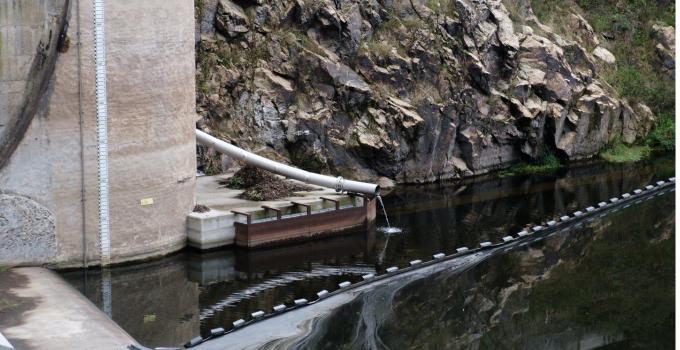
The fish ladder in action
Ecological and social benefits match technical success
The New Poutès redevelopment did more than update an old hydropower plant; it reconnected a fractured ecosystem, restoring sediment flow and providing effective fish migration routes. The New Poutès continues to supply about 85% of its original hydroelectric output.
Importantly, this project demonstrates the potential of ‘collective intelligence’; that is, collaboration among diverse stakeholders (government, operator, NGOs, local communities) to produce outcomes that are superior to those achieved through conflict or unilateral decisions.
Moreover, it challenges the notion that dams are immutable – a rigid infrastructure at odds with the environment. Instead, New Poutès embodies a modern, adaptive approach: engineering solutions that evolve over time, responding to environmental and social imperatives.
Lessons from Poutès
As many dam owners and operators consider the future of their aging dams and the need for sustainable management, New Poutès stands out as a model. It shows that:
- with thoughtful design and management, hydropower and biodiversity can coexist
- partial removal and targeted retrofitting of a dam can sometimes be a cost-effective and ecologically positive alternative to full demolition
- restored rivers can recover ecological functions like fish migration, sediment transport and dynamic flow regimes, contributing to broader goals of ecological resilience
- multi-stakeholder participatory processes combining NGOs, operators, authorities and communities can help reconcile competing interests and produce durable solutions.
For me, as a planning specialist, this last point resonated particularly powerfully. It’s exciting to see a project that has learned from the lessons of the past, engaged openly and genuinely with its community, and navigated a path toward greater long-term sustainability.
When environmental, social and heritage values are considered from the outset and integrated into dam design, upgrades and refurbishments, the outcomes are better for everyone. In the Poutès story, it took the loss of the operating licence to make a major leap. Proactive efforts to bring a better balance to the ledger of impacts verse benefits may help avoid such dramatic circumstances.
Having finished my study trip and returned to Tasmania, I’m excited to continue my involvement in Entura’s projects involving dam refurbishment, redevelopment and upgrades – including the new lease on life being planned for Hydro Tasmania’s Tarraleah hydropower station. This project is sure to find itself amongst global examples of leading practice, setting the standard for other owners of older hydropower assets.
Bunfu thanks EDF team members Benoit Houdant (Technical Director Engineering) and Sylvain Lecuna (project manager of the Poutes Dam project), and Roberto Epple (former President of the European Rivers Network) for the site tour. It was incredible to share a site tour with representatives of 2 parties that were once in opposition, but now share in the pride of Poutès.

Poutès Dam and surrounding topography
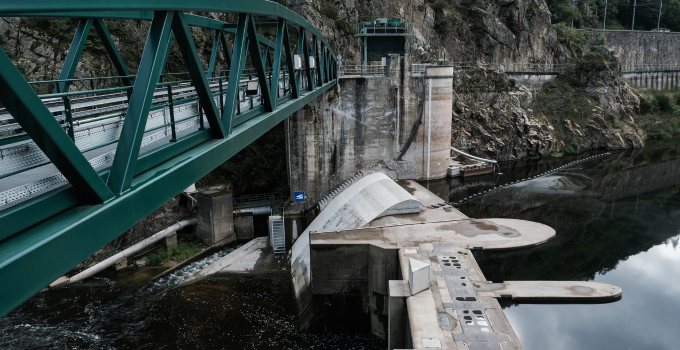
Close-up of Poutès Dam
ABOUT THE AUTHOR
Bunfu Yu is a dynamic young leader in renewable energy planning, approvals and business development. Bunfu was named the National Young Planner of the Year by the Planning Institute of Australia. This honour recognised not only her passion for planning and delivering renewable infrastructure but also her active contribution to the profession through mentoring, public engagement and knowledge sharing. She is currently a Senior Environmental Planner and a Business Development Manager at Entura.
11 December, 2025


 +61 437 026 788