
THOUGHT LEADERSHIP
Reflections from MYCOLD 2025: Innovation, resilient dams and the evolving role of hydropower

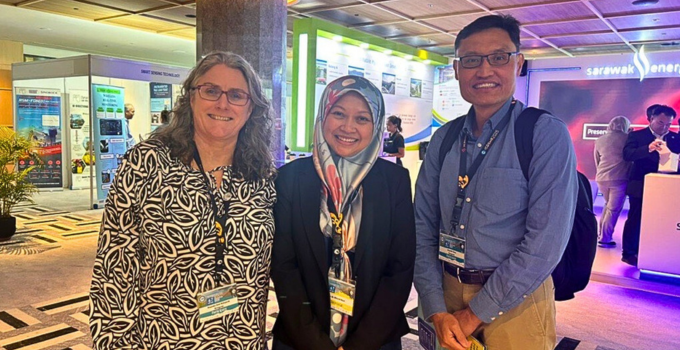
Earlier this month, I had the privilege of joining colleagues from across Malaysia and the region at the 3rd International Conference on Dam Safety Management and Engineering (ICDSME2025), organised by the Malaysia Commission on Large Dams (MYCOLD), held in Kuching, Sarawak. There’s a particular energy that comes with a MYCOLD conference – part reunion, part technical deep-dive, part regional conversation about water, resilience and community safety.
I returned energised and inspired – not only by the technical excellence on display, but also by the sense of shared purpose across our industry and the tangible people-to-people exchanges and collaborations. With energy systems transforming rapidly, climate change accelerating and dam safety expectations strengthening, it has never been more important for dam and hydropower professionals to share openly and learn from one another. ICDSME2025 offered that in abundance.
Here are just a few reflections on some of what I heard …
Reimagining hydropower in changing markets and climates
In the ‘Advancing sustainable hydropower’ session, I shared perspectives from Tasmania’s long hydropower journey and Entura’s experience supporting the state’s major renewable energy initiatives.
My message was clear: the feasibility of pumped hydro or of reimagining conventional hydropower isn’t simply a technical question of ‘can we build it?’ but ‘what is the long-term value it creates?’ Smart choices depend on a holistic understanding of context – i.e. the markets, energy mix, climate, environmental impacts and benefits, and community perspectives and impacts. Pumped hydro is never ‘impact-free’, and it is not inherently more sustainable than conventional hydropower. What matters is how we think about the future of the energy transition, understanding what role pumped hydro can play in that context, how well we select sites, how carefully we consider environmental and social impacts, and how thoughtfully we design (and extend) assets for long-term economic and social value.
With wind and solar dominating new energy investment in Australia, hydropower’s baseload role can shift to respond to evolving market dynamics. Hydropower’s deep storage, flexibility and system stability are becoming increasingly important. We’re seeing these opportunities in Tasmania, where both conventional hydropower and pumped hydro could – with more interconnection to the mainland – help balance a renewables-rich National Electricity Market while returning extra revenue to Tasmania and increasing the reliability of supply across Australia’s south-east.
Climate change adds further complexity to feasibility considerations. Changing rainfall patterns, more variable inflows and more frequent extremes – as well as with the increasingly variable generation mix and how energy sources interact – all influence when hydropower can generate or store.
Ultimately, I believe there are not only opportunities with extending operating life, refurbishing or redeveloping dam assets; there are also obligations upon us as an industry to do our best for the sustainability of these assets. We need to focus constantly on how to optimise outcomes from the base impacts of hydropower or dam developments and seek ways to reduce impacts into the future. We also need to think about how to deliver great outcomes and value that extends across a long asset life, beyond the limited commercial timeframes considered in final investment decisions.
Technology, people and the future of dam safety
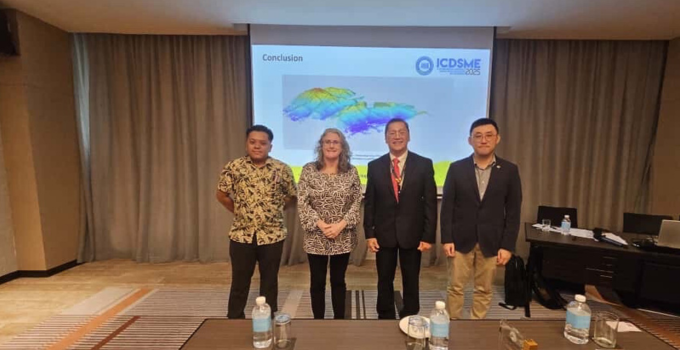
I had the honour of chairing a keynote session featuring Yang Berbahagia Prof. Datin Ir. Dr. Lariyah binti Mohd Sidek and Dr Martin Wieland.
Dr Wieland’s insights into the seismic performance of dams reminded us that strong engineering fundamentals remain as crucial as ever, even as digital tools advance. Prof. Lariyah explored how digital platforms, artificial intelligence and risk-based frameworks are shaping the next generation of dam safety practice. She emphasised the importance of the human layer: building institutional readiness, strengthening safety culture, fostering stakeholder trust, and ensuring effective engagement with communities.
Together, their perspectives reinforced that the future of dam safety will depend on both technological innovation and human-centred capability and how effectively these dimensions interact. That’s something Entura is focused on as we continue to bring deep expertise and experience, while exploring and testing the possibilities of new technology to support design and analysis.
Learning from incidents to strengthen global knowledge
Another highlight for me was chairing a session on dam surveillance, monitoring and evaluation. Seven presentations, while different in context and purpose, in combination emphasised the power of data and the importance of learning from experience.
A standout paper examined the 2022 landslide incident at Kenyir Dam, an event that occurred quite soon after Entura’s dam safety inspector training program used the dam as a site visit capstone. Despite extreme rainfall and slope instability, and some damage to appurtenant structures and spillway, instrumentation data confirmed that the dam behaved as designed. What was also clear was that, largely, the instrumentation in place and the data that was able to be collected was a positive demonstration of the importance of robust dam design and monitoring systems.
Another paper explored machine-learning approaches to forecasting short-term reservoir levels at Batang Ai Hydroelectric Project – a scheme with which Entura has long been associated. The results were impressive and point to a future where AI-supported forecasting strengthens real-time operations, especially under increasing climate variability.
These are exactly the kinds of insights our industry must continue to share openly and widely. We can never ‘design out’ all risk, but we can reduce it through good data and continual reflection and learning from real-world events.
Strengthening long-term capability in Malaysia
ICDSME2025 also highlighted the importance of building capability – something I am passionate about. It was encouraging to see Malaysia’s Certified Dam Safety Inspector program, developed with input from Entura’s training arm ECEWI, growing into a sustained and locally led pathway, launched during the conference. Strengthening dam safety ultimately depends on skilled people and strong institutions, making investment in training an investment in long-term sustainability of dam safety governance – and ultimately greater national resilience. We hope to continue to work with MYCOLD to determine how our specialised expertise can further enhance capability uplift beyond surveillance, extending to dam safety risk decision making and dam safety engineering.
A shared commitment to the future
Conferences like ICDSME2025 are timely reminders of our collective responsibility and the shared purpose we need to bring to the challenges ahead. We’re all navigating the same landscape, and when we come together – sharing data, stories and lessons – we accelerate progress for everyone.
I am grateful to MYCOLD for the invitation to contribute and for the generous knowledge-sharing throughout the event. I left Sarawak optimistic: the connection, commitment and collaboration across our sector have never been stronger as we work toward our common goal: safer, more sustainable dams and hydropower systems that support resilient futures.
2 December, 2025


 +61 417 503 692