
Making more of your monitoring

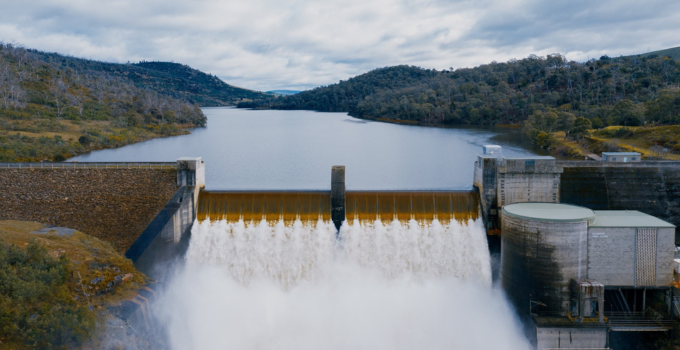
Monitoring dams is a key aspect of dam safety, but what do we mean by monitoring, why is it necessary, and how can dam owners make the most of their monitoring investment? Senior Principal Paul Southcott shares his insights …
Dam safety is a system that responsible dam owners put in place to protect the community, environment and infrastructure. Monitoring is an important element of this system. By monitoring we mean using instrumentation to help assess the condition of the dam and detect early signs of deterioration so that action can be taken to address the issue.
Here are some principles for getting the best value from your investment in dam instrumentation:
Monitoring across the dam lifecycle
Exactly which instruments need to be considered will depend on both the stage of the dam’s life the type of the dam. For example, at the concept stage, rainfall and stream gauges in the catchment will provide key data on the hydrology including flood estimation and yield. Similarly, during construction of an embankment dam, settlement cells may be used to measure the deformation of fill as the dam is built. There may even come a time in the dam’s lifecycle when certain instruments no longer provide relevant data to the dam owner. This article focuses on the operation stage of the dam, but the same principles apply regardless of the stage of the dam lifecycle.
Measuring the right things in the right places
Instrumentation is fundamentally about measuring a parameter associated with dams – such as seepage, pressure or movement – that tells us if the dam is behaving as the designer intended or if some investigation and/or intervention is required. To decide what instruments to install and where to locate them, the key thing is to measure the parameters linked to the potential failure modes (PFM) of the dam. This reveals when early intervention is needed to prevent failure or to trigger emergency actions through the Dam Safety Emergency Plan (DSEP).
To understand the PFMs of a dam, we must first undertake a risk assessment that considers all the potential ways that the dam can fail. The next step is to consider which parameters could be measured to give warning of that particular failure mode. For example, if the failure mode was flood overtopping leading to erosion and breach of an embankment dam, then measuring rainfall and reservoir level would be appropriate. Rainfall would warn that a flood is coming; reservoir level measurements would reveal how close the dam is to being overtopped. Both forms of instrumentation would be useful: rainfall as a lead indicator that conditions are changing and reservoir level as an indicator of current conditions and whether actions need to be taken (e.g. opening spillway gates or starting emergency evacuations).
Other PFMs would require different types of instruments to detect incipient failures. For example, piping or internal erosion is often a key failure mode of earthfill and earth and rockfill dams. The best instrument to detect this failure mode is a seepage monitoring weir, often using a v-notch weir. This instrument captures and measures the seepage rate by measuring the water level behind the weir, which can then be converted to an equivalent flow. The trend in the readings over time will indicate whether seepage is stable or is showing an increasing trend that may indicate an emerging piping failure. Location of the weir is critical: it needs to be located so that it captures all the seepage from the dam (or part of the dam) but is not so far downstream that there is a significant catchment highly influenced by rainfall runoff.
Installation and commissioning
To make sense of instrument data, we need to know exactly where the instrument is installed and what it is installed in, and be confident that we have the right calibration certificates. This is why a detailed quality assurance process needs to be in place for installing and commissioning instruments.
Consider the installation of a vibrating wire piezometer in the rock foundation of a concrete gravity dam to measure the uplift pressures under the dam. Installing the piezometer will require drilling a hole into the rock, lowering the piezometer down the hole, surrounding it with a backfill material and sealing it into the hole, running the cable to a data logger and programming the data logger. Each step could affect the instrument’s ability to provide meaningful data for review and analysis:
- Drilling the hole: Soil and rock foundations are typically heterogeneous (not uniform), so the instrument’s location will affect its readings (a piezometer installed in solid rock will not record anything, whereas installation in closely jointed rock may record close to reservoir pressure). Geotechnical logging of the hole is recommended so that the instrument can be installed where it will capture the most relevant information and to assist in interpreting the data.
- Installing the instrument: The level of the instrument must be recorded correctly because it is critical to both the calculation of the foundation pressure and the associated interpretation of the data. Similarly, before installation, the instrument needs to be correctly identified by recording its serial number (and associate calibration certificate), and its function must be checked with a zero reading obtained.
- Sealing the instrument in the hole: Sealing the hole prevents it becoming a drain (i.e. providing pressure relief), but will also prevent removal of the instrument in the future, which is why a quality assurance process should first confirm that the instrument is functioning appropriately.
- Running the cables: Cables must be correctly identified to ensure the instrument is correctly identified at the data logger. This is particularly important when many instruments are being installed at the same time.
- Programming the data logger: It is easy to incorrectly program the data logger to convert the raw data (a frequency measurement in vibrating wire instruments) to either a pressure or head value. The raw data should be recorded and saved in the long-term database so that it can be checked and validated by manual instrument readings.
Checking the data
Getting data is not enough; the data needs to be good. Instruments can tell us a lot about how a dam is performing, but all instruments fail eventually and their calibration needs to be checked regularly. Ideally, this should be done using an independent instrument that can be read manually. For example, many different instruments can measure the water level in a reservoir. It is very easy to check they are providing good data by having gauge boards in the reservoir set to the same datum that can be read by operators during routine inspections and then cross-checked against the data received from the electronic instruments and data loggers. If there is an anomaly between readings, the cause of the data error needs to be tracked down and fixed.
Data storage
Data loggers have limited data storage capacity and typically overwrite old data if the data is not downloaded frequently enough. A secure database is needed to ensure that the full record of monitoring data is available for the life of the structure. Retaining the full record allows long-term trends to be identified and investigated.
Review and interpretation
Collecting and storing monitoring data is only the beginning. To make it a useful dam safety tool, the information needs to be regularly reviewed and interpreted. This will typically involve generating timeseries plots of the parameters against environmental data (e.g. rainfall and temperature) and loading data (e.g. reservoir level). The purpose of monitoring is to check that the dam is not exhibiting signs that may be an early indicator of a potential failure mode.
For example, seepage monitoring data from an embankment dam is a key way of monitoring for initiation of a piping or internal erosion failure mode. Seepage is influenced by both reservoir level (as this influences the seepage rate through the embankment and foundation) and rainfall (adding to the flow through the monitoring weir from rainfall runoff). Interpretation of the plots is not simple. A step change or a gradual change over years may indicate an emerging safety issue and should be investigated further. Sometimes the scatter in the data is hard to resolve, but a scatter plot of one variable against another (e.g. plotting seepage against reservoir level) can help untangle the key influences and relationships between parameters.
Monitoring data can also highlight potential safety issues when compared against the design assumptions and expectations. A common example is comparing the actual foundation pore pressures below a concrete dam against the assumed uplift pressures used in the stability analysis. This would confirm that the dam stability is (or is not) meeting the accepted factors of safety envisaged by the designer.
Regular review of the monitoring data by a dam safety engineer familiar with the dam is essential, and can be aided by alerts and alarms. Setting alert and alarm levels needs to consider both design expectations and historical precedent for the instrument. When an alert or alarm is triggered, automated messages should be sent to the dam safety team for review and interpretation.
In summary …
As we’ve discussed here, making the most of dam safety monitoring requires a carefully considered and comprehensive process, in which:
- instruments are targeted to detect key failure modes
- instruments are carefully installed and the process is well documented
- data produced by the instruments is checked and validated
- data is securely stored as a permanent record of the dam performance
- data is regularly reviewed and interpreted by experienced dams engineers.
Technology alone doesn’t keep dams safe, but when paired with sound engineering judgement, effective dam safety monitoring provides a strong foundation for safer, more resilient and more sustainable dams that can serve communities for generations.
ABOUT THE AUTHOR
Paul Southcott (Senior Principal – Dams and Headworks) is Convenor of ANCOLD’s ‘Guidelines for Dam Instrumentation and Monitoring Systems Working Group’. He has nearly four decades of experience in civil and dam engineering, with an exceptional depth of technical knowledge and extensive industry experience. Paul’s expertise is a crucial part of Entura’s ongoing support for dam upgrade and safety works for our clients’ extensive dam portfolios. He has contributed to many major dam and hydropower projects throughout Australia and the Indo-Pacific region, including for Hydro Tasmania, TasWater, Snowy Hydro and numerous councils and water utilities including SeqWater, Sun Water and SAWater. Paul was named Tasmania’s Professional Engineer of the Year in Engineers Australia’s 2021 Engineering Excellence Awards.
20 August, 2026


