
Planning a renewable energy journey in the Pacific
Like many stories of island journeys, the pursuit of high levels of renewable energy in the Pacific involves good planning and skilled navigation to stay safe and on course, and holds the promise of rich rewards.
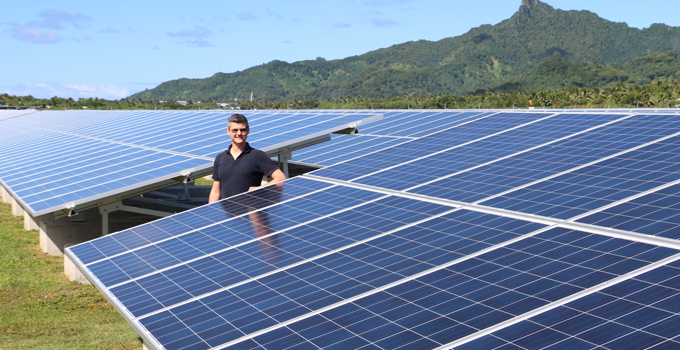
Throughout the Pacific, island communities are embracing ambitious renewable energy targets , many as high as 100% renewables over the next decade or two. This isn’t surprising, given that these islands are already experiencing significant impacts of climate change, and recognise the environmental benefits of reducing or replacing carbon-intensive diesel power generation.
There are also sound economic benefits to reducing reliance on expensive diesel fuel, which remains the single largest expense to generate power in these remote locations.
The answer to meeting targets, while also reducing carbon emissions and costs, lies in power systems that use only renewable energy. However, transitioning to higher levels of renewable energy in power systems requires confidence that the renewables can provide the energy security, self-sufficiency and system stability required by these remote communities.
Renewable energy technologies may pose some challenges for reliability and quality of power supply, but remedies can be found in enabling technologies. In an isolated power system, matching the renewable technologies with the right enabling technologies at the right moment needs detailed planning.
Every journey needs a map
As each island community’s renewable energy journey is different, careful strategic planning is needed to choose the right solution, to integrate it in the right way, and to be able to scale it up effectively to meet increasing renewable targets and electricity demands.
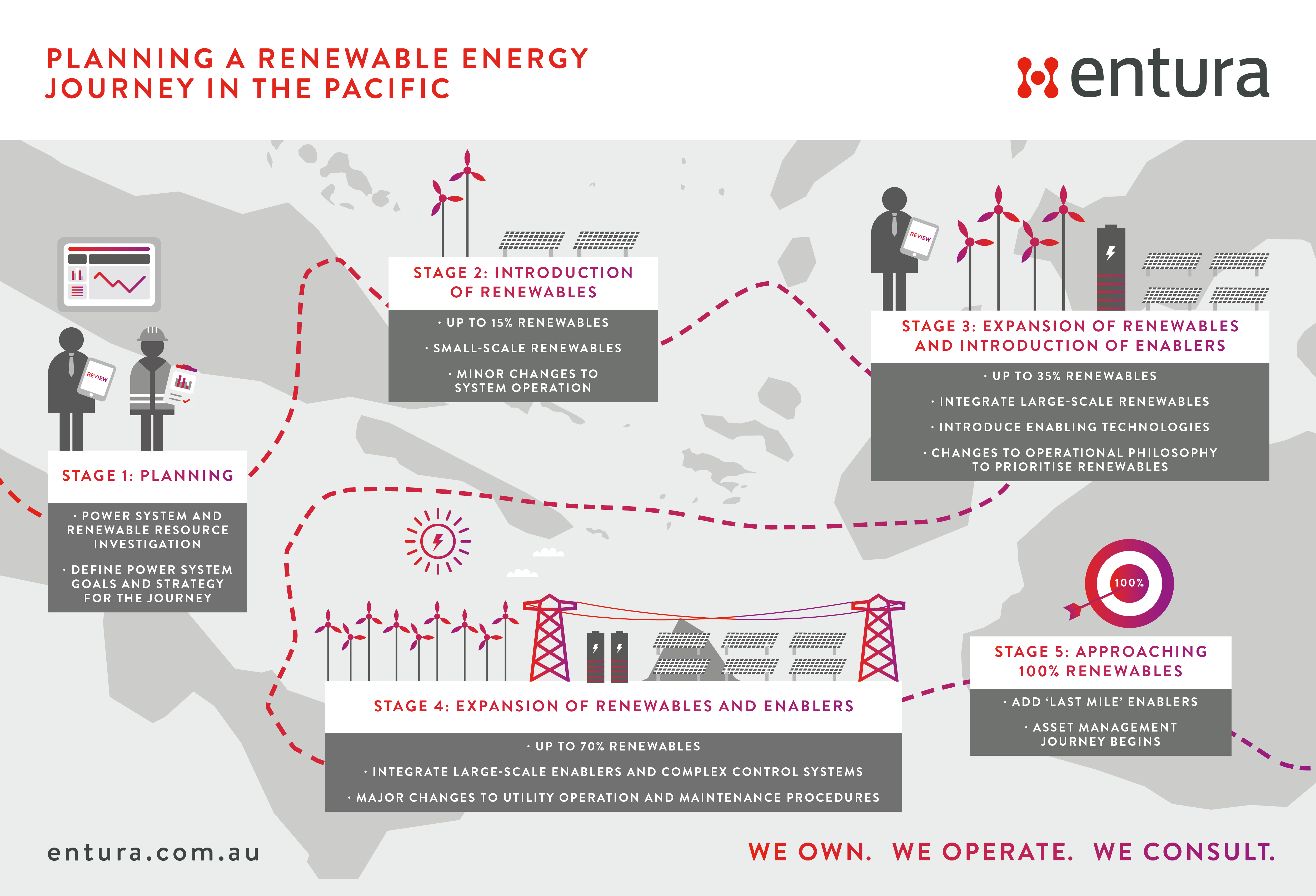
Click image to view infographic.
Entura has been helping a number of Pacific island communities embark on their renewable energy journeys. Through this experience, we’ve developed a map of the key stages of the journey:
Stage 1: Planning – In this stage, we explore the status of the current power generation assets, determine what needs to be improved, understand the renewable resource, and investigate the cost of the renewable energy journey and options for funding it.
Stage 2: Introduction of renewables – In this stage, we begin by harvesting the ‘low-hanging fruit’ – introducing the renewables that we can without enablers or network upgrades, and without changing the control philosophy. At this stage, the renewables are perceived as mostly load offset, and could reach up to 15–20% of the island’s total energy demand. Few enabling technologies are necessary at this stage.
Stage 3: Expansion of renewables and introduction of enablers – As we progress beyond 15 to 20% renewable penetration, we need to stop, review and adjust course if necessary. To progress towards 35% renewable energy contribution to the power system demand, we need to adjust the system’s operating philosophy to integrate large-scale renewables, and introduce the appropriate enabling technologies.
Stage 4: Expansion of renewables and enablers – This stage marks the largest change in how an island power system is operated. As we move beyond 50% renewables, again we should stop, review and adjust course where needed. At this stage, power systems become very complex to operate and maintain as high renewable penetration can only be achieved through a delicate balance of multiple new enabling technologies working in perfect sync. The island community could find itself investing more in enabling technologies than in renewable energy at this stage, but this could result in a higher renewable energy contribution. It is also crucial at this point to consider changes to energy delivery, relationships with customers and to the utility’s procedures, and to building its personnel capabilities.
Stage 5: Approaching 100% renewables – As most of the major changes to the power system are introduced in the earlier stages, Stage 5 is about finishing off the journey. The ‘last renewable mile’ is usually the most expensive one, so this last stage is all about identifying enabling technologies and techniques that can bridge the gap between 70–80% and 100% renewable contribution, without significant increases in the cost of electricity.
Yap’s journey to 25% renewables
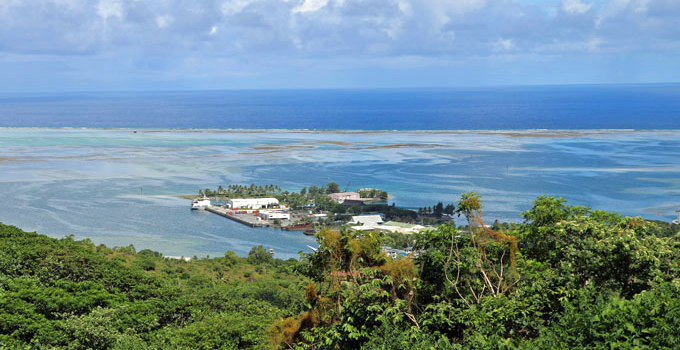
Entura has helped several island communities plan and begin their renewable journeys. One example is the island of Yap in the North Pacific.
We’ve been working with the Yap State Public Service Corporation to reduce Yap’s heavy reliance on imported diesel for power generation, and to enable the island to rely as much as possible on indigenous, renewable resources through an integrated high-penetration renewable energy remote area power system (RAPS).
After decades of operating on diesel fuel only, the system will soon reach 25% renewable energy contribution. Once completed, the project aims to enable Yap to experience up to 70% instantaneous renewable penetration when conditions allow, and to deliver an annual fuel saving of up to US$500 000.
Back in 2014, Entura helped the Yap community plan their renewable journey by embarking on Stage 1. Since then, Entura has helped the Yap utility to reach Stage 2 by integrating small amounts of solar and by building its capability to install and maintain solar arrays.
The Yap renewable energy development project is now entering Stage 3, in which a new breed of high-renewable-supporting diesel generators are being installed, major works are being carried out to install three 275 kW cyclone-proof wind turbines, an island-wide solar-controlling communications network for 500 kW distributed solar PV is being rolled out, and a centralised control system is being installed.
Once these activities are completed, the Yap power system will be firmly in Stage 3, and ready for future stages in Yap’s renewable journey.
On course for 100% renewables in the Cook Islands
The Cook Islands is a group of 15 small islands in the South Pacific, to the north-east of New Zealand. Entura is helping the Cook Islands on its journey to reduce reliance on diesel fuel and achieve greater energy security, self-sufficiency and sustainability through developing renewable power systems on six islands. The country’s goal is to generate electricity from renewable energy sources on all islands by 2020.
The islands of Mauke, Mitiaro, Mangaia and Atiu have small average loads of around 100kW each. After careful planning, upgrades to the distribution grid and programs to train and build local capacity, these islands will quickly reach Stage 5 of their journeys, operating at almost 100% renewable energy using solar PV and batteries, with diesel providing backup during longer periods of renewable energy resource deficiency.
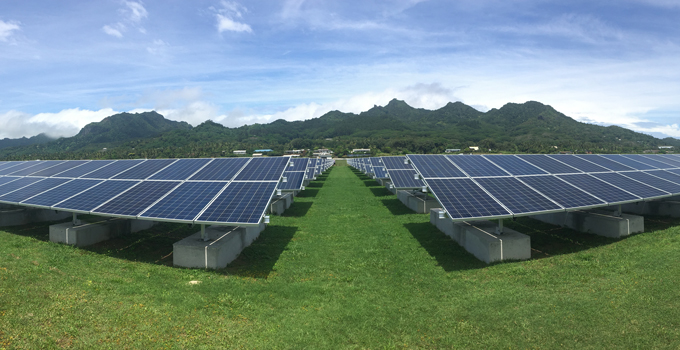
A fifth island, Aitutaki, is currently at Stage 1, finalising the planning of its renewable journey. It will rapidly jump to Stage 3 as 1 MW of solar PV, a 0.5 MW power battery, new diesel generator and centralised control system start working together to deliver a power system with a renewable contribution of up to 25%.
Rarotonga is the largest, main island in the Cook Islands and operates a complex power system requiring meticulous strategic planning. This power system is already at Stage 2, with a renewable contribution surpassing 10% due to the contribution of residential and commercial solar. Entura is helping the Rarotongan utility to move towards Stage 3 by introducing an additional 1 MW of solar PV and enabling technologies such as energy storage, which will help the system absorb even more renewable energy.
The journey continues
It is often said that the end of one journey is the beginning of another. After a community has reached 100% renewable energy, it needs to continue its journey to maintain that status through proper operation, maintenance and asset management, to secure the system for years to come. This long-term asset management challenge involves attention to both physical and human assets, including capacity building, training and skills development for individuals and organisations.
Entura is bringing practical maintenance know-how to island communities such as Yap and the Cook Islands. And, through the Entura clean energy and water institute, we are helping to boost the skills of technicians and managers. By doing so, Entura is offering island communities a guiding hand from the start of the renewable journey right through to its destination, and beyond.
If you would like to discuss how Entura can support your renewable energy journey, please contact Silke Schwartz on +61 407 886 872 or Shekhar Prince on +61 412 402 110.
A version of this article has been previously published by RenewableEnergyWorld.com
MORE THOUGHT LEADERSHIP ARTICLES
How can we manage a network with more renewables?
Can our network and market frameworks support two to three times more renewables in Australia in the next 10 to 15 years without radical or innovative actions?
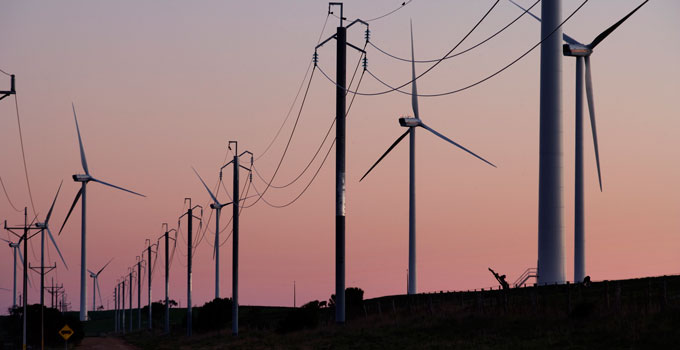
Once upon a time, we had an electricity system that was dominated by large users and large producers, and everyone else just tagged along. It needed very few points of control. Demand was easy to predict, as was the availability and cost of generation.
This is increasingly not the case.
The predictability and consistency on which the market and the network relied are being eroded by changes in how we produce and consume electricity. The efficiency benefits of the market are being undermined and it seems unable to find a ‘new normal’ that works. At the same time, the technical robustness of the electricity supply is being undermined through the reducing share of dispatch of synchronous generation.
These effects are only beginning to emerge in the wider National Electricity Market (NEM). We are suffering from increasing uncontrollability, unpredictability and variability.
Uncontrollability
As wind and solar PV replace synchronous generation in the NEM, system inertia and fault levels will steadily decline, along with the availability of frequency-control ancillary services (FCAS, or ‘spinning reserve’). More self-dispatched generation also limits the market operator’s ability to efficiently manage transmission constraints.
Unpredictability
We can use statistical models to predict demand pretty accurately unless we factor in customer storage. Installation of uncontrolled storage adds a degree of uncertainty to the demand. The current pre-dispatch followed by real-time dispatch methodology may not be capable of dealing effectively and efficiently with this uncertainty. Furthermore, the factors determining take-up of new technologies are difficult to predict. This uncertainty makes it more difficult for network planners to forecast and hence maintain capacity in the network.
Variability
Increasingly, generation dispatch patterns (and load patterns in some regions) depend on non-market variables like sun and wind (and rain). This variability can lead to a wide range of valid system dispatches, which in turn may require a wide variety of network supports, such as reactive power support from SVCs and the like. Interconnector capacity requirements vary depending on dispersion or concentration of generation relative to demand.
How might a low-synchronous-generation network be managed?
In many ways Tasmania provides a glimpse of the future in terms of how a low-synchronous-generation network may be managed. Since Tasmania has been connected to Victoria, generators, major customers and the network service provider, with support from Entura, have collaborated to extend and enhance the Tasmanian power system’s ability to cope with what is already in excess of 70% non-synchronous generation under high wind and high import on the interconnector. While the interconnector can provide some frequency support, this support is capped within the capacity of the link.
The solution in Tasmania is to reduce demand for frequency control, increase capacity to supply frequency control and actively manage fault level and inertia. This has required detailed understanding of the power system dynamics within the Tasmanian power grid as well as innovative engineering to understand and adapt hydro generators to extend their capability or flexibility. The solutions range from tweaking the control systems of individual generating units to establishing and coordinating system-wide protection schemes and constraint equations.
This experience shows that understanding the fundamental characteristics of a power system and its likely operating modes, and a common purpose and resolve to enhance its operation, can lead to an expanded technical envelope in which the electricity market can seek a cost-effective outcome. It has required collaboration across the sector including equipment manufacturers, owners of windfarms, hydropower stations, interconnectors and large customers.
Can this experience be replicated elsewhere?
Different power systems may demand a different set of solutions, but the fundamentals remain the same. A functioning AC power system needs inertia, fault level, frequency and voltage control as well as energy sources to function to an acceptable standard. Each power system will have its own sweet spot for providing these requirements. Inverter-based generators (solar, wind and batteries) can provide inertia-like responses for instance and so may reduce reliance on synchronous machines for that requirement.
A bigger question is: will the market takes us there or will it lead us down a blind alley of misguided self-interest? We are already seeing some murmurings of market reform that may ultimately lead us to the right long-term solution, but I’m not sure that we can always rely on market-led transitions, especially where the transition has not been envisaged as part of market design. This may be a misplaced leap of faith.
It’s clear that no single solution is going to sort this out in most cases. It’s also clear that some level of collaboration will be required to make the transition work smoothly. The planner must also consider technological change and customer expectations; else we run the risk of over-capitalising on solutions only for them to become redundant and ‘stranded’.
Ultimately, we know the challenges are not insurmountable but we also know that the solution is likely to be arrived at through care and deliberation rather than market meanderings.
If you would like to find out more about how Entura can help you adapt successfully to the rapidly changing market for electricity generation and energy services, contact Donald Vaughan on +61 3 6245 4279 or Wayne Tucker.
About the author
Donald Vaughan is Entura’s Technical Director, Power. He has more than 25 years of experience providing advice on regulatory and technical requirements for generators, substations and transmission systems. Donald specialises in the performance of power systems. His experience with generating units, governors and excitation systems provides a helpful perspective on how the physical electrical network behaves and how it can support the transition to a high renewables environment.
MORE THOUGHT LEADERSHIP ARTICLES
Finding the right value in dynamic modelling of renewables
What value can you derive for renewable energy projects through developing accurate models? When is the effort and expense involved justified by potential benefits?
Renewable energy project developers are often confronted with seemingly large costs to develop accurate dynamic models of their projects. This can be due to regulation, or it may be because that level of accuracy, potentially in excess of the regulatory requirements, adds value to the project. It may be that the modelling actually allows the project to remain viable in the face of connection issues.
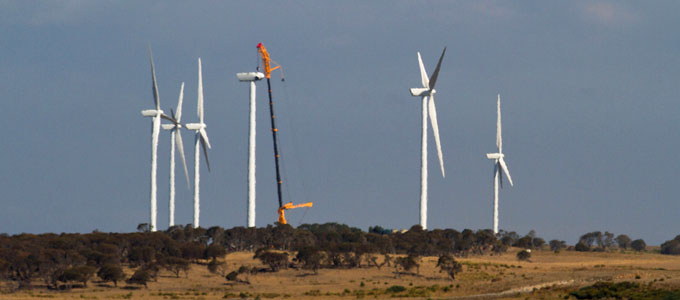
On some levels it’s easy to say the regulations require accurate modelling. However, for any renewable energy project there is a level of modelling that will be the right fit , and the regulations shouldn’t ask for more than that without good reason. So let’s look at the relative value of accurate modelling in various contexts, and then later we can see if there’s a mismatch between that value and regulatory regimes.
The requirements for power system modelling of generating units vary from place to place, but as ‘traditional’ generation levels recede and power electronics and intermittency gain more than a foothold in the power system, accurate modelling will increase in importance and value.
The aims of these models cover three levels:
- Level 1: Does my plant work?
- Level 2: Does my plant interact appropriately with the nearby network?
- Level 3: Does my plant interact appropriately with the power system as a whole?
Accurate modelling can add value at any of these levels, but the degree of effort required to release that value depends on the type of project, the type of network and the location in the network.
The issue impacts all renewable energy projects but let’s take a wind farm as an example and move it around the network to explore this.
Small wind farm in the distribution network
Let’s build a 10 MW wind farm and connect it close to a distribution substation on a 33 kV feeder. At this size, most of the ‘does my plant work?’ question is answered by the off-the-shelf inverter controls, so little value is to be gained at that level.
However, the interaction of the plant with the network and nearby customers is critical. The connection point is close to other customers and so the variability of the wind farm can impact the quality of the neighbours’ supply.
Accurate modelling here gives certainty that there’ll be no surprises at commissioning. Imagine convincing a network service provider that your flicker indices are OK, only to have the neighbouring plant force you to redesign or curtail your operations after commissioning. That has real project impact and possibly brand impact too.
Larger wind farm in the sub-transmission network
What if we move our wind farm to the remote end of a 132 kV line and build it ten times bigger? Now we don’t have any neighbours, although we could have some in the future. We have a stability problem because of the long line, so we now need auxiliary plant (e.g. a capacitor bank) to help control voltage and hence maintain production.
We’ve got a plant that has to cater for an external requirement (level 2) but that then implies an internal control or coordination requirement (level 1).
In this scenario, our models’ accuracy helps with internal design and, as a results, saves commissioning time. It also helps optimise production by clearly communicating the control actions of our plant to the wider system model. This allows the degree of stability improvement to be accurately characterised and so constraints are not arbitrarily applied. The business-case levels of production are preserved.
Large wind farm in the transmission network
If we move this large plant to a 500 kV connection point and triple its size, it’s almost akin to the scale of our 10 MW plant back on the 33 kV. Now we’re less interested in voltage controls due to the high fault levels at the connection point. It’s very difficult to see the influence of the wind farm’s controls on the surrounding network. The only possible value now is related to system strength and fault-ride-through phenomena (level 3).
This now requires accurate modelling of a smaller subset of controls, but it’s interacting with the whole system. In a strong system these issues are generally negligible. In a weak network, they’re critical. So, for this example, the value is derived from integrated design of the controls to ensure system compatibility (i.e. no constraints). The value stems from efficiency and effectiveness at levels 1 and 3. The value is in gaining connection, preserving energy production and streamlining commissioning.
The following tables summarises these three examples. It shows my opinion on the value of dynamic model accuracy to projects connected at various levels of the electricity grid. Note there is never a complete lack of value in having accurate models . Also note that this is relative value.
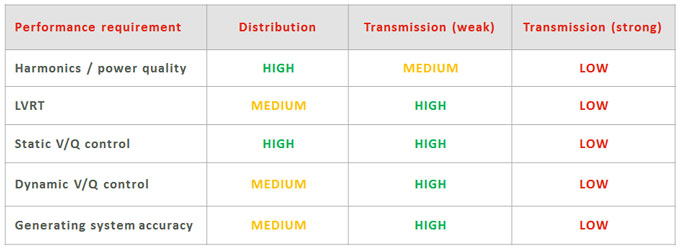
The cost of accurate modelling may not vary much across these three connection levels but the value it brings to a project does. The table shows an estimation of the value that model accuracy brings relative to the connection point strength and what aspects of the project it helps support.
So if you’re considering a wind farm, or any generation project, don’t forget the value that accurate modelling may bring to that project, but be mindful that this value may be limited due to the nature of the system and locale that you’re connecting into.
The art is to find the ‘Goldilocks Zone’ between the regulatory requirements for model accuracy, production loss through avoidable constraints and modelling effort. Too much or too little attention to these issues leads to unrealised project value. If we find the right balance, it’ll be just right.
If you would like to find out more about how Entura can help you adapt successfully to the rapidly changing market for electricity generation and energy services, contact Donald Vaughan on +61 3 6245 4279 or Silke Schwartz on +61 407 886 872.
This author originally presented on this topic at the Clean Energy Council Wind Industry Forum in March 2016.
About the author
Donald Vaughan is Entura’s Technical Director, Power. He has more than 25 years of experience providing advice on regulatory and technical requirements for generators, substations and transmission systems. Donald specialises in the performance of power systems. His experience with generating units, governors and excitation systems provides a helpful perspective on how the physical electrical network behaves and how it can support the transition to a high renewables environment.
MORE THOUGHT LEADERSHIP ARTICLES
Binary states: the rise of the switching controller
The security of an electricity network is threatened by the rise of sophisticated controls on modern generating equipment. These controls lead to complex interactions with the electricity network and must be managed carefully to maintain reliable system security.
Transient stability power system modelling has almost always been the cosy domain of Laplace transforms and smooth, linear controls. The rise and abundance of power electronics in wind turbines and solar PV is changing this and adding a degree of discomfort.
These new controllers switch control modes based on internal and external variables, and as such introduce a new model phenomenon, the switch controller action. A switched controller can be particularly difficult to model accurately as it invariably switches based on an imperfect measurement of a process quantity, coupled with a time delay.
The switch will operate if the process quantity remains out of tolerance for the delay period. The imperfection in measurement can make it hard to accurately predict when or if a switching controller will operate. This can lead to a ‘Schrödinger’s cat’ scenario: the simulation continues past the switching point but we never know whether it should have switched or not, and if it had switched would the result be more or less valid? The simulation could just as correctly be in either state. Argh!
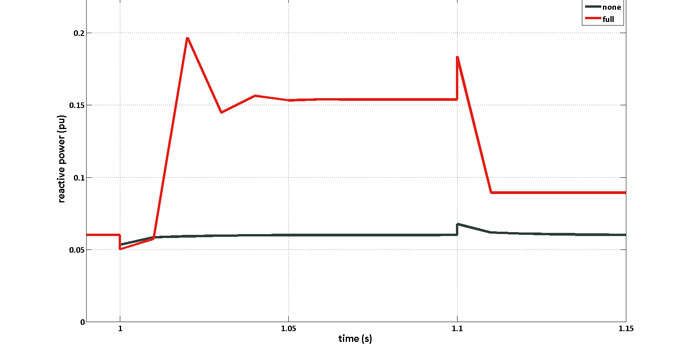
One school of thought is that more accurate and less assumptive modelling practice (such as using electro-magnetic transient simulations) might reduce this problem. However, it is highly unlikely that this form of modelling will deliver all the gains that its proponents expect. Rather, some conditions are likely to still give rise to the switching uncertainty, even with a much higher modelling cost.
Confronted with this uncertainty, how can we ensure that the modelling provides a useful insight into the limits of system operation? We’ll look at three scenarios: generator integration, system model validation, and system planning.
Generator integration
For generator integration, we typically define a set of boundary conditions and extreme event scenarios and determine whether the new generator is able to be connected within the system technical standards. This approach almost always ensures operation of the switching controllers that protect a generator from abnormal conditions, and there is no ambiguity of outcome. All good, job done? Well, no!
What if a slightly less severe system event leads to a condition in which the switching controller doesn’t activate but really should have? That’s a problem. This uncertainty requires us to define a much more complex set of scenarios to assure ourselves that a generator will comply with the technical standards.
System model validation
To validate system models, we generally measure responses from generating units and the system, and this tells us how the system and the generating units have behaved. So far, so good. Although, we don’t always know the severity of the instigating fault with any certainty, and this degree of freedom can open the dreaded window of switching controller uncertainty. Again, two possibilities exist in the model space: switching or not.
We know which is right, but is it fair to assume that the model inaccuracy suggested by comparison is entirely due to the generator with the switching controller? Um, well, probably not, but sometimes, yes. This is perhaps more difficult to resolve because it’s hard to unpick the sum of small inaccuracies in the system model from the clearly aberrant behaviour of the switching controller since the aberrant behaviour may be due to those summed inaccuracies.
System planning
The number of scenarios explored in system planning studies leads us to try to ignore the contributions of single generating units, or at least to assume accuracy in those contributions. Limits to system dispatch are established based on breakpoints such as transient stability and damping ratios. But how do we know we’re studying the correct, most onerous events? Severe events will always lead to switching controllers operating. Less severe events lead to hit-and-miss operation and potentially less stable system operation at potentially lower flows, so they must become part of our planning simulation considerations.
The rise of the switching controller and the uncertainty that it brings is a worrying development , with no easy work-around. Being aware of the conundrum should lead to accounting for it in some way. When the problem first arises during connection studies, the results at this stage can inform validation tests to increase the certainty of the modelling of the switching controller. Understanding the sensitivity of the controller to voltage and frequency variations and imbalance should provide an appreciation of the need for more advanced modelling, or not.
Switching controller uncertainty demands due consideration from network simulators lest the security of the power system is compromised and we all suffer.
If you would like to find out more about how Entura can help you adapt successfully to the rapidly changing market for electricity generation and energy services, contact Donald Vaughan on +61 3 6245 4279.
About the author
Donald Vaughan is Entura’s Technical Director, Power. He has more than 25 years of experience providing advice on regulatory and technical requirements for generators, substations and transmission systems. Donald specialises in the performance of power systems. His experience with generating units, governors and excitation systems provides a helpful perspective on how the physical electrical network behaves and how it can support the transition to a high renewables environment.
MORE THOUGHT LEADERSHIP ARTICLES
Eight principles for successful investment in renewable energy projects
When you are considering investing in a renewable energy project, a thorough due diligence investigation can identify the costs, benefits and risks, and lead to well-informed decisions.
In practical terms, this is about asking the right questions about the project, distinguishing when an issue is important and when it is not, and prioritising your efforts.
Why prioritise your efforts? Because the unfortunate reality is that most due diligence investigations don’t result in an investment. As consultants, we are aware of this reality, but as part of a larger business that acquires, develops and owns renewable energy assets, we understand that effort and expenditure must produce results.
When we lead renewable energy due diligence investigations, we often start with a quick assessment to establish as soon as possible if there are any ‘show stoppers’. No matter how preliminary or comprehensive the assessment, these eight principles guide our considerations:
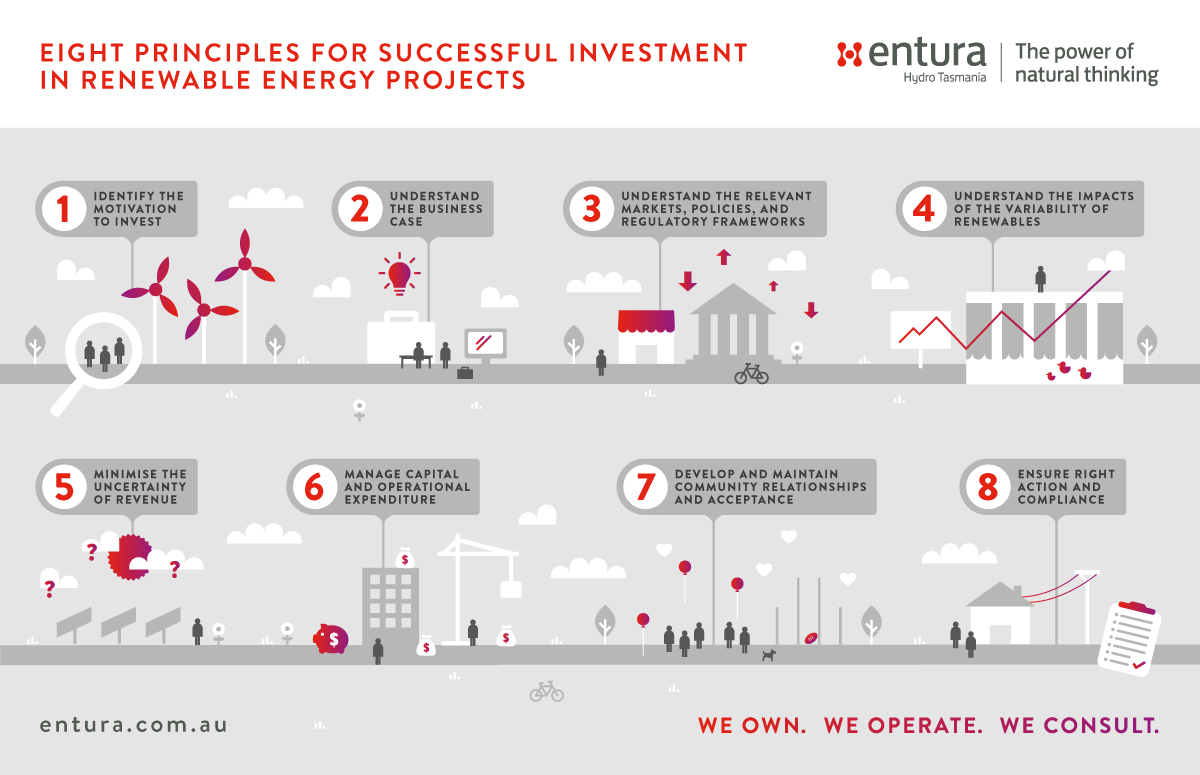
1 – Identify the motivation to invest
A thorough due diligence investigation will identify high-level issues such as sovereign risk, right down to detailed technical issues associated with the particular investment opportunity.
Your motivations as the investor will influence the assessment of these risks. It may not simply be all about financial return, but also a desire to limit carbon exposure or to increase corporate social responsibility. And if we understand your business, we can bring a clearer perspective to the assessment.
Traditionally, investors have relied on consultants to assess the technical issues in detail, but have preferred to assess high-level risks ‘in-house’. This approach is understandable, but it may not be making the most of your consultant’s knowledge. Most renewable energy consultants these days have been in the game a long time, and you will find them keen to provide a more holistic assessment of risk.
2 – Understand the business case
As with any investment decision, investors interested in renewable energy projects need to understand the level of investment of financial and human resources required for the project, and the likely returns for that investment – the business case.
Each project will have its own set of issues and risks to identify and potentially mitigate as part of a robust business case. Risks will affect the revenue stream, the cost of the project, and/or the social acceptability of the project.
An experienced due diligence provider can provide value by recognising the difference between issues that will materially affect the project business case and those that will not, or by identifying opportunities where others might only see risks.
3 – Understand the relevant markets, policies and regulatory frameworks
Renewable energy projects are often supported by government policies that recognise the environmental benefits of clean generation and support the revenue stream for the project. It is essential to understand both the commercial market for your energy and this policy environment.
You also need to understand the relevant regulatory frameworks – planning, environmental, electricity grid, corporate governance, taxation, financial, employment, or occupational health and safety. All these factors need to be considered when assessing the cost of the project and the risks associated with the investment.
4 – Understand the impacts of the variability of renewables
Renewable resources such as solar, wind or small run-of-river hydropower schemes generate power with a variable output that can be forecast, but is not necessarily available on demand. This feature of renewable energy can lead to quarterly or annual variations in generation and in revenue that are beyond the control of the owner.
However, renewable projects do not have variable fuel costs. So by weathering the short-term fluctuations of renewable generation through prudent technical and financial risk management, you can achieve greater long-term certainty in your business case than with non-renewable generation projects.
The variability also means that when the resource is available (for example, the sun is shining), you want your project to export energy to the electricity grid without constraint. Therefore, for renewable energy projects, the grid connection arrangements can mean the success or failure of your project.
5 – Minimise uncertainty of revenue
The variable nature of renewable generation can create short-term uncertainty in revenue; however, long-term certainty in revenue is generally a must-have for a renewable energy project looking to sell its power output.
In some markets, set tariffs may be offered from government bodies for renewable projects. In markets with a floating electricity price, long-term power purchase agreements are often sought with counterparties such as retailers or large-scale energy consumers.
There may not be much assistance a consultant can provide on this issue – except to remind you to read the fine print of any agreements and, if the project does not have a confirmed buyer for the power, make sure you know the risks!
In terms of what the project is technically capable of generating, an operational project has more certainty than a development site, and may be more attractive for some investors.
6 – Manage capital and operational expenditure
Renewable energy projects require a large upfront capital expenditure. Depending on your risk appetite as an investor, exposure to risk can be managed through the contractual arrangements with the developer, equipment suppliers and the construction contractor. Comprehensive long-term operations and maintenance agreements are often available, which reduce your risk, but at a cost.
One issue worthy of particular note is construction delays. Investments that are otherwise sound can suffer due to delays in construction, which can have significant impacts on the expenditure and revenue profiles, and the terms of any debt provision.
7 – Develop and maintain community relationships and acceptance
Renewable energy projects operate within communities. There will be a range of attitudes towards your project and relationships to manage, and it will be up to you to develop and maintain a healthy relationship with the community.
Your community may see your project as a major contributor to the local economy through direct employment and indirectly through contracting. The community may even expect you to play a leading role in supporting local community activities through sponsorship and other activities.
8 – Ensure right action and compliance
An opportunity to invest in a renewable energy project might occur at any stage of the project. Regardless, the nature of the due diligence is usually very similar – have the right actions have been undertaken, does the project comply with its commitments, and will it continue to comply into the future?
Because Entura is part of Hydro Tasmania, Australia’s largest renewable energy producer, we understand what it means to live with the full consequences of investment decisions and risks. So we approach due diligence for our clients in the same way we would if the investment opportunity was our own.
That means developing a full understanding of the proposed project, discovering any risks that could prevent its success, and finding the best ways to make the most of the project’s strengths and avoid any possible weaknesses.
If you are seeking to invest in renewable energy, Entura can assist you with practical, expert due diligence services for proposed or operational projects in the Asia-Pacific region. Please contact Patrick Pease or Silke Schwartz on +61 407 886 872.
About the author
Seth Langford is a specialist renewable energy engineer at Entura and has been working in the wind industry for more than ten years. Seth has been involved with major wind farm projects as a technical specialist and a team leader for feasibility studies and due diligence projects in India, China, Australia, Sri Lanka, South Africa and New Zealand. Seth has spent considerable time assessing greenfield and operational wind farms on behalf of developers wishing to acquire wind farm projects.


