
Dam decommissioning: old dams, new opportunities
While many dams have very long lives, and could in theory operate for centuries, some dams reach a point at which decommissioning becomes a realistic final phase of the dam life cycle.
Decommissioning is not something that happens very often, given the significant value of dams and their functions, which are often multiple. Maintaining and upgrading dams, rather than decommissioning, can sometimes also be a more sustainable solution if this extracts more economic, social and environmental value to offset the initial impacts that the dam may have caused when originally constructed.
However, decommissioning may be the best option if the dam is no longer needed to deliver its original purpose, if it is no longer providing commercial or societal benefits, or if it is considered too costly to continue maintaining the dam or to undertake the necessary upgrades to stay compliant with contemporary regulations and standards.
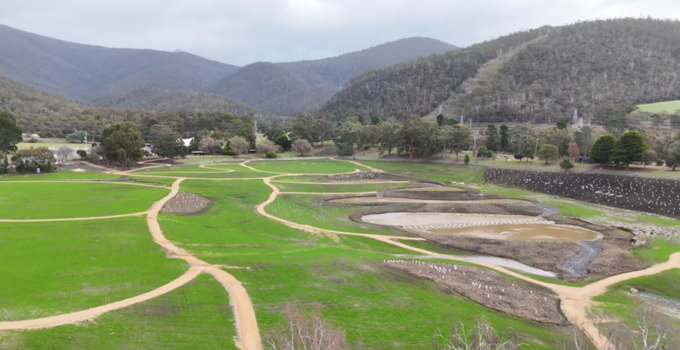
How is a decision to decommission made?
The decision to decommission a dam is usually based on a comprehensive risk assessment. Risk assessments play a critical role in managing dams throughout their life cycle. They primarily focus on ensuring safety and minimising risks associated with dam operation, failure and decommissioning.
Risk assessments estimate risks, identify hazards and failure modes, evaluate the tolerability of the risk, compare potential risk reduction measures if needed, and establish a risk reduction strategy.
If the risk is not tolerable, risk reduction measures will be recommended, and a risk reduction strategy will be established to reduce the risk. The risk reduction measures will generally involve upgrade works. When the option to undertake dam upgrade works is considered, the option to decommission the dam is often also included. The dam owner can then undertake a cost–benefit analysis to determine the most viable option, understand the level of risk reduction achieved, and consider less tangible aspects such as community concerns.
What’s involved in decommissioning a dam?
Decommissioning a dam requires considerable planning to minimise environmental impacts and reduce the chance of leaving any residual hazards in the long term. A thorough assessment of the site conditions and downstream environment is a crucial first step towards identifying the appropriate decommissioning actions.
The location of the dam and the details of the dam works will determine the planning requirements, which often include:
- engineering design – taking breach width and batters into account to remove the possibility of retaining water, and assessing the impact on flooding downstream (as dams frequently provide flood mitigation even when this is not their primary function)
- sediment and erosion control planning – as sediment release can cause significant water quality issues and harm to habitats downstream. It is important to note that the reservoir area will initially be unvegetated and will not have any topsoil that can be used to support vegetation growth to control erosion. Additionally, sediments will typically have been deposited in the dam reservoir and are generally very easily remobilised, so this needs special attention from the designers
- flora, fauna and cultural heritage studies – as decommissioning can dramatically alter ecosystems both upstream and downstream, and heritage features can often be highlighted improving the amenity of the new asset. Ecological studies such as flora and fauna assessments are important to identify any threatened species that need to be considered in the decommissioning plans, such as through exclusion zones or timing the works to minimise impacts (e.g. conducting work outside of breeding seasons)
- fluvial geomorphology assessment – which identifies how rivers interact with their landscapes and how they change over time. It is important to understand this given that the decommissioned dam will have water flowing through it rather than retaining water, changing the balance of erosion and sedimentation processes
- dam safety emergency plan for decommissioning works – to protect communities from flooding during the decommissioning works
- regulatory approvals – a dam decommissioning permit will be needed, which will include managing any specific regulatory requirements such as issuing a notice of intent prior to commencing works and providing work-as-executed reports and drawings at the completion of the works to confirm all conditions have been successfully met.
- Depending on the use and location of the dam, it is recommended to consult with a range of stakeholders, including the local community and council, during the planning process to ensure that their perspectives and concerns are considered early. If the dam is located near to residences, public spaces or other civic amenities, extensive consultation is likely to be needed due to the potential nuisance from the works (e.g. noise, dust and additional traffic in the local area). A masterplan can be developed through this process of consultation, outlining potential options for remediating and repurposing the area based on the community’s priorities, such as creating potential new community assets such as wetlands, parks or sporting facilities.
The work involved in decommissioning a dam will depend on the type of dam and the surrounding environment but commonly involves:
- re-routing inflow away from the reservoir or past the dam
- removing all or part of the dam wall
- modifying or removing the outlet works
- lowering the spillway crest level or removing the spillway control gates or stop-boards
- treating retained liquid prior to discharging it in a safe condition
- stockpiling and stabilising accumulated sediments from within the reservoir
- removing or encapsulating impounded material, such as trees and vegetation
- revegetating the reservoir area and rehabilitating the site to perform its new purpose.
Doing it safely
Decommissioning a dam is a very complex matter involving many stakeholders and often taking some time to reach its conclusion, so it is prudent for dam owners to embark early on some interim measures to rapidly reduce any identified dam safety risks. The simplest and most cost-effective risk reduction measure is usually to lower the level of the reservoir.
The next stage is identifying the planning requirements and works involved with decommissioning and developing a decommissioning plan. The engineering design, included in the decommissioning plan, will consider the necessary environmental assessments and ensure adherence to appropriate guidelines.
Common considerations when developing the engineering design include:
- hydrological and hydraulic assessment of conditions before and after decommissioning
- the necessary breach width and batters to make the site safe
- safely discharging or removing retained water and material
- the volume of any attenuated water remaining after decommissioning
- gradient of the land if the reservoir is being completely drained
- erosion and sediment control during and after decommissioning
- managing inflows and floods during the decommissioning
- careful consideration of the final land use after decommissioning including the ecological restoration and community uses.
Achieving success
For decommissioning to be considered successful, it’s crucial that the decommissioning plan and engineering design take account of the priorities that emerge from stakeholder consultation. Many communities become attached to a dam as part of their local landscape, especially if the dam is very old. They may wish for some of the dam’s heritage to be retained or acknowledged in some way, such as retaining and integrating parts of the abutment into the future form or land use where it is safe to do so, or echoing the past by incorporating smaller water features into the resulting site.
Another major consideration for successful decommissioning is controlling erosion and sediment. Reservoirs typically have a low point that can function as a temporary sediment basin once the water level is substantially lowered. Rainfall and inflows can be channelled with small bunds and hessian silt rolls to the sediment basin. Turbid water can then settle or be treated, if necessary, before being pumped out. After decommissioning, erosion and sediment can be managed by revegetating exposed areas with native plants, creating habitat features such as wetlands or log jams, and managing and monitoring wildlife to ensure their adaptation to the changing environment. Simple solutions can be implemented to achieve positive – or at least neutral – outcomes for biodiversity.
Right process, right people
Decommissioning dams takes a wide range of skills to deliver a successful outcome – from hydrology and hydraulics, environmental and heritage assessments, through to detailed construction planning and a vision for the repurposed land. With the right people and process, decommissioning can reduce safety risks to the community, protect the environment during the works, and ultimately create new, sustainable assets enhancing the amenity of the area for the benefit of communities now and long into the future.
Entura has been involved in a number of dam decommissioning projects including Waratah Dam and Tolosa Dam. To talk with Entura’s specialists about a dam decommissioning project, contact Richard Herweynen or Phillip Ellerton.
ABOUT THE AUTHOR
Joey Scicluna is a civil engineer, who began his career managing commercial and subdivision projects. Since joining Entura’s dams and geotechnical team in 2022, he has undertaken a wide range of dam safety surveillance inspections and reporting, dam safety modelling and analysis and risk assessments. Joey has been the lead author for a number of intermediate and comprehensive dam safety reviews, and has developed design concepts and conducted feasibility studies for existing and new dams projects. Joey enjoys problem solving and working with stakeholders to achieve the best outcome for every project.
Risk is the word – reflections on the NZSOLD/ANCOLD 2025 conference
From 19 to 21 November 2025, industry experts from consultants to asset owners gathered in Ōtautahi Christchurch, New Zealand, to exchange insights, challenge thinking and strengthen connections ‘across the ditch’ and beyond. Here Entura’s Sammy Gibbs reflects on the conference …
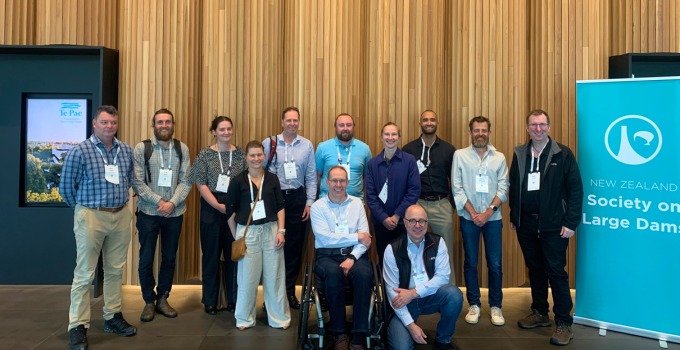
If I had dollar for every time I heard the word ‘risk’ across the two-day event, I might have been able to fund next year’s conference myself!
Why was this the case? As noted in many of the presentations and papers, the dam industry is facing the combined challenges of aging dam infrastructure, changing design standards, climate change impacts, community expectations and resource/cost constraints. As a result, the industry is shifting more towards risk-informed decision-making/frameworks, compared to traditional standards-based approaches,to manage and design dam infrastructure.
No dam is 100% safe and all risks can never be designed out entirely, but a sophisticated understanding of their risk can inform our decisions and actions so that we can target key issues cost-effectively and ensure resilience in our dams and water infrastructure.
Risks in asset ownership
In his opening address, Andrew Watson, Director of Dam Safety & Generation Asset Planning at BC Hydro in Canada, provided valuable insights into how BC Hydro uses a risk-informed framework to manage its dams. He discussed the use of a ‘vulnerability index’ to understand the significance of identified physical deficiencies in the dam portfolio. The higher the index, the greater the likelihood that the deficiency would result in poor performance. This index allows BC Hydro’s dam safety team to understand the overall risk profile and prioritise future works. It left us contemplating how the ANCOLD 2022 Risk Assessment Guidelines and ALARP process may be enhanced by integrating components of this approach. This could be a useful way of measuring how far the dam is from meeting ‘best practice’ and hence enhance the justification for further risk reduction or accepting the position as ALARP.
Later in the conference, Andrew Watson was joined by Peter Mulvihill, Lelio Mejia and Barton Maher to discuss legacy risk and how to manage it. Legacy risk is relevant for many asset owners (nationally and internationally) as our sector faces the complexities of inheriting aging facilities, acquired from past organisations/owners. A key challenge with these legacy structures is the transfer of knowledge to new asset owners. Important records such as monitoring data, design and construction information are often lost (or were never developed), making it difficult to understand and quantify the current risk position of the structure. These aging facilities are also unlikely to meet current design standards or withstand climate change impacts. Risk-informed decision making and phased approaches become critical in such instances, as does asking the question ‘Does it matter?’ when it comes to unknowns. Like tying surveillance programs to key failure modes, unknowns should also be associated with credible failure modes.
It was noted that for some of these structures the most appropriate solution is decommissioning, as the risk imposed by the structure (and the cost to mitigate it) may outweigh the economic benefit of the asset itself. In such instances, this decision can provide social and environmental benefits and are worth investigating.
Risk in surveillance monitoring
The conference reaffirmed the critical role of risk-based surveillance monitoring and the importance of understanding how dam instrumentation relates to key failure modes and/or performance. The most effective tool to support this is an event decision tree.
Entura’s Diego Real reiterated the importance of understanding key failure modes when implementing instrumentation upgrades. His paper presented a staged approach for the upgrades, providing clients with a cost-effective, practical solution that assists in managing dam safety risks.
Although there was discussion about various ways in which surveillance programs can be optimised, our industry is aligned in recognising the criticality of undertaking routine inspections as the first line of defence when it comes to identifying potential failure indicators.
Risk mitigation solutions
Several presenters shared examples of bespoke solutions responding to dam risks – including Entura’s Jaretha Lombaard, who highlighted how a Swedish berm was used to mitigate risks associated with piping failures at an earth and rockfill embankment dam in Tasmania.
Other risk mitigation solutions presented included non-physical works such as improvements in surveillance and monitoring. In one example, alarm systems in rivers are being used effectively to warn and evacuate the public in a swimming pool downstream in the event of a flood. Instead of relying solely on costly capital-intensive physical upgrades, the most effective strategy for reducing societal risks may lie in enhancing the speed and reliability of early warning systems.
Sharing knowledge to tackle similar problems
NZSOLD/ANCOLD 2025 was an excellent opportunity to see how specialists are tackling the complex challenges facing the dams industry. Walking away, my mind was full of phrases involving the word ‘risk’, but I felt reassured that we are all facing similar problems and by sharing our knowledge and innovations we’re continually improving our ability to design, monitor and maintain dams.
This conference will be a tough act to follow, but I look forward to the 2026 ANCOLD conference to be held in Lutruwita/ Tasmania (where I live and Entura originated).
ABOUT THE AUTHOR
Sammy Gibbs is a civil engineer with 7 years of consulting experience and joined Entura’s Dams and Geotech Team in May 2021. Sammy has a diverse background in dam and water engineering and works on a range of projects including consequence category assessments, hydrology studies, hydraulic design, risk assessments and dam design projects.
Reflections from MYCOLD 2025: Innovation, resilient dams and the evolving role of hydropower
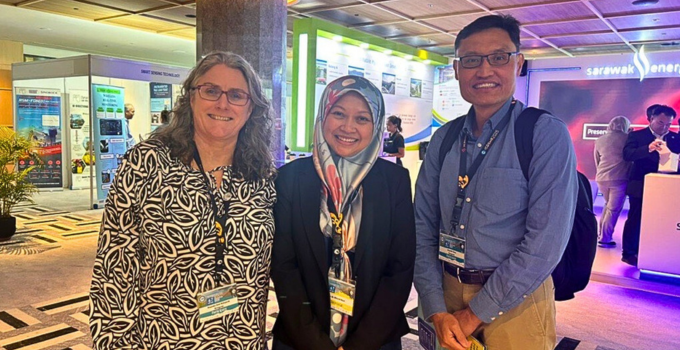
Earlier this month, I had the privilege of joining colleagues from across Malaysia and the region at the 3rd International Conference on Dam Safety Management and Engineering (ICDSME2025), organised by the Malaysia Commission on Large Dams (MYCOLD), held in Kuching, Sarawak. There’s a particular energy that comes with a MYCOLD conference – part reunion, part technical deep-dive, part regional conversation about water, resilience and community safety.
I returned energised and inspired – not only by the technical excellence on display, but also by the sense of shared purpose across our industry and the tangible people-to-people exchanges and collaborations. With energy systems transforming rapidly, climate change accelerating and dam safety expectations strengthening, it has never been more important for dam and hydropower professionals to share openly and learn from one another. ICDSME2025 offered that in abundance.
Here are just a few reflections on some of what I heard …
Reimagining hydropower in changing markets and climates
In the ‘Advancing sustainable hydropower’ session, I shared perspectives from Tasmania’s long hydropower journey and Entura’s experience supporting the state’s major renewable energy initiatives.
My message was clear: the feasibility of pumped hydro or of reimagining conventional hydropower isn’t simply a technical question of ‘can we build it?’ but ‘what is the long-term value it creates?’ Smart choices depend on a holistic understanding of context – i.e. the markets, energy mix, climate, environmental impacts and benefits, and community perspectives and impacts. Pumped hydro is never ‘impact-free’, and it is not inherently more sustainable than conventional hydropower. What matters is how we think about the future of the energy transition, understanding what role pumped hydro can play in that context, how well we select sites, how carefully we consider environmental and social impacts, and how thoughtfully we design (and extend) assets for long-term economic and social value.
With wind and solar dominating new energy investment in Australia, hydropower’s baseload role can shift to respond to evolving market dynamics. Hydropower’s deep storage, flexibility and system stability are becoming increasingly important. We’re seeing these opportunities in Tasmania, where both conventional hydropower and pumped hydro could – with more interconnection to the mainland – help balance a renewables-rich National Electricity Market while returning extra revenue to Tasmania and increasing the reliability of supply across Australia’s south-east.
Climate change adds further complexity to feasibility considerations. Changing rainfall patterns, more variable inflows and more frequent extremes – as well as with the increasingly variable generation mix and how energy sources interact – all influence when hydropower can generate or store.
Ultimately, I believe there are not only opportunities with extending operating life, refurbishing or redeveloping dam assets; there are also obligations upon us as an industry to do our best for the sustainability of these assets. We need to focus constantly on how to optimise outcomes from the base impacts of hydropower or dam developments and seek ways to reduce impacts into the future. We also need to think about how to deliver great outcomes and value that extends across a long asset life, beyond the limited commercial timeframes considered in final investment decisions.
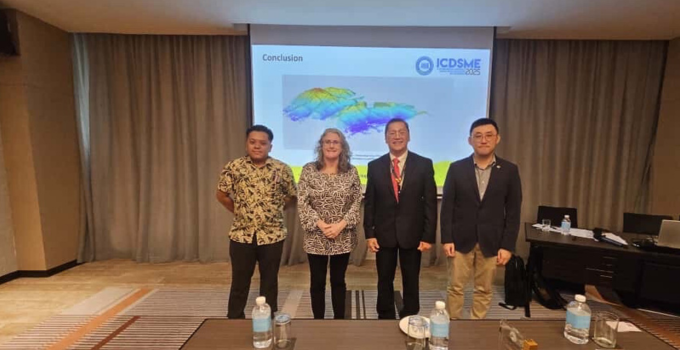
Technology, people and the future of dam safety
I had the honour of chairing a keynote session featuring Yang Berbahagia Prof. Datin Ir. Dr. Lariyah binti Mohd Sidek and Dr Martin Wieland.
Dr Wieland’s insights into the seismic performance of dams reminded us that strong engineering fundamentals remain as crucial as ever, even as digital tools advance. Prof. Lariyah explored how digital platforms, artificial intelligence and risk-based frameworks are shaping the next generation of dam safety practice. She emphasised the importance of the human layer: building institutional readiness, strengthening safety culture, fostering stakeholder trust, and ensuring effective engagement with communities.
Together, their perspectives reinforced that the future of dam safety will depend on both technological innovation and human-centred capability and how effectively these dimensions interact. That’s something Entura is focused on as we continue to bring deep expertise and experience, while exploring and testing the possibilities of new technology to support design and analysis.
Learning from incidents to strengthen global knowledge
Another highlight for me was chairing a session on dam surveillance, monitoring and evaluation. Seven presentations, while different in context and purpose, in combination emphasised the power of data and the importance of learning from experience.
A standout paper examined the 2022 landslide incident at Kenyir Dam, an event that occurred quite soon after Entura’s dam safety inspector training program used the dam as a site visit capstone. Despite extreme rainfall and slope instability, and some damage to appurtenant structures and spillway, instrumentation data confirmed that the dam behaved as designed. What was also clear was that, largely, the instrumentation in place and the data that was able to be collected was a positive demonstration of the importance of robust dam design and monitoring systems.
Another paper explored machine-learning approaches to forecasting short-term reservoir levels at Batang Ai Hydroelectric Project – a scheme with which Entura has long been associated. The results were impressive and point to a future where AI-supported forecasting strengthens real-time operations, especially under increasing climate variability.
These are exactly the kinds of insights our industry must continue to share openly and widely. We can never ‘design out’ all risk, but we can reduce it through good data and continual reflection and learning from real-world events.
Strengthening long-term capability in Malaysia
ICDSME2025 also highlighted the importance of building capability – something I am passionate about. It was encouraging to see Malaysia’s Certified Dam Safety Inspector program, developed with input from Entura’s training arm ECEWI, growing into a sustained and locally led pathway, launched during the conference. Strengthening dam safety ultimately depends on skilled people and strong institutions, making investment in training an investment in long-term sustainability of dam safety governance – and ultimately greater national resilience. We hope to continue to work with MYCOLD to determine how our specialised expertise can further enhance capability uplift beyond surveillance, extending to dam safety risk decision making and dam safety engineering.
A shared commitment to the future
Conferences like ICDSME2025 are timely reminders of our collective responsibility and the shared purpose we need to bring to the challenges ahead. We’re all navigating the same landscape, and when we come together – sharing data, stories and lessons – we accelerate progress for everyone.
I am grateful to MYCOLD for the invitation to contribute and for the generous knowledge-sharing throughout the event. I left Sarawak optimistic: the connection, commitment and collaboration across our sector have never been stronger as we work toward our common goal: safer, more sustainable dams and hydropower systems that support resilient futures.
Can you trust advanced tools without qualified professionals behind them?

To make confident decisions about renewable energy assets – from building a wind farm to monitoring dam performance or optimising asset management – owners and operators need precision data they can trust.
As the renewable energy sector becomes increasingly digitised, the quality of measurements matters more than ever. Digital twins, predictive analytics, AI-driven performance tools and remote operations all depend on reliable, precise and traceable data.
Good data provides visibility. It lets owners and operators detect faults or safety issues early, optimise performance, and protect reliability and revenue. For example, accurate turbine alignment during installation or refurbishment could save hundreds of thousands of dollars in downtime and maintenance.
However, data only provides value if it has the right level of accuracy for the job intended. If the data isn’t up to scratch, the decisions won’t be either.
Keeping pace with technology is a steep learning curve
Surveying has always been the backbone of infrastructure development, land management and industrial precision. From the early days of using theodolites and chains to today’s cutting-edge technologies like laser scanning, UAV photogrammetry and LiDAR, the discipline has evolved dramatically. Yet, one constant remains: the need for appropriately qualified and experienced professionals.
Surveying is far more than measuring distances – and achieving precision requires more than sophisticated instruments. It requires a deep understanding of geodesy, data integrity, error propagation and spatial analysis. Traditional instruments such as theodolites and total stations demand mastery of angular measurement and trigonometric principles. GNSS-based methods introduce complexities like satellite geometry, atmospheric corrections and datum transformations. As technology advances, the learning curve steepens: laser scanners and UAVs generate massive point clouds, while LiDAR systems demand expertise in filtering, classification and 3D modelling.
Surveying principles now extend beyond land and construction into industrial metrology, where precision is measured in microns rather than millimetres. In the renewable energy sector, the applications are vast, from assessing hydropower turbine blade wear and integrity of concrete structures to verifying the verticality of wind turbines and ensuring accurate positioning of new hydraulic equipment. Here, advanced techniques like laser trackers and terrestrial laser scanning dominate, and the margin for error is extremely small.
Precision gives confidence that the data feeding an asset’s digital models is accurate, consistent and aligned with recognised standards. When survey instruments, operational sensors and digital monitoring systems all work within a strong metrological framework, asset owners can be confident that their decisions are based on fact, not noise.
The human behind the technology
However sophisticated today’s measurement tools and technologies may be, their outputs are only as trustworthy as the professionals behind them.
Without properly qualified and experienced operators, advanced tools can become liabilities rather than assets. Misinterpretation of data or incorrect calibration can lead to costly errors in construction, infrastructure alignment or asset management.
Using the wrong technique or sensor for the use case and conditions, neglecting appropriate calibration, and a lack of adequate redundancy can lead to major issues and costly mistakes.
Specialised, qualified professionals will think through these issues early, ensuring that accuracy and tolerance requirements are clearly defined from the start and that data integrity is maintained throughout with robust quality control and assurance procedures.
Human insight provides the environmental and engineering context and assurance that automated systems alone cannot deliver. Surveying and metrology professionals can determine whether readings are valid and offsets are accounted for – and will be able to distinguish genuine change from measurement anomalies.
Ultimately, it is professional judgement that transforms accurate data into actionable insights and confident decisions.
Accuracy drives advantage
Today’s surveying advances are transforming how decisions are made. Spatial data is no longer just a technical input; when validated and interpreted by qualified professionals, it becomes a valuable source of real strategic insight and advantage. When the data is right from the start, every subsequent step becomes more certain and the outcomes have the best chance of being more efficient and sustainable. Such clarity can be the difference between success throughout an asset’s lifecycle and expensive lessons learned.
As technologies advance, so does the need for qualified professionals who understand both the science of measurement and the realities of complex, dynamic infrastructure. By ensuring accuracy, compliance with standards and efficient workflows, the qualified surveyor safeguards projects from financial and reputational risks – enabling the reliability, safety and commercial confidence that every asset owner depends on.
If you’d like to talk to us about the potential of advanced surveying and metrology on your project, contact Phillip Ellerton or a member of our Spatial & Data Services Team.
How hydropower history and innovation can continue to power progress
Having been named as the Planning Institute of Australia’s Young Planner of the Year for 2024 and awarded a bursary, Entura’s Bunfu Yu travelled through Switzerland and France to study hydropower and energy innovation. Her reflections from the study tour highlight how history-rich hydropower assets can continue to evolve and add value in a changing world …
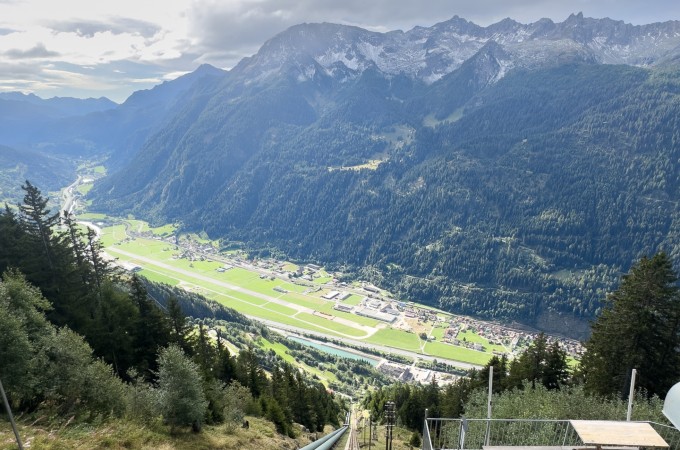
Switzerland’s Ritom hydropower project – which is in the late stages of a major redevelopment and anticipated to be operational later in 2025 – is a technical marvel of the past and the present. It is also a lesson in how energy infrastructure can evolve while still respecting its historical roots.
The original Ritom power station was commissioned in 1920 as part of a traditional hydropower scheme using water from Lake Ritom to generate electricity. It holds a special place in Swiss energy history as the first plant to supply electricity to the Gotthard railway, which is a vital north–south transit corridor through the Alps. This early integration of hydropower with transport infrastructure helped shape the modern Swiss energy landscape.
However, after more than a century of faithful service, Ritom’s aging infrastructure and the region’s changing energy needs prompted a major rethink.
Modernising with purpose
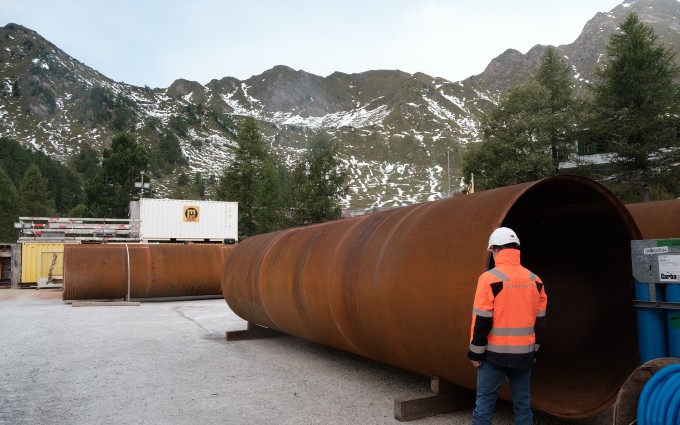
Ritom is undergoing a major transformation to meet 21st century demands. The redevelopment project involves replacing the historic hydropower plant with modern facilities and converting it from a conventional hydropower scheme to include a pumped hydropower component. By using two existing lakes (Lake Ritom and Lago di Cadagno) as the upper and lower reservoirs, energy can be stored by pumping water uphill during periods of low demand and releasing it to generate electricity when demand peaks. This is critical for maintaining reliability and stability in today’s dynamic grid. The lakes are also popular with walkers, and this recreational value will continue alongside the repurposed scheme.
The revamped facility will increase capacity to 120 MW, improving energy resilience for both the local Ticino region and the Swiss Federal Railways. The upgrade enhances energy security and does so with a strong emphasis on environmental and community values.
Balancing environment, engineering and community
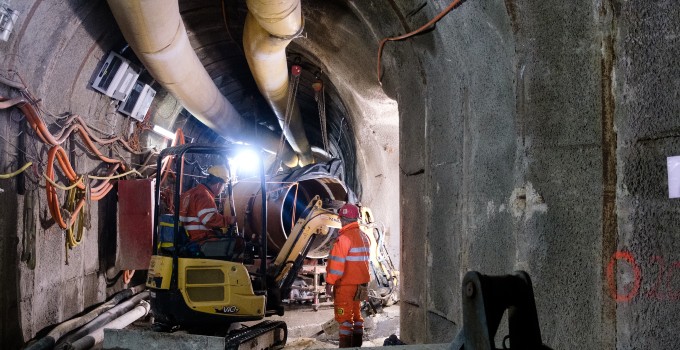
Like all major infrastructure projects, Ritom has complexities. A key concern is managing downstream water flow to protect river ecosystems. To address this, the project incorporates a demodulation basin – an engineered feature that moderates flow variations, preserving the ecological health of the river below.
Minimising disruption for the local community during construction has also been a priority. This has taken careful management, as the project is nestled between the alpine villages of Piotta and Piora. The project team constructed a dedicated cableway to move heavy materials – such as massive steel penstocks – away from narrow local roads. This solution reduced construction traffic and helped preserve the peace and safety of surrounding communities.
Ritom is an inspiring example of how infrastructure can evolve when regulators, engineers and communities work together. Innovative thinking coupled with flexibility in permitting has enabled tailored solutions that are practical and environmentally sound – an approach that is replicable worldwide.
Technical excellence delivering long-term social value
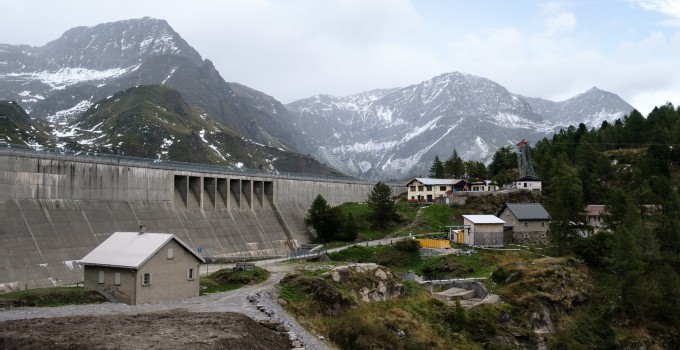
Ritom reminds us that great infrastructure is more than engineering and functionality – it can inspire and be enjoyed.
Each year, the region celebrates the connection between nature, people and infrastructure through the ‘Stairways to Heaven’ race – a brutal yet iconic event that ascends 4,261 steps alongside the original penstocks of the Ritom scheme. With an average 89% incline over 1.2 km, it is Europe’s steepest race, attracting elite athletes as well as daring locals. The climb is physically punishing, but those who reach the summit are rewarded with breathtaking panoramic views of the Swiss Alps and the glistening Ritom reservoir.
This race is more than a sporting challenge. It is a symbol of how infrastructure can become deeply woven into the identity of a community, engendering enduring pride and delivering long-term social value well beyond its technical purpose.
The Ritom project is a powerful reminder that the future of energy lies in more than technology alone, but in how we carefully and intentionally navigate the intersections and synergies of history, environment and communities.
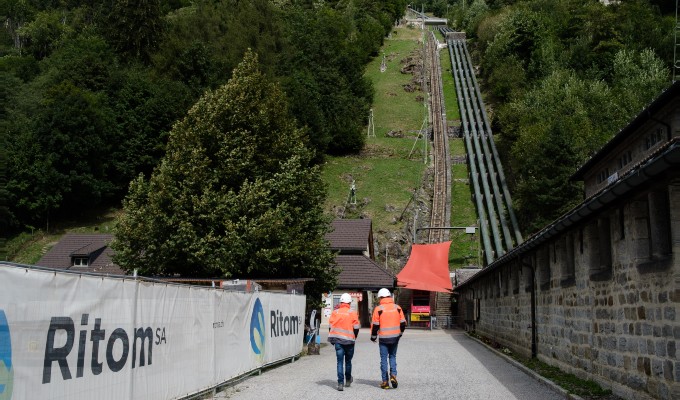
Planning for progress
Redeveloping or repurposing long-standing hydropower assets demands more than engineering expertise – it requires sensitivity to contemporary expectations. Since many of these projects were first built, the regulatory environment has shifted dramatically, with much greater emphasis on biodiversity protection (terrestrial and aquatic), climate resilience, the voices of local communities, and the cultural and heritage values of the Country on which these projects have been developed. The best projects don’t treat these as hurdles, but as opportunities to build broader value into the asset’s future.
Making good decisions at the earliest stages of refurbishment, repurposing or redevelopment is critical. To ensure lasting benefits, projects will need clear strategies grounded in sound technical evidence and shaped by a strong understanding of regulatory requirements and community expectations. Long-term success is more likely when projects are not only viewed through the technical lens of extending asset life, but are reimagined with community and environment at their core. Hydropower projects such as these can be catalysts for long-term energy security, greater ecological stewardship, strengthened social outcomes, and even become a source of community pride and inspiration.
In Australia, Entura is working with Hydro Tasmania to apply these principles through our work on the redevelopment of the Tarraleah hydropower scheme, parts of which are more than 80 years old. The redevelopment aims to increase capacity and flexibility so that Tarraleah can better serve the needs of the changing energy market – and future generations. It’s a project that echoes Ritom’s lesson: that heritage and innovation can coexist to create modern, sustainable infrastructure with value that endures for generations. By striking the right balance, hydropower can continue to do what it has always done best – power progress – while also meeting the needs and values of communities and environments today and long into the future.
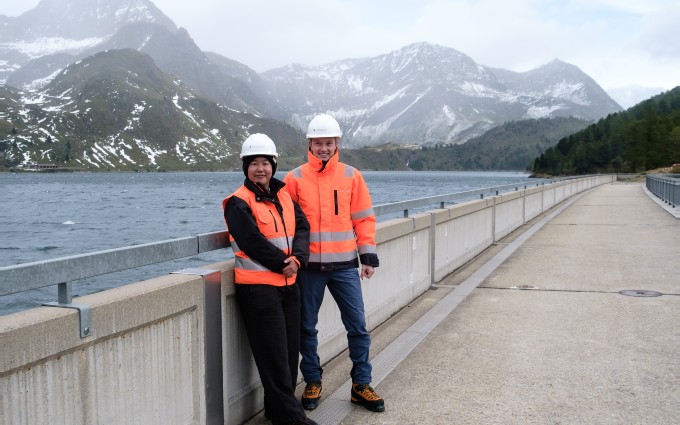
Bunfu (above left) thanks Lombardi Engineering Switzerland for organising a comprehensive on-site tour of the Ritom hydropower project.
ABOUT THE AUTHOR
Bunfu Yu is a dynamic young leader in renewable energy planning, approvals, and business development. Bunfu played a pivotal role in Entura’s Environment and Planning Team’s success in achieving the Planning Institute of Australia’s National Award for Stakeholder Engagement in 2024. In 2023, Bunfu was named the National Young Planner of the Year by the Planning Institute of Australia. This honour recognised not only her passion for the planning and delivery of renewable infrastructure but also her active contribution to the profession through mentoring, public engagement, and knowledge sharing. She is currently a Senior Environmental Planner and a Business Development Manager at Entura, having joined the business as a Graduate Planner in 2018.
‘Dams for People, Water, Environment and Development’ – some reflections from ICOLD 2024
Entura’s Amanda Ashworth (Managing Director) and Richard Herweynen (Technical Director, Water) recently attended the International Commission on Large Dams (ICOLD) 2024 Annual Meeting and International Symposium, held in New Delhi. Amanda presented on building dam safety capability, skills and competencies, while Richard presented on Hydro Tasmania’s risk-based, systems approach to dam safety management, and the importance of pumped hydro in Australia’s energy transition.
Here they share some reflections on ICOLD 2024 …
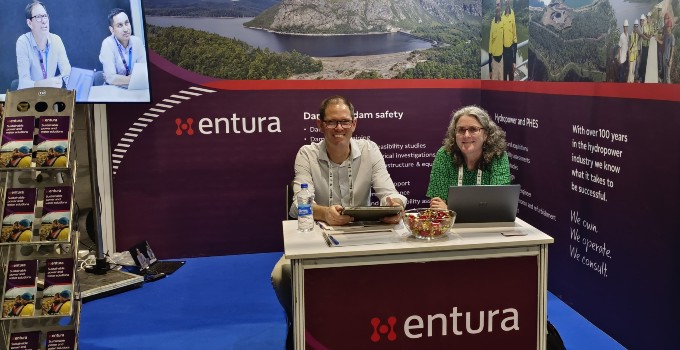
Richard Herweynen – on the value of storage, ‘right dams’, and stewardship
At ICOLD 2024 we were reminded again that water storages will be critical for the world’s ability to deal with climate change and meet the growing global population’s needs for food and water. We can expect greater climate variability and therefore more variability in river flows, which means that more storage will be needed to ensure a high level of reliability of water supply. Without more water storages to buffer climate impacts, heavily water-dependent sectors like agriculture will be impacted.
To slow the rate of climate change, we must decarbonise our economies – but without significant energy storage, it will be difficult to transition from thermal power to variable renewable energy (wind and solar). Pablo Valverde, representing the International Hydropower Association (IHA), said at the conference that ‘storage is the hidden crisis within the crisis’. There was a lot of discussion at ICOLD 2024 about pumped hydro energy storage as a promising part of the solution. It is also important, however, to remember that conventional hydropower, with significant water storage, can be repurposed operationally to provide a firming role too. Water storage is the biggest ‘battery’ of the world and will be a critical element in the energy transition.
With the title of the ICOLD Symposium being ‘Dams for People, Water, Environment and Development’, I reflected again on the need for ‘right dams’ rather than ‘no dams’. ‘Right dams’ are those that achieve a balance among people, water, environment and development. In the opening address, we were reminded of the links between ‘ecology’ and ‘economy’ – which are not only connected by their linguistic roots but also by the dependence of any successful economy on the natural environment. It is our ethical responsibility to manage the environment with care.
When planning and designing water storages, we must recognise that a river provides ecological services and that affected people should be engaged and involved in achieving the right balance. If appropriate project sites are selected and designs strive to mitigate impacts, it is possible for a dam project’s positive contribution to be greater than its environmental impact, as was showcased in number of projects presented at the ICOLD gathering. Finding the balance is our challenge as dam engineers.
The president of ICOLD, Michel Lino, reminded delegates that the safety of dams has always been ICOLD’s focus, and that there is more to be done to improve dam safety around the world. At one session, Piotr Sliwinski discussed the Topola Dam in Poland, which failed during recent floods due to overtopping of the emergency spillway. Sharing and learning together from such experiences is an important benefit of participating in the ICOLD community.
Alejandro Pujol from Argentina, who chaired one of the ‘Dam Safety Management and Engineering’ sessions, reflected that in ICOLD’s early years the focus was on better ways to design and construct new dams, but the spotlight has now shifted to the long-term health of existing dams. It is critical that dams remain safe throughout the challenges that nature delivers, from floods to earthquakes. In reality, dams usually continue to operate long beyond their 80–100 year design life if they are structurally safe, as evidenced in the examples of long-lived dams presented by Martin Wieland from Switzerland. He suggested that the lifespan of well-designed, well-constructed, well-maintained and well-operated dams can even exceed 200 years. As dam engineers, no matter the part we play in the life of a dam, we have a responsibility to do it well.
From my conversations with a number of dam engineers representing the ICOLD Young Professional Forum (YPF), and seeing the progress of this body within the ICOLD community, I believe that the dam industry is in good hands – although, of course, there is always more to be done. I was pleased to see an Australian, Brandon Pearce, voted onto the ICOLD YPF Board.
Another YPF member, Sam Tudor from the UK, reminded us in his address of the importance of knowledge transfer, the moral obligation we all have especially to the downstream communities of our dams, and our stewardship role. He was referencing his experience of looking after dams that are more than 120 years old – all built long before he was born. Many of our colleagues across Entura and Hydro Tasmania feel this same sense of responsibility and pride when we work on Hydro Tasmania’s assets, which were built over more than a century and have been fundamental to shaping our state’s economy and delivering the quality of life we now enjoy. It is up to all of us to carry the positive legacy of these assets forward with care and custodianship, for the benefit of future generations.
Amanda Ashworth – on costs and benefits, dam safety, and an inclusive workforce
Like Richard, I found much food for thought at ICOLD 2024. For me, it reinforced the need to accelerate hydropower globally, particularly in places where the total resource is as yet underdeveloped. To do so, we will need regulatory frameworks that support success – such as by monetising storage and recognising it as an official use – and administrative reforms that ease the challenges of achieving planning approvals, grid connection agreements and financing for long-duration storage. We must encourage research and development to move our sector forward: from multi-energy hybrids to advanced construction materials and innovations to improve rehabilitation.
In particular, I’ve been reflecting on how our sector could extend our thinking and discourse about the impacts and benefits equation beyond the broad answer that dams are good for the net zero transition. How can we enact and communicate the many other potential local environmental and social benefits and long-term value from dams?
Much of the world’s existing critical infrastructure came at a significant financial expense as well as social and environmental costs – so it is our obligation to pay back that investment by maximising every dam’s effective life. When we invest in extending the lifespan of dam infrastructure through effective asset management and maintenance, and when we maximise generation or the value of storage in the market, we increase the ‘return on investment’ against the financial, social and environmental impacts incurred in the past.
Of course, the global dams community must continue to prioritise dam safety and work towards a ‘safety culture’. I was pleased to hear Debashree Mukherjee, Secretary of the Ministry of Jal Shakti, celebrate the progress on finalising regulations across states to enact India’s Federal Dam Safety Act and establishing two centres of excellence to lift capacity across the nation. Dam safety depends on well-trained people with the right skills and competencies to comply with evolving standards, apply new technologies, and respond effectively to changing operational circumstances and demands.
I also enjoyed hearing from ICOLD’s gender and diversity committee on its progress, including updates from around 14 nations on their efforts to build a more inclusive renewable energy and dams workforce. This is front of mind for us, as we step up Entura’s own focus and actions on gender equity throughout our business this year.
The challenges facing our dams community – and our planet – are enormous, but there is certainly much to be excited about, and we look forward to continuing these important conversations over the next year.
From Richard, Amanda and Entura’s team, many thanks to the Indian National Committee on Large Dams (INCOLD) for organising and hosting this year’s ICOLD event, supporting our sector to build international professional networks, and facilitating the sharing of experiences and knowledge across the globe – all of which are so important for growing the ‘ICOLD family’ and supporting a safer, more resilient and more sustainable water and energy future.
Growing the future of hydropower – observations from a career in the industry
Entura’s Senior Principal Hydropower, Flavio Campos, knows hydropower inside out. Flavio has recently joined Entura, after working around the world on significant hydropower projects ranging from 30 MW to a whopping 8,240 MW. We asked him to share some of his hydropower journey, what excites him about the future of the sector, and what’s different about conventional hydropower and pumped hydro in supporting the clean energy transition …
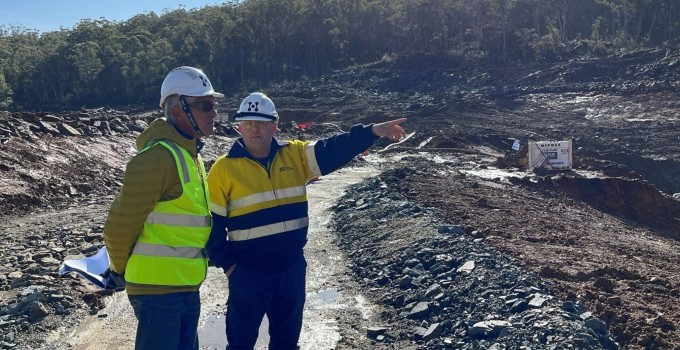
When I immigrated from Brazil to Canada in 2012, it was no accident that I settled in Ontario, near Niagara Falls. I had taken a job with a consulting firm that had a hydropower hub strategically located in the Niagara region due to its long history of hydropower.
The Niagara region is the home of the Adams Power Plant, completed in 1886 – the first alternating current (AC) power plant built at scale, delivering an installed capacity of 37 MW at 2,200 V. The voltage is stepped up by a transformer to 11,000 V, allowing for an economic transmission line reaching to the city of Buffalo, NY, 32 km away. The concept was launched by engineer Nikola Tesla in collaboration with George Westinghouse, beating Thomas Edison’s bid, which was based on a direct current (DC) system. Tesla’s dream of harnessing the awesome power of Niagara Falls was realised by the end of the 19th century, when hundreds of small hydropower plants emerged and multiple forms of electricity utilisation spread across the world.
The hydropower boom, led by Brazil and China
When I started my career in the hydropower industry in 1995, I could feel the ongoing impact of the great hydropower boom that was led by Brazil and China through the 1970s and 1980s. In 1999, I was construction manager for Tucurui Dam, one of the biggest hydropower plants in Brazil and the world at that time (now ranked 8th in the world), delivering a total installed capacity of 8,240 MW. As part of my role, in order to raise production to the expected rates, I was able to visit China’s Three Gorges Dam during construction and learn about their techniques and massive concrete operations.
In the 1990s, Brazil’s hydropower industry had plenty of experienced professionals, from construction trading foremen and general superintendents to highly educated engineering professionals from whom I had the privilege to learn.
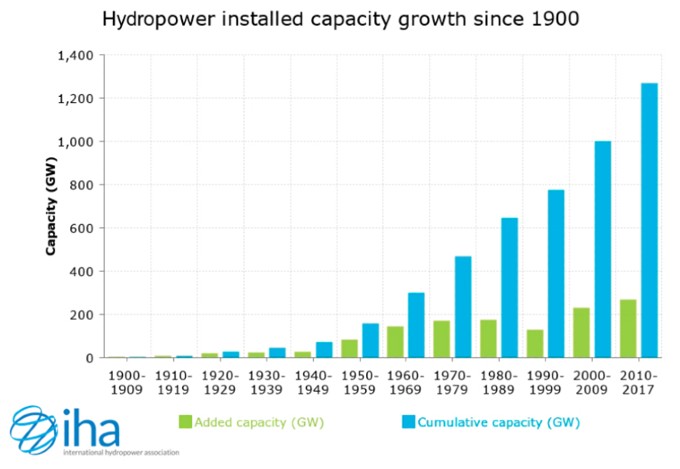
Since those glorious decades, global hydropower capacity has increased significantly. The strongest period was 2007 to 2016, when more than 30 GW was added per year on average. Since 2017, the industry has slumped to only 22 GW per year on average, with only 13.7 GW installed in 2023. However, it is interesting that of the new 13.7 GW, 6.5 GW was delivered as pumped hydro energy storage.
A new wave of pumped hydro
At a HydroVision International conference in Portland, Oregon, in 2019, I noticed that pumped hydro was a significant topic of discussion. The conference highlighted several factors making pumped hydro projects attractive for the clean energy transition: the ‘battery’ feature itself which helps to balance supply and demand, its contributions to grid stability, its lower environmental impact compared to conventional hydropower, the availability and efficiency of variable-speed units, and the cost comparison against other types of batteries.
Projections of a new wave of pumped storage soon evolved from conference coffee-break chatter to reality: in 2022, more than 10 GW of pumped hydro was delivered, the most ever achieved by the industry. Most of this has been delivered in China, where top-down policies imposed by government can deliver rapid results. Other countries operating on a more open-market basis need to improve the mechanisms to foster pumped hydro so that it can support the grid effectively as other variable renewable energy (VRE) sources, such as wind and solar, proliferate.
There is now consensus that pumped hydro is a necessity for grids to cope with increasing amounts of VRE– and the need is urgent. Pumped hydro, however, requires significant upfront investment in civil works and time to implement. Studies by the IHA indicate that besides the inherent need for additional pumped storage in the grid, the world’s conventional (non-pumped) hydropower installed capacity must double by 2050 in order to achieve net-zero transition targets. This will be challenging, given such a low level of new hydropower worldwide in recent years, and the fact that the most attractive sites have been already developed.
There is also opportunity to re-imagine existing conventional hydropower plants to make the most of their natural battery and firming potential – by operating flexibly to support firming VRE rather than generating for maximum volume. Even where there is no market mechanism to specifically monetise this value, it could be rewarded for national or regional outcomes.
How can we achieve the much-needed growth in conventional hydro and pumped hydro?
Conventional (non-pumped) hydropower has long been recognised for clean energy and the long life of the infrastructure. The challenge now is to identify, gain approvals and sustainably deliver new projects in a world where human occupation is growing fast and reaching into the most remote corners of watersheds. Governments and regulators must assess cost benefits against the social and environmental impacts before giving the green light to new hydropower projects.
Developing pumped hydro can be more flexible, especially when it is a closed-loop system that doesn’t depend on water flows, except for first-time filling and for topping up the losses caused by evaporation. Pumped hydro is not new – in fact, it has existed for more than a century. What is new, however, is the challenge of fostering pumped hydro development at the rate needed.
The IHA has helped clarify what is needed for the industry to develop pumped hydro faster. The IHA’s Guidance Note delivers recommendations to reduce risks and enhance certainty, supporting market players to better understand the issues.
Another interesting initiative in the hydropower journey is XFLEX Hydro, a European initiative which brought together 19 entities such as IHA, EDP, EDF, Alpiq, Bechtel and others, with the objective of increasing hydropower capabilities and flexibility to cope with changing grid profiles. X-Flex has launched 7 pilot projects already – and 4 of these are pumped hydro. This combined initiative has illustrated two important areas of focus that can benefit market players and accelerate uptake:
- The need for a supportive regulatory regime: Policy-makers and other stakeholders need to facilitate the development of regulations or market mechanisms that fairly compensate pumped hydro, as well as conventional hydropower, such as ‘price cap and floor’ mechanisms, compensation for stability features provided by hydropower, and expediting the approval process while ensuring that social and environmental impacts are minimised and mitigated.
- The advantages of evolving technologies, including:
- variable-speed units, increasing flexibility
- hydraulic short-circuit operation, in which the plant can pump and generate simultaneously
- hydro/battery hybrid system, in which the battery works along with hydropower and enhances plant flexibility
- digital/AI control platforms, which can improve the overall grid efficiency and reduce downtime.
Hydropower for a better future
The challenges of rapidly building out new conventional hydropower and pumped hydro are huge. Yet, where there is a will, there is a way. Those of us who understand and believe in the benefits of conventional hydropower and pumped hydro have a duty to bring communities along on the journey and to help build a better future for the next generations.
We look forward to bringing you more of Flavio’s insights into conventional hydropower and pumped hydro in future articles. Flavio is currently contributing to a number of Entura’s assignments including supervising construction on the Genex Kidston PHES project in Queensland, for which Entura is the Owner’s Engineer, and being a key adviser on the Tarraleah upgrade as part of Hydro Tasmania’s Battery of the Nation program.
Dams are crucial to climate change response and the energy transition
At the recent ICOLD meeting in Gothenburg, Sweden, dam engineering experts from across the globe came together to share knowledge, discuss trends and issues, and engage with each other. One important topic of discussion was the role of dams in the international response to climate change and what that will mean for the dams industry. Richard Herweynen, Entura’s Technical Director, Water, shares his thoughts on this topic here …
Why will dams play a critical role?
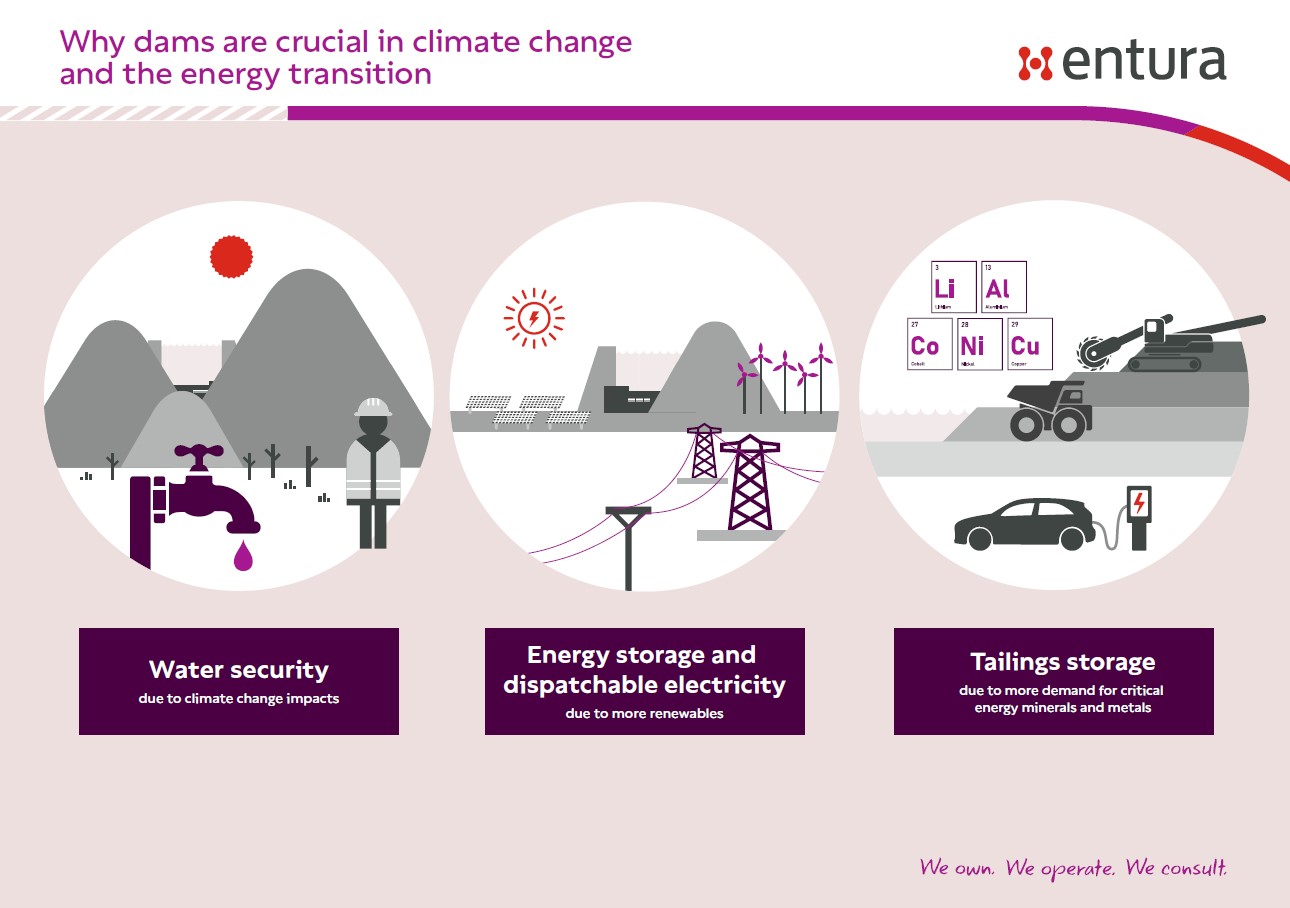
Three major reasons why dams will be crucial in the climate change response and energy transition are water security, dispatchability of electricity, and tailings storage.
- Water storages will be vital to provide the same level of water security
Water security is essential for humanity. With greater hydrological variability due to climate change, more storage will be needed to provide the same level of security of water, food and energy. Water storage is a fundamental protection from the impacts of a changing climate, safeguarding the supply of water, and the water–food–energy nexus, even during extended drought.
The effects of climate change are predicted to increase and to result in greater magnitude and frequency of hydrological extremes, such as prolonged droughts and significant floods. With prolonged drought, inflows to storages will reduce. If demand remains the same, stress on existing water storages will increase.
Water storages are used to regulate flows and manage this variability: storing water when there are high inflows (or floods) and then using this stored water during low inflows (or droughts). Dams are used to create these vital water storages.
- Hydropower and pumped hydro energy storage (PHES) are critical for the energy transition
A key response to climate change is the decarbonisation of the electricity sector through renewable energy. Wind and solar power now offer the lowest cost of energy, have low ongoing operational costs, and emit the least greenhouse gases across their lifecycle – and therefore hold the greatest potential for rapid decarbonisation of the energy sector. Of course, wind and solar PV output vary according to the weather and the time of day – but the electricity market needs the supply of electricity to match demand, or for these renewables to be dispatchable.
Energy storage is the key to smoothing out the variability of renewable energy generated by solar and wind. The power and duration of the storage are the two key variables in determining the most suitable solution. Low-power, short-term storage is currently more cost-effective using batteries, but longer periods and larger power requirements are likely to rely on bigger storage options, such as pumped hydro energy storage (PHES) and traditional hydropower. Smoothing out the daily variability in renewables can be achieved effectively through pumped hydro. Dams are used to create the water storages used in both traditional hydropower and PHES.
- The transition to renewables will demand more minerals and metals
The global energy transition will demand a major increase in renewable energy technologies – which in turn will require more of the ‘critical energy minerals’ and metals. The rising need for minerals such as copper, aluminium, graphite, lithium and cobalt will not be able to be met by recycling and reuse alone. Therefore, extraction and storage of minerals from mining operations will be essential to sustain the renewable energy transition.
According to a report by the World Bank Group, the production of minerals such as graphite, lithium, and cobalt could increase by nearly 500% by 2050 to meet the escalating demand for clean energy technologies. It is estimated that over 3 billion tonnes of minerals and metals will be necessary for the deployment of wind, solar, geothermal power and energy storage, all of which are vital for achieving a sustainable future with temperatures below 2°C.
However, this need for mining activity comes with a special responsibility for sustainable practices, including the proper management and storage of mining waste. Rock, soil and other by-products are left behind after the desired minerals have been extracted from the ore. Tailings facilities store this waste, playing a crucial role in mitigating the environmental impact of mining operations. Dams, in particular, are commonly used to create these facilities, as they provide an effective means of containing the waste.
Dams used in tailings facilities are designed to withstand the weight and pressure of the waste materials, prevent seepage of contaminants into the surrounding environment, and take into account factors such as stability, erosion control and water management. Dams that are well designed, constructed and monitored, adhering to stringent environmental and safety regulations, can help prevent the spread of mining waste into nearby water bodies, reducing the risk of water contamination and protecting aquatic ecosystems.
Working towards ‘good dams’
While there have certainly been some examples around the world of dams that have had adverse impacts, it is clear that dams will play a critical role in the international response to climate change and the decarbonisation of the energy sector. It’s therefore vital that dams are planned, constructed and managed appropriately and safely. With increasing understanding of impacts and far greater sophistication of internationally accepted sustainability protocols, it is now up to developers and planners to heed the lessons of the past and find the right dam sites for nature and communities.
It is important that we ensure the safety of existing dams as well as the safety of any new dams. Examples from around the world demonstrate the devastating consequences of dam failures. Safety must be every dam owner’s key concern, and should be managed through an active dam safety program.
Of course, the larger the portfolio of dams an owner is managing, the greater the demand on their resources; however, it is critical that dam safety risks for water storages and tailings facilities are managed appropriately across dam portfolios to protect downstream communities. The Portfolio Risk Assessment process increases the focus on potential failure modes and risk as drivers of the dam safety program and as the basis for deciding priorities for allocating operational and capital resources.
It will also be vital that dams engineers, owners and operators keep up to date with the latest developments in the dams industry worldwide through continuous learning and important global forums such as ICOLD.
If you’d like to talk with Entura about your water or dam project, contact Richard Herweynen.
About the author
Richard Herweynen is Entura’s Technical Director, Water. Richard has three decades of experience in dam and hydropower engineering, and has worked throughout the Indo-Pacific region on both dam and hydropower projects, covering all aspects including investigations, feasibility studies, detailed design, construction liaison, operation and maintenance and risk assessment for both new and existing projects. Richard has been part of a number of recent expert review panels for major water projects. He participated in the ANCOLD working group for concrete gravity dams and is the Chairman of the ICOLD technical committee on engineering activities in the planning process for water resources projects. Richard has won many engineering excellence and innovation awards (including Engineers Australia’s Professional Engineer of the Year 2012 – Tasmanian Division), and has published more than 30 technical papers on dam engineering.
MORE THOUGHT LEADERSHIP ARTICLES
Planning sustainable water infrastructure in a changing world
In an already water-stressed world and a rapidly changing climate, water is increasingly precious. To manage and control this vital resource, we must create and maintain safe, reliable and sustainable water infrastructure – and such a challenge calls for good planning.
The International Commission on Large Dams is working towards releasing new guidance for water infrastructure planning – and Entura’s Richard Herweynen is a member of the Technical Committee looking to develop a new ICOLD Bulletin on planning. In this article, Richard explains the importance and evolution of planning approaches.
Water infrastructure projects deliver the dams, treatment plants, irrigation systems and distribution networks that provide water for homes, food production, industries and emergencies. They also create the structures integral for mitigating the effects of floods and droughts. But to maximise the benefits of this infrastructure, projects must be planned, engineered and managed for effectiveness, safety and sustainability.
These projects are far too important to approach in a haphazard way. Planning offers a structured, rational approach to solving problems – and it is the start of the ‘pipeline’ for addressing water resource needs and competing demands. In fact, for civil works programs, everything begins with planning.
Without a good plan, where are we?
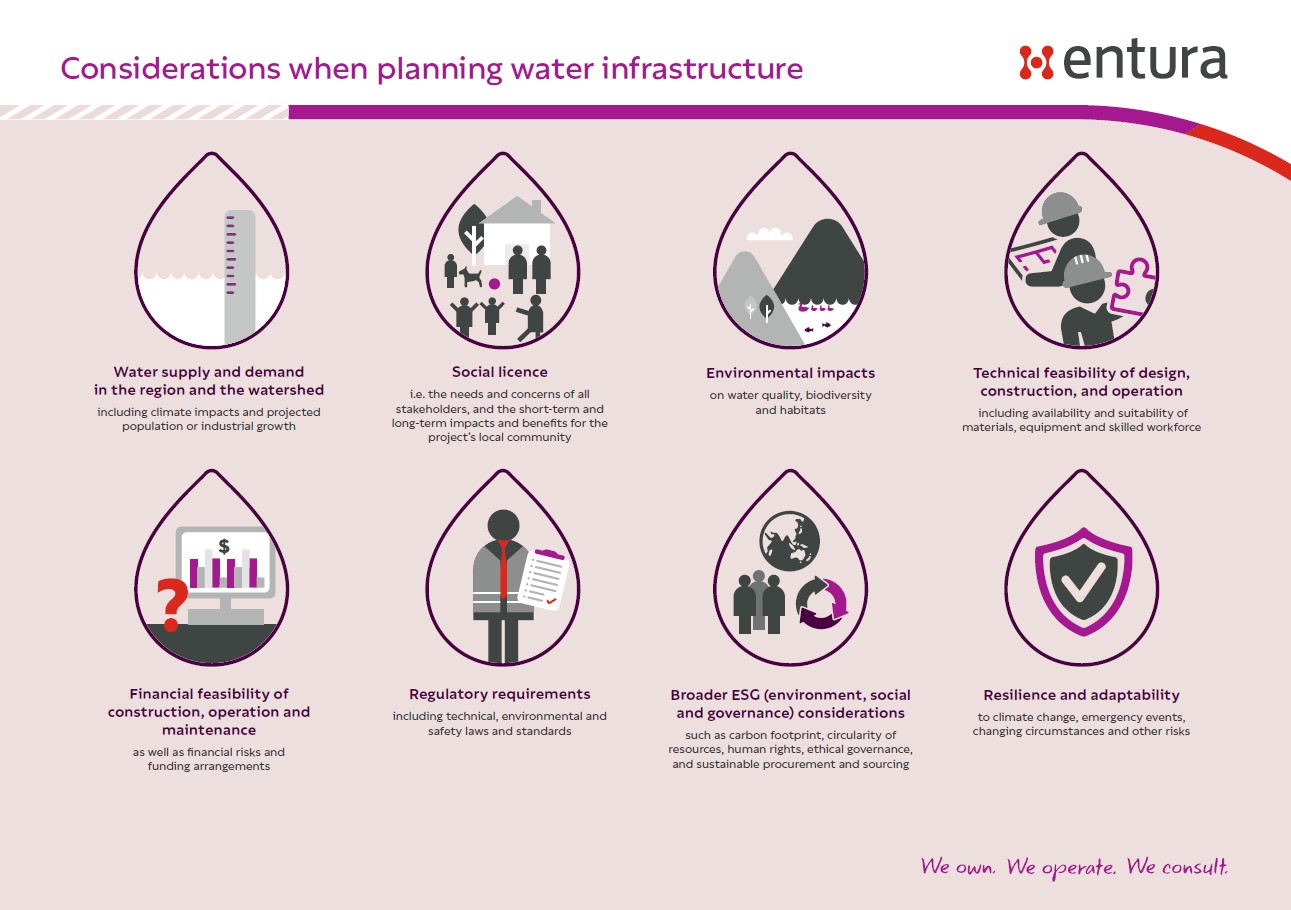
Without careful planning, it can be difficult to achieve creative, cost-effective solutions to water needs. The planning stage helps decision-makers identify water resource problems, conceive solutions and evaluate the inevitably conflicting values inherent in any solution. Planning is best done by a team that brings together specialists in many of the natural, social and engineering sciences.
At the planning stage, all of the following points should be thought through:
Guidance for better planning
In 2007, I became the ANCOLD-nominated member on a new Technical Committee for the International Commission of Large Dams (ICOLD) entitled ‘Engineering Activities in the Planning Process for Water Resource Projects’. In 2009 we put forward a position paper setting out an ‘Improved Planning Process for Water Resource Infrastructure’ based on ‘comprehensive vision based planning (CVBP)’.
At the next ICOLD Annual Meeting in Sweden in June 2023, our committee will be meeting to work on an updated framework that takes into account the rapid change we’ve witnessed over the last decade and the many cross-cutting issues that are impacting the planning process, such as risk-informed decision-making, climate change, sustainable development, environmental concerns, and river basins/systems.
What is ‘comprehensive vision-based planning’ (CVBP)?
Before we talk about updates, let’s take a quick look at our existing approach to CVBP, as articulated in 2009.
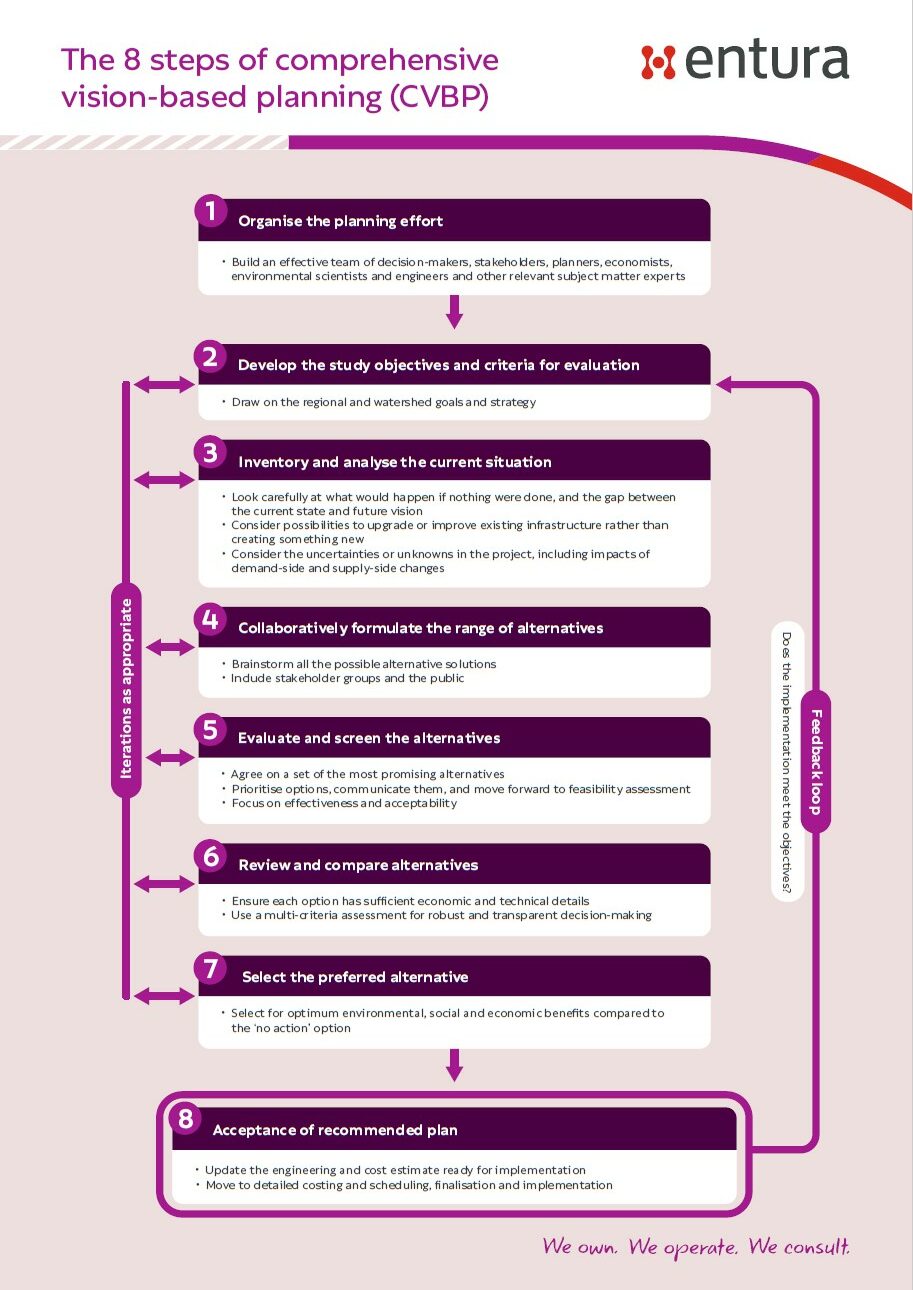
CVPB is a comprehensive, transparent planning process based on a shared vision for sustainable water resource development. It aims to achieve a better ‘triple bottom line’ outcome, with optimum economic, social and environmental outcomes.
Whereas many past projects were planned on a case-by-case basis, CVBP looks beyond the immediate project to the broader regional vision and watershed goals (which may also cross national borders), taking projected changes in water supply and demand into account. It draws on integrated water resources management (IWRM) to consider multiple points of view about how to manage water and to view each water infrastructure project in relationship to the other existing infrastructure in the region.
CVPB also incorporates much greater attention to the realistic options and cost-benefits of mitigation of environmental impacts – and it draws in more interdisciplinary engineering, cost estimating, and stakeholder/community engagement.
CVBP is, therefore, a holistic, integrated and collaborative approach to planning and a much-improved pathway towards successful outcomes.
The 8 steps of CVBP
As currently articulated, CVBP has 8 defined steps – but it’s an iterative process in which steps 2 to 7 are repeated multiple times, as necessary. The 2009 ICOLD bulletin goes into much greater detail than we can in this article, but this will give you an overview:
Changes moving forward
It is time to update the planning process and guidance in the light of the rapid changes we are experiencing in our environment, innovations in technologies, and an increasing awareness of sustainability and ethics.
In the past, much water infrastructure has been planned within a reasonably near-term political and social lens and timeframe, and from a perspective of relative stability. But we know that change is constant and rapid, so our planning approaches need to shift to an even greater appreciation of uncertainty, risk and the intensifying potential for extreme events. There is also an urgent need to apply a deeper and broader awareness of the many considerations that make for greater environmental, social and economic sustainability.
Important factors here will be an uplift in stakeholder involvement and governance, a very clear focus on the costs and benefits that can’t easily be quantified or monetised, and reinforcement of the fundamental principle of ‘do no harm’.
It will also be important to take an adaptive approach to regional planning objectives, with a strong awareness of different regional and cultural values, goals, expectations, methodologies, financing arrangements and roles of government.
We should expand the planning scenarios to also explore non-structural options, dam removal plans, and scenarios based on failure modes. We also need to improve early data collection by finding and filling data gaps, improving the ways in which we preserve historical information, and improving data portrayal.
It is very important to involve the right people. Ideally, the planning team should be more than ‘multi-disciplinary’ or ‘interdisciplinary’. It should aspire to be ‘transdisciplinary’, in which all disciplines work seamlessly and collectively and achieve a level of insight that is ‘greater than the sum of its parts’.
This year, our Technical Committee will continue to build on some of these elements as we review and rearticulate CVBP, working towards a new ICOLD Bulletin to guide water infrastructure planning.
In a changing world, our approaches to infrastructure cannot stagnate. Designing, articulating and applying new planning frameworks is an important step towards creating and maintaining the sustainable, reliable water infrastructure our planet so urgently needs.
If you’d like to talk with Entura about your water or dam project, contact Richard Herweynen.
About the author
Richard Herweynen is Entura’s Technical Director, Water. Richard has three decades of experience in dam and hydropower engineering, and has worked throughout the Indo-Pacific region on both dam and hydropower projects, covering all aspects including investigations, feasibility studies, detailed design, construction liaison, operation and maintenance and risk assessment for both new and existing projects. Richard has been part of a number of recent expert review panels for major water projects. He participated in the ANCOLD working group for concrete gravity dams and is the Chairman of the ICOLD technical committee on engineering activities in the planning process for water resources projects. Richard has won many engineering excellence and innovation awards (including Engineers Australia’s Professional Engineer of the Year 2012 – Tasmanian Division), and has published more than 30 technical papers on dam engineering.
MORE THOUGHT LEADERSHIP ARTICLES
Field investigations in remote locations – factors for success
Conducting field investigations in remote areas is no ‘walk in the park’. On top of the investigation activities themselves, there are the complex logistics of getting personnel and equipment into hard-to-reach places, the imperatives of maintaining safety and managing community expectations, and the significant challenge of conducting works but leaving minimal impact on the landscape.
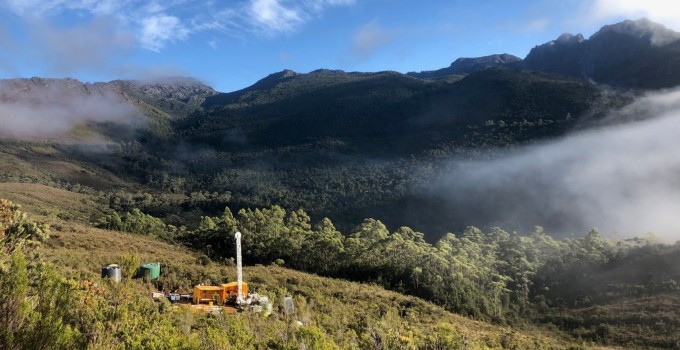
‘Leave no trace’ may not be too hard a goal when you’re heading off on a simple bushwalk. However, when it comes to conducting field investigations in remote areas with heavy specialist equipment, ‘treading lightly’ can be extremely challenging – but it is something Entura is committed to.
Entura has recently delivered geotechnical investigations for Hydro Tasmania’s feasibility study into the potential for pumped hydro development in some very rugged, remote country in western Tasmania. This is how we did it, and some success factors we can share for field work in these conditions.
Planning
Planning and contract expertise is paramount for successful execution of any project, but particularly so in remote locations. It’s important to take the time at the very beginning of a project to really understand the entirety of the scope and the project objectives. To reduce the risk of unwelcome surprises and unwanted variances, spend enough time on the ground before the works commence so that you can be sure that all the elements have been considered.
This is also the time to gain a full understanding of all the permits and approvals that will be required, the lead time to achieve them, and the range of agencies and key stakeholders who need to be engaged right from the earliest stages.
It will take time and consideration to engage carefully with all contractors to understand their expertise, capability and willingness to undertake the works; but the effort to find the right contractors will be more than repaid by the improved outcomes.
Our project involved multiple drilling investigations to 600 m in 3 separate and remote locations, including a deep ravine located between Lake Plimsoll and Lake Murchison in the heart of Tasmania’s West Coast. The goal was to achieve a clear understanding of geological conditions within the region, which had previously been identified as a fault zone. Our planning needed to encompass all the necessary desktop studies to understand as much as possible about the environment, the stakeholders, the regulations and requirements, and the conditions our contractors could expect, all in advance of sending personnel and equipment into the remote site.
The key to our success in the project was leaving no stone unturned in the planning phase, and using these preliminary insights to choose the right contractors for the job, with the right equipment and skills to achieve our objectives. When things go smoothly and look seamless or simple from the outside, it is usually because of the significant investment of effort in detailed, logical planning right at the start.
Site access
Remote access can be extremely difficult, so the success of a project will depend on establishing practical, efficient and low-impact routes at the earliest stages of planning. Time is money, so contractors will need the easiest and quickest access to the site that you can achieve without compromising on safety or the environment. This will need early and thorough engagement with land-owners to identify constraints, requirements and options. Selecting the best access options will rely on a deep understanding of the biodiversity and heritage values of the site through desktop analysis combined with intensive field observations and data collection.
We selected access routes using a variety of considerations, including what equipment would be required on site, the duration of investigations, the significance of data we gained in the planning stage, analysis of the costs and benefits of options, consideration of the longer term benefits to the land-owners, and consideration of future works.
Ultimately we used a combination of access methods including foot tracks, temporary and permanent roads, and helicopter access. Again, it was crucial that we chose the right contractors who could cope with the conditions and understand the constraints. Our excellent local contractors were integral to our success.
Environment
Conducting works in a region of high natural values demands deep consideration of strategies to avoid or reduce long-term impacts and of what remediation efforts will be necessary and effective.
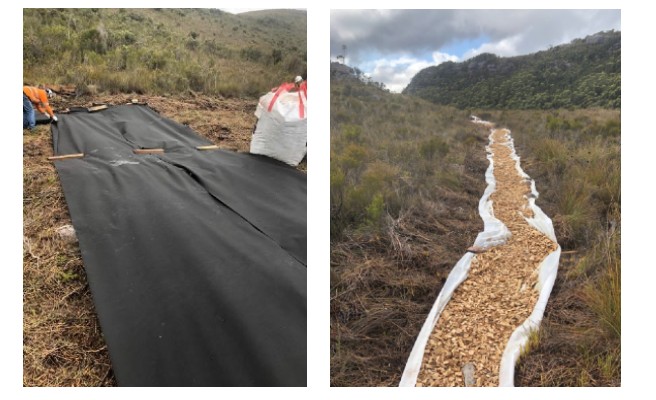
In one particular instance, we identified and implemented a range of strategies to create a 1.2 km foot-access track in a very sensitive and damp area that was likely to become muddy and highly degraded under the pressure of constant foot traffic during the duration of the works. To protect against this, we hand-cleared the site, developed suitable drainage channels, stabilised the banks, then deployed geo-fabric matting onto which we laid a top coat of clean and approved local woodchips. This innovative solution proved highly successful: it provided solid, safe and reliable footing, excellent drainage and made clearing up the site relatively easy and efficient as the woodchips could be wrapped in the geo-fabric matting, bagged and removed from the site. Once the works were completed, the cut-back vegetation was relatively unscathed, and was able to re-shoot and re-establish rapidly.
Stakeholder and community engagement
Continuous and inclusive community and stakeholder engagement, tailored to the particular community or stakeholder segment, is critical for the success of any project – and the earlier it begins, the better. In our project, we went out on the front foot, building a shared understanding of our objectives, making detailed information available and inviting stakeholders to raise any concerns with our team. We even facilitated site visits for key stakeholders to gain a fuller understanding of the works and build trust.
Many project proponents will tell stakeholders and communities that they want them ‘to come on the journey’ – but we walked the talk, inviting stakeholders to check our milestones, come along to inspect aspects of the work, and to share their feedback.
Cultural heritage
Over a sustained period, Hydro Tasmania has undertaken intensive desktop and field analysis of particular regions and their history. In addition to this rich database of information, Entura has access to specialist cultural heritage consultants who document heritage sites and support us to manage these sites in accordance within the appropriate legislation requirements. Early notification and thorough assessment early in the planning phase indicates whether a heritage site or specific location is likely to be encountered, which enables processes to be established to mitigate heritage risk, minimise site damage and, in some instances, plan for total avoidance and re-siting of works.
In our project, the early engagement of reputable consultants gave us confidence that any areas of significance had been identified. We clearly defined these areas of significance and protected them from any impacts from the works.
Water supply
Drilling investigations require a significant volume of water every day. But not all, if any, remote locations have a ready supply, and if so it’s usually some distance away. Geotech drilling investigations require up to 30,000L/day depending on ground conditions, so the ability to capture and re-circulate water and reduce sediment discharge to the natural environment is crucial in remote locations. Sometimes this needs a bit of innovative thinking to achieve.
Working in a naturally wet environment and on a hillside enabled us to trap natural run-off and control flow to a small header tank (44 gallon drum), then pipe the water to 3 x 10,000L tanks at a flow rate over 24hr period. Three sandbags, float switches and low-impact plastic irrigation pipe allowed us to supply the drill rig with water for 90% of its operation, only having to stop temporarily while drilling during a 5-day period without rainfall.
The creation of a small pond on a steep downhill slope minimised environmental impact downstream and allowed a steady flow of water to continue over the micro dam. The header tank minimised air locks, while tank float switches prevented overflow on the drill site.
By capturing water above the work site, we eliminated the need for extra foot tracks to the creek down in the valley or the need to pump and re-fuel a diesel water pump or to truck water in over 2 km.
Climate conditions
Projects sometimes can’t wait for the perfect time of year to commence. In Tasmania, this brings the challenges of adverse weather conditions and extreme events such as snow and bushfire – even within the same month!
Our remote projects faced these challenges, including frozen water pipes, snowed-in access routes and the risk of bushfire. Planning, watching the weather, and evacuation plans became a daily function.
At one particular location we soon learned that water freezing overnight in pipes could cause significant delays in the morning. Our quick solution was to drain the pipes at night to avoid the problem reoccurring.
To mitigate risks in hot conditions, we had safety processes and equipment in place, such as no-work orders in extreme hot and windy conditions, evacuation plans, safe areas, designated exits, fire pumps and satellite communications.
Safety
Safety should be a top priority on all worksites, and working in very remote areas involves an extensive range of safety considerations. Our workplace health and safety plan provided an overarching document to support the program of work, providing a framework of safety planning, processes and equipment, and careful consideration of the range of potential controls. Each of our contractors developed their own safe work method statement for their own tasks.
In our project, the key identified risks were driving long distances in remote areas and working in areas at risk of bushfire. However, adding to the complexities of safety considerations was that our project was conducted in the time of COVID-19, which necessitated extra hygiene requirements, COVID testing, travel restrictions and the need to immediately stop work when any symptomatic individuals were identified. Ultimately, by implementing our safety plans and processes, we completed the project with no significant safety incidents.
Team work and problem solving
In such complex conditions, the ‘glue’ is good relationships built on trust, shared expectations and objectives, accountability and confidence in each other. This enables collaborative problem solving to overcome challenges or changes in the project. However, contractors often don’t know each other and may be meeting for the first time onsite, so these trusting relationships need to be built quickly.
This requires a level of frankness and transparency among all parties, with honest and open analysis of where things are working well, where there’s room for improvement or where more support is needed.
Particularly in remote areas, it is essential that people don’t feel isolated or alone. Regular drop-ins can help, providing continuity and fresh eyes on site.
Some of the success of a remote project will come down to experience, but just as much depends on good teamwork, regular and open communication, choosing great contractors, and meticulous planning. Not every on-site circumstance can be foreseen, but with these success factors in place, you’ll have a solid foundation and the flexibility to solve challenges on the ground as they arise.
Written by James Butler.
MORE THOUGHT LEADERSHIP ARTICLES
Multipurpose dams: maximum value for money?
When a dam is being considered, there’s usually a primary purpose. But are there also secondary purposes that can benefit the local and wider community? Have you thought about the potential additional economic development that can stem from a multipurpose dam?
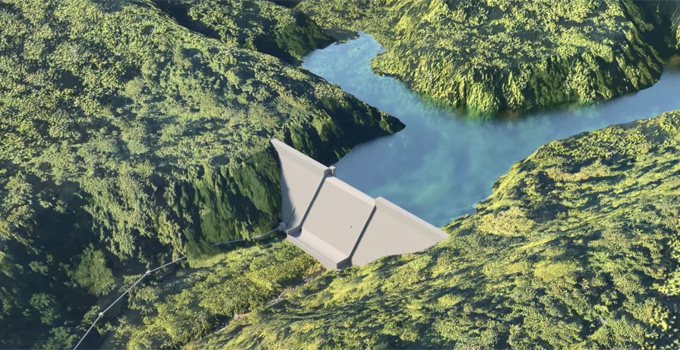
A simulation of Alaoa Dam in Samoa
Multipurpose dams combine two or more functions of traditional single-purpose dams into one dam infrastructure project. A multipurpose dam may combine storing and supplying water for irrigation, industry or human consumption; flood control; power generation and power storage; navigation; water regulation; environmental releases; climate change resilience; and recreational purposes.
The dam structure will be similar to a single-purpose dam, but the design will incorporate features into the dam and water infrastructure facility to accommodate different purposes. These may take the form of irrigation channels, power generation facilities or navigation facilities. Including various gates or valves can provide greater operational flexibility for floods or environmental releases for downstream community and environmental needs. A single-purpose project can become multipurpose during its planning stage, during operation, or in the long term when re-engineering becomes necessary.
Why consider multiple purposes?
Multipurpose dams are not a new concept; in fact, almost half of all dams are used for more than one purpose. There is a growing trend to consider multiple purposes when developing a dam, for several reasons:
- Dam sites, particularly storage sites, are scarce national resources (i.e. they are not unlimited), so it makes sense to consider how to extract maximum benefit from them when constructed.
- Dam infrastructure may commonly last for up to 100 years or more (i.e. they are considered a long-term asset). A dam represents a genuine long-term investment for the future, and so ideally should be viewed as such and incorporate the potential for flexible use over time.
- Multipurpose dams are very beneficial in developing countries, as the multi-functionality of the dam operations can contribute to a number of development goals simultaneously, such as energy, water and food security, economic development, and climate resilience. In 2016, the International Commission of Large Dams (ICOLD) recognised the importance of multipurpose dams in the release of the ICOLD Bulletin ‘Multipurpose Water Storage – Essential Elements and Emerging Trends’, which rightly links the common global needs of water, food and energy. The sporadic, spatial and temporal distribution of precipitation rarely coincides with demand, making storage essential for food supply, energy production, potable water supply and other water delivery services that depend on sizable, reliable, continuous and efficient supply of water.
- Climate change scenarios predict increasing variability in rainfall, impacting both yields and flood peaks. Droughts will affect agricultural production, and flooding is expected to increase due to more extreme weather events. With many regions of the world experiencing significant water stress, which is expected to be exacerbated by global warming, storage will play an increasingly critical role in bolstering a water system’s hydrological resilience. Dam projects should be designed with this necessity and value of storage in mind. Even in developed countries, we need our dam infrastructure to be ready to adapt to future changes as required. Taking change into account and considering multipurpose approaches will benefit new dam projects as well as projects that modify existing reservoirs.
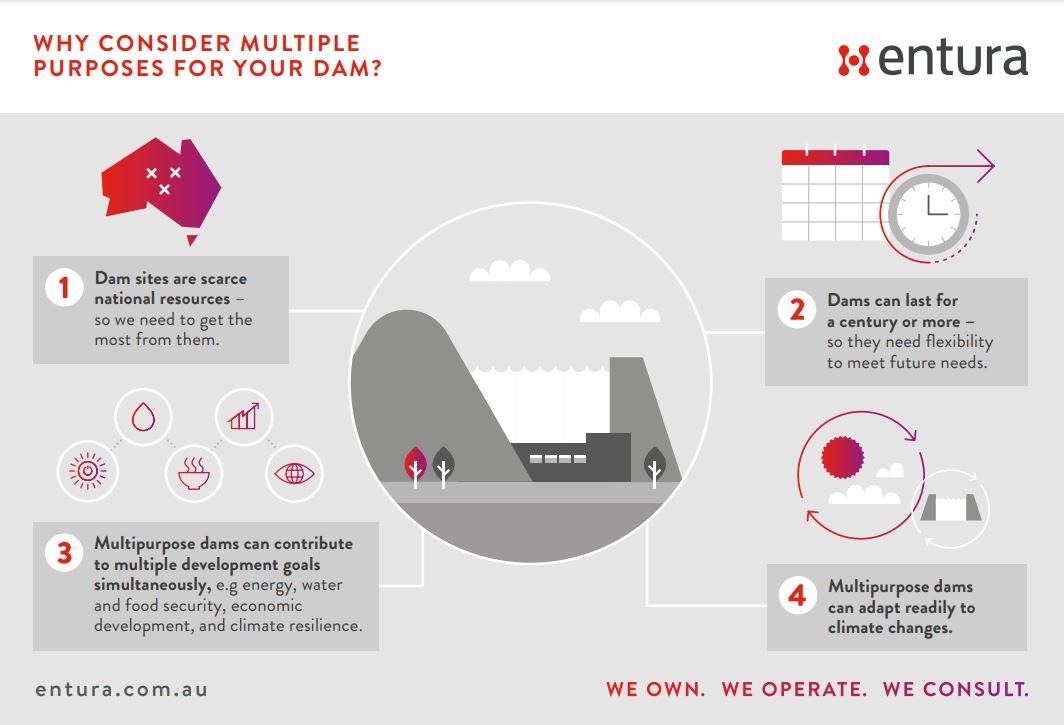
Looking into the future
Multipurpose water storage projects pose additional engineering challenges when compared to single-purpose projects. Given the longevity of the infrastructure of large storage projects, planning professionals need to develop and implement solutions that will provide adequate flexibility to adapt to changes or to the diverse needs of multipurpose schemes. Scale, site selection and operational characteristics should be assessed through a long-term perspective, incorporating anticipated trends and emphasising adaptability so that future generations will inherit infrastructure that can evolve as the world continues to change.
There is no doubt that this sustainability principle is valid; however, determining how best to implement it in practice is not always easy. It is hard to anticipate and predict what will happen in a century (which is the expected life of many dams), yet this should not stop us during the early stages of the project from trying to assess long-term performance based on potential long-term scenarios (i.e. scenario testing).
Multiple perspectives for multiple purposes
Achieving the best outcome for a multipurpose dam is more likely when planners and engineers work together and closely consider the local community’s needs and the potential benefits to be gained. Both social and environmental needs should be considered, with detailed social and environmental impact assessments conducted.
Applying the principles of Integrated Water Resource Management (IWRM) in the planning process will help promote coordinated development and optimal management of water resources – furthering progress towards goals of social equity, economic efficiency and environmental sustainability. It is important to establish criteria by which to monitor the achievement of the multipurpose objectives and the post-construction impacts on the community and environment. Another important consideration is the manner of operation of the multipurpose reservoir, which will also be critical to achieving the range of its objectives.
What is a multipurpose dam worth?
A key planning challenge in multipurpose dam infrastructure is fully appraising the economic costs and benefits of the project. In many projects there’s a tendency to focus the analysis on the components that provide revenue streams (such as energy and water supply and irrigation tariffs) as these are most easily valued. However, this can underrepresent the project’s value across all of its multipurpose objectives, potentially resulting in suboptimal decision making or difficulty justifying the long-term investment. For example, a fundamental purpose of storage projects is flood mitigation – but flood mitigation does not generate a revenue stream. However, the economic value of flood control to a country (through avoidance of direct and indirect flood damages) often justifies the allocation of funds from the public sector.
Putting this into practice in Samoa
The Alaoa Multi-Purpose Dam in Samoa is a fitting example of the considerations presented above.
Samoa is a small tropical island country in the Pacific, and has been heavily affected by severe tropical storms. In 2012, Cyclone Evan caused extensive flooding and damage to the Apia region, the capital, where most of the population and economic activity is located. With such storms predicted to increase in frequency and severity as the climate changes, the Government of Samoa has adopted a programmatic approach to address climate-change-induced flooding. This includes the new Alaoa Multi-Purpose Dam, sized and designed with long-term climate scenarios in mind and to provide multiple functions. It aims to increase flood protection, improve the current water supply system’s seasonal reliability, and provide additional hydropower via installation of a small hydro facility.
The dam’s design considered multipurpose functions and climate change risks, and included small modifications to provide better outcomes. Climate resilience was ‘designed in’ by incorporating ‘dead storage’, providing sediment flushing capability, increasing the flood capacity, and including a number of gates and valves – all contributing to future flexibility of operation.
The intake to the small hydro station incorporated a station bypass valve for water supply. As well, a low-level outlet and a mid-level outlet were added to increase the operational flexibility of the dam to meet its three purposes. This also enabled both low-flow and high-flow environmental releases, and improved dam safety management. How the reservoir is operated will be significant in achieving the multipurpose functions. The dam’s flexibility will allow future adaptive modification of the operation to align with the changing demands of the reservoir.
The main purpose of the Alaoa Multi-Purpose Dam was flood retention and mitigation. Consequently, as we discussed above, a limited financial analysis could not justify the multipurpose project, yet the broader economic analysis could. However, the financial analysis indicated that the regular revenue stream from the small hydro’s energy production could increase the project’s sustainability once constructed. This revenue stream would contribute to the ongoing operation, maintenance and dam safety activities associated with the multipurpose project’s long-term operation.
Could multiple purposes be incorporated into your dam project?
Whether you are in the planning process or the early design phase for a new dam, consider whether your project could be modified to:
- achieve multiple purposes and increase the benefits of your dam project
- increase operational flexibility to allow your dam to adapt to future changes and demands
- improve the use of water resources for all needs, including the environment
- increase the climate resilience of your dam and the impact of climate change on its multiple objectives.
If you would like to discuss how we can assist you with planning and designing a multipurpose dam, please contact Richard Herweynen, Paul Southcott or Phillip Ellerton.
About the author
Richard Herweynen is Entura’s Technical Director, Water. Richard has three decades of experience in dam and hydropower engineering, and has worked throughout the Indo-Pacific region on both dam and hydropower projects, covering all aspects including investigations, feasibility studies, detailed design, construction liaison, operation and maintenance and risk assessment for both new and existing projects. Richard has been part of a number of recent expert review panels for major water projects. He participated in the ANCOLD working group for concrete gravity dams and is the Chairman of the ICOLD technical committee on engineering activities in the planning process for water resources projects. Richard has won many engineering excellence and innovation awards (including Engineers Australia’s Professional Engineer of the Year 2012 – Tasmanian Division), and has published more than 30 technical papers on dam engineering.
MORE THOUGHT LEADERSHIP ARTICLES
Keeping international projects moving, even when we’re grounded
With no set date for when life will return to usual after COVID-19, nor any guarantee of whether life will ever return to what we previously knew as ‘usual’ at all, there are very few areas in the consulting life in which we can simply say ‘we’ll wait until this is all over’. Life, and projects, must go on.
Although we can’t avoid the disruption and uncertainty that the coronavirus has unleashed, we can increase our resilience and agility. We can also embrace opportunities to innovate and to create new ways (or reinvigorate old ways) to achieve our goals.
Here, Entura’s Environment and Planning team continue to apply their proactive approach to keeping projects alive in the current circumstances, and explain how they are continuing their activities on two international projects despite the travel restrictions that are making it impossible to visit the project sites.
Old ways for new times – Engaging communities in Tonga
For many countries across the globe, the immediate challenge is building resilience to fight through the pandemic. However, for some small island nations that have managed to stay out of the virus’s path so far, such as Tonga and the Federated States of Micronesia, the concept of resilience has a broader context.
Climate resilience is a core objective, as these nations are feeling the increasing impacts of rising sea levels and more frequent and intense weather events. In this context, robust power infrastructure that is suited to extreme weather is one component of greater resilience, as is transitioning from diesel dependence to higher levels of renewables, which builds greater security of energy supply at a lower longer term financial and environmental cost. More access to stable, reliable and clean electricity is also critical for the health, wellbeing and education of local communities, and is the foundation for economic development. Entura has been fortunate to be involved in some meaningful resilience-building projects in the Pacific, supporting many of our neighbouring nations to implement sustainable energy solutions.
However, with a current project in Tonga, coronavirus has thrown our travel plans into disarray. The challenge we’re facing now is how to continue the planning, engagement and environmental activities required by such a project when we can’t physically get there, can’t hold town hall meetings and can’t host information sessions with locals.
While the pandemic is forcing many practitioners to extend and expand their use of digital forms of engagement (such as websites, Facebook, Twitter, ‘Bang the Table’ or moderated ZOOM-based focus groups), some projects are located in communities that do not enjoy easily available or reliable internet or telephone access. In these cases, such as our project in Tonga, we need to think differently about ways to facilitate engagement from a distance.
For the Tongan project, we’re heading back to basics: the tried and tested solution of providing information on paper. Working with the local project management unit, along with our client, we are designing and implementing a newsletter to be printed in the local language and distributed to regulators and communities. It will provide snapshots of the project, latest updates on scheduling, and will even feature some interviews to provide greater coverage of ongoing community engagement.
As the construction company for the project is, like us, unable to travel internationally at the moment, construction is yet to take place. Nevertheless, we are continuing to facilitate all aspects of the project remotely, such as lining up approvals with regulators, and guiding engagement on the ground. With the help of our Tongan counterparts, we can still keep information and updates flowing despite the physical limitations on our involvement ‘in the flesh’.
Buying time and building partnerships in South-East Asia
Just as COVID-19 started closing borders and halting international travel, our team was reaching the culmination of many weeks planning an impact assessment for a large infrastructure project in South-East Asia. Our discipline experts were about to book their tickets and embark on the journey to site to survey environmental and social impacts. However, we placed the site surveys on hold indefinitely to comply with travel restrictions, ensure the safety of our people and contractors, and not risk spreading the virus in remote communities.
This abrupt shift in our plans afforded us the chance to take a breath, reflect on the project and its broader risks, and then develop an alternative plan to keep progressing aspects of the work that could be done remotely. We are now proactively undertaking desktop approval studies and initial public consultation from our desks. We’re ‘buying time’ now to save time later.
When travel restrictions lift and it is once again safe to physically attend the site, we will be ahead of where we would have been pre-COVID-19. We will better understand potential issues and have a more thorough insight into the local and community context. We’ll have already carefully planned our field studies with more targeted approaches. We’ll be better prepared for stakeholder questions that may arise, and will have already considered ways in which the project might manage challenges and risks going forward.
But there’s something more that we’re seeing emerge in this COVID-19 period. We’re finding that the shared need to adapt to trying times and the mutual desire to find workable solutions is strengthening our relationships with our clients, building even greater trust and collaboration, and it is leading to ‘partnership’ relationships that transcend the more common transactional paradigm of client–consultant. We are working closely together to openly discuss issues and options, and to determine how best to manage emerging challenges to benefit the project.
Would this have happened without COVID-19? Perhaps – but under the usual pressure of timelines, expectations, standardised processes and the drive for efficiency, there isn’t often the same flexibility or space to build different qualities and layers in our relationships or to consider potential issues quite so broadly or creatively.
Will the project benefit from the changes made necessary by COVID-19? Probably – despite the difficulties caused by the limitations on travel, it can only be positive to have had the chance to take the time to more thoroughly and holistically consider all the issues and risks before we proceed to field studies and stakeholder engagement.
Will timelines change significantly because of COVID-19? Not necessarily – we will inevitably lose some months by not being able to go into the field, but we will have ‘bought’ some time by compiling a good portion of the project documentation prior to the field studies, so that the time required in subsequent stages is lessened.
Wherever in the Indo-Pacific region our international projects are located, our clients can be confident that we’re seeking all the ways we can – new or old – to keep making progress in these uncertain and complicated times … and to come through them stronger together.
If you would like to discuss how Entura can help you with your environmental or planning project, please contact us.

Don’t let COVID-19 stop your project
A vital part of the success of all projects, whether they are new or operational, is maintaining progress towards milestones and retaining currency in the social and regulatory realms. How can we achieve this during a global pandemic?

With the COVID-19 crisis affecting people and businesses across the globe, employers and employees alike are racing to find normalcy. Fortunately for Entura, we’ve already been working and collaborating virtually for many years across country and state borders, with dispersed office, client and project locations. So, even though our teams are working from home, it is still business as (mostly) usual, in unusual times!
Although COVID-19 hasn’t thrown us completely, travel restrictions have pushed us to think differently about many of our projects and methods. This is the time to explore proactive ways to ensure projects do not come to a grinding halt or fall off a community’s or regulator’s radar.
Keeping environmental and planning projects moving forward
Entura’s environment and planning team works frequently in the field – lakes, forests, roadsides, development sites and many more – so COVID-19 travel restriction have taken a hit at our ability to undertake survey and monitoring programs or to conduct site visits, but it hasn’t led to tools down.
We may miss out on our chance to hit the frosty outdoors this autumn and winter, but there are still many ways that we can and will continue to make progress and deliver value. It’s about thinking creatively about how we can be proactive. And that means finding measures and activities for the short and medium term that will keep the project moving towards the longer term project milestones and goals (without the anticipated longer term extending into the much further horizon!)
For example, there are proactive things we can do to prepare us better for when we can once again visit the site. We have access to a wide range of data and can undertake thorough desktop investigations early in the project. We will then be able to step on site well prepared and looking to fill knowledge gaps or to verify what should be there. That puts us in a better position to be alert to anything unexpected we might find when we’re physically on site in future. Unusual discoveries and observations will be more pronounced. Such approaches can help shorten project timelines post-COVID-19 compared with the inevitable blowouts that would be caused by downing tools completely.
Policy and regulatory reforms are also still happening across the country – some as a result of COVID-19, others associated with larger reform programs to update antiquated legislation. Our discipline experts continue to engage with the regulators and relevant government agencies and authorities to ensure we understand the nuances of these changes and how they may influence the scope of existing and future projects and programs of work.
More proactive, less reactive
The restrictions caused by COVID-19 have highlighted the need to be proactive so that we can be better positioned for the longer term. It’s natural for a consulting paradigm to tend towards the reactive and process-driven, but this is the time to shift such tendencies.
With a future-focus and forward thinking, we can all seek out proactive solutions to keep projects and processes running as smoothly as possible, to meet any milestones that are still feasible, and to do everything that is reasonably possible in the present circumstances that will minimise delays once the pandemic has eased.
This needs to be a shared process. If as consultants and clients we put our heads together, we can develop shared understandings of the opportunities, risks and issues affecting all parts of the project and all the players involved. With team work and good communication, together we’ll find the most innovative and workable solutions, and together we will survive and thrive.
Beyond the immediate
The circumstances of the pandemic are also an opportunity to think beyond the immediate projects on our desks. This is a great time for our clients to review their projects and environmental and social management practices, to be better positioned for the post-COVID-19 future. This could include being more informed about potential risks or thinking through changes that you could make to your management practices to better address ongoing or emerging issues.
In our next article, we will highlight some of the projects we are currently working on, and how we have adapted them in light of COVID-19. We will also dig down into some of the key regulatory reforms happening across the country, and what implications they may have on projects during the COVID-19 period and beyond.
At Entura, we will continue to respond to government measures as they surface, and we will continue to be here to assist all our clients to better understand the opportunities, risks and issues associated with keeping your project alive during COVID-19.
A message from our team to yours
And to finish on a light note – Entura’s environment and planning team has nimbly settled into their new branch offices, from urban Melbournian set-ups to peri-urban workplaces at the foothills of the majestic kunanyi/Mount Wellington in Tasmania. From our team to you or yours, here are a few handy tips which we have found to help with this transition to working from home:
- Stay connected – drop your colleague or manager a line and ask how they are going, and where possible (bandwidth permitting), turn on the video during your virtual meetings.
- Schedule regular team catch-ups, and why not end the week with an optional virtual gathering to kickstart some weekend banter?
- Don’t be embarrassed if your pets or children make an appearance – it helps lighten the mood and may provide the laugh that someone really needed.
- Get some fresh air before you start work – imitate that commute to work by going for a walk or cycle.
If you would like to discuss how Entura can help you with your environmental or planning project, please contact us.
Pictured, clockwise from top left:
- Senior Social and Stakeholder Consultant, Dr John Cook
- Land Use Planner, Bunfu Yu
- Senior Aquatic Scientist, Dr Malcolm McCausland (and friends)
- Team Leader Environment and Planning, Raymond Brereton
- Senior Environmental Planner, Cameron Amos
- Senior Planning and Environmental Consultant, Scott Rowell (about to head out for a ride)
- Environmental Consultant, Rachael Wheeler
MORE THOUGHT LEADERSHIP ARTICLES
What’s the best technology for your pumped hydro project?
For your pumped hydro project to be suited to future energy market conditions, you need to understand the technology options available – because pumped hydro plant is not one-size-fits-all. Let’s go for a deep dive …
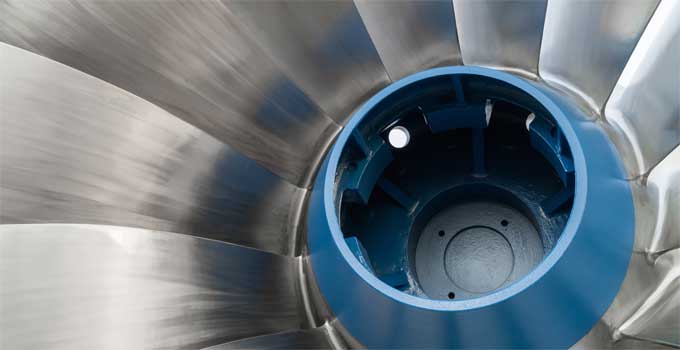
Pumped hydro has been around for more than a century, but in recent years it has leapt into the forefront of the quest for energy storage and firming options as the energy sector embraces increasing levels of renewable energy generation. If you want to get the best from a pumped hydro project, it’s important to come to grips with the implications of the different types and combinations of mechanical and electrical machines that have been developed over the long history of hydropower and pumped hydro.
The choices are among fixed-speed reversible pump turbines, variable-speed reversible units (including doubly-fed inverter arrangement), and ternary sets. Each has its own variations and strengths in terms of the services able to be provided to the energy market. But the technologies also vary in costs, housing requirements and performance.
All pumped hydro projects are likely to offer benefits to the market by contributing to operating reserves, reducing spill or curtailment of variable renewable energy, reducing cycling and ramping of thermal plant, lowering transmission congestion and associated costs, and lowering greenhouse gas and pollutant emissions when used to displace thermal generation. But let’s look at the specific pros and cons of each of the different pumped hydro configurations, and how they compare.
Reversible units
Reversible units comprise a single hydraulic machine (turbine-pump), a single electrical machine (motor-generator) and a single shaft. The unit changes rotational direction to switch between generating and pumping modes.
These reversible units come in two different forms: fixed speed and variable speed. The fixed-speed reversible units can’t optimise the uptake of power from the grid in pumping mode, which is important in a grid with the rapid and frequent fluctuations characteristic of high levels of variable renewable energy. However, with a multi-unit arrangement in a power station, additional flexibility during the pumping cycle could be achieved at a premium.
Variable-speed reversible units provide greater efficiency and flexibility and provide different opportunities for grid support than fixed-speed units in pumping mode. However, should all the thermal plants be retired as the energy market transforms, the lack of synchronous machines could become a major issue where rotating inertia becomes scarce. Asynchronous (variable-speed) machines rely on their power electronic controls to provide inertia. While this can be artificially enhanced relative to synchronous machines, it relies on externally provided system strength which may also be lacking in the absence of thermal units.
Based on recent projects in Australia, the cost of electrical and mechanical equipment for variable-speed reversible units is about 30% greater than for fixed-speed units and the construction cost is approximately 10% more. Yet, while fixed-speed units come at a lower cost, variable-speed machines have the potential under some configurations to provide more valuable services in operation, such as variable load during pumping operation, and as long as there is adequate synchronous generation, inertia distributed around the network.
Ternary sets
Ternary sets comprise two hydraulic machines (a turbine and a pump), coupled on a single shaft, with a single electrical machine (motor-generator). This means that the direction of the turbine is the same in generating and pumping mode. They are often the only solution for projects with very high head but they can be applied for lower head projects too. Without having to change direction, little changeover time is needed between modes, making it possible to respond much faster to the grid. There’s also less stress on the machines, which can be individually optimised. The turbine and pump can even operate simultaneously (in hydraulic short-circuit mode), and the turbine can be used to start the pump (further reducing changeover time).
This description makes it sound as if ternary sets are the way to go … but it isn’t that simple.
Many of the elements of the civil works for a pumped storage project are the same whether fixed-speed reversible units, variable-speed reversible units or ternary sets are used. However, the powerhouse structure for ternary sets needs to be taller or wider (as the units are bigger), penstocks and tailrace branch pipes will require an extra bifurcation, and it is likely that the costs involved in hydro-mechanical equipment such as gates and valves will be significantly greater.
The extra construction costs can add up to approximately 25 per cent more than for reversible units. And the additional electro-mechanical equipment could come at a 35 to 50 per cent higher price tag compared to the fixed-speed reversible units. However, countering the increased cost of ternary sets is their likely efficiency gain of 2 to 3 per cent and a faster response time than reversible units are capable of.
The increasing need for fast response
Adopting either variable-speed reversible units or ternary sets appears, on the face of it, to be more expensive than fixed-speed reversible units, but there are mitigating circumstances that make them worthy of serious consideration.
With settlement periods in the Australian National Electricity Market reducing from 30 minutes to 5 minutes, fast response is critical. Both ternary sets and variable-speed reversible units have a big advantage over fixed-speed units in this regard, but fixed-speed units can work with the 5-minute settlement if they are utilised appropriately as part of a pumped storage scheme.
Short-circuit mode
Reversible units and ternary units require similar amounts of power from the grid in synchronous condenser mode. For a 125 MW unit, the grid power required is estimated at about 4 MW.
Some projects investigating the idea of hydraulic short-circuit with variable-speed, doubly-fed inverter machines are currently underway. In essence, a waterway is shared between two units with a bifurcation upstream and downstream of the units. In this case one of the units will operate in generating mode and the other in pumping mode.
What’s the answer?
There’s a lot to take in when comparing the different pumped hydro configurations. It’s generally accepted that variable-speed reversible units and ternary sets have certain advantages over fixed-speed reversible units in a changing energy market. Yet, in some cases fixed-speed units will do the job, and at a lower cost, whilst at the same time guaranteeing synchronous generation if rotating inertia is of essence to grid stability. There’s no clear-cut winner when it comes to pitting variable-speed reversible units and ternary sets against each other. As usual, the right choice will depend on the specifics of your project conditions and what changes you anticipate as energy markets continue to evolve.
If you would like to discuss how Entura can help you with your pumped hydro or renewable energy project, please contact Nick West on +61 408 952 315, Richard Herweynen on +61 429 705 127 or Phillip Ellerton on +61 439 010 172.
About the authors
Nick West is a civil engineer at Entura with more than 18 years of experience, primarily in hydraulics and hydropower. Nick’s skills range from the technical analysis of the layout of hydropower projects to the preparation of contractual project documents and computational hydraulic modelling. Nick was a key team member of the Kidston Pumped Storage Project Technical Feasibility Study and is currently involved in feasibility assessments of pumped hydro options as part of Tasmania’s Battery of the Nation initiative.
MORE THOUGHT LEADERSHIP ARTICLES
Engineering – by humans, for humans
When engineers think about the future, do we get so engrossed in the complex technical problems that we don’t attend enough to the human angle?
Engineers have a reputation, whether rightly or wrongly, for being poor communicators, working obsessively and in isolation, and focusing on the immediate goal rather than its impacts on communities. Often, clichés have a basis in truth. If we are going to shift perceptions, we need to start by thinking about the way we work and the leadership we show to the next generation of engineers.
There’s no way we can predict the major developments, challenges or solutions of the next five or six generations of engineering careers. What we should focus on is what we can do right now to lead change in our profession and our communities – and I think the keys are communication, collaboration and community.
Communication
I recently listened to a podcast in which two energy market experts talked with a power system engineer. They discussed all sorts of technical matters relating to frequency and voltage control. I love those topics, but this conversation was limited and uninspiring because the participants simply didn’t have a common language or understanding.
We need to learn to communicate in ways that a variety of people can understand. That will mean better conversations with the people who can help our work have greater impact, and it will help our communities to appreciate the importance of our work in their lives.
It’s too easy for us as a profession to sit at our desks or stand under our hard hats and luxuriate in how clever we are, and then bemoan how so many people have no idea what we do and don’t value our work.
When things that involve engineers go wrong, a flurry of opinions erupts. Failures such as the blackout in South Australia, or the cladding issues at the Grenfell Towers, or issues with airlines or bridges or dams all lead to our communities questioning and debating engineering practice. Engineers tend to try to stay out of this rough and tumble for fear of being misrepresented. Yet maybe it’s better that we do engage where we can, since being misrepresented on a small issue is better than allowing a groundswell of misguided public opinion due to a lack of understanding of engineering principles.
We need to try to better explain our work and find simple ways to convey the complexities of the decisions that we make.
Collaboration
The world is far more complex now than it was a century ago – but it is impossible to imagine what level and pace of change future generations will experience. If we want to transform our world or help build a better future, we can’t do it by ourselves.
Engineering no longer operates in isolation, if it ever did. We must collaborate across the engineering team and across other professional disciplines to achieve truly effective development for our communities. Sometimes we may need to focus a little less on technical delivery as a primary outcome, and increase our recognition of the value gained by engaging successfully with the communities on whom the project relies for success.
Collaboration makes our work more effective, and exposes us to a wider range of inputs and values that we can incorporate into our designs and processes. Engineering can be a leader but it can also be a facilitator for better outcomes when we draw on, listen to and learn from the other experts involved in other aspects of our projects.
Community
Engineering work almost always benefits more people than merely the one who pays the bill. Much of my work is in connecting wind farms and solar farms to the grid. Mostly my work is paid for by the owner of the farm, and while it delivers direct benefits to the owner through return on investment, it also affects everyone connected to the nearby network. It affects the network service provider and market operator, it pays salaries, and it supplies the clean energy that helps the country reduce emissions and meet its international targets. In other words, my work, which may seem intangible, has tangible effects in the real world.
If we agree that our labours produce real impacts, we need to take better care to fully consider the wider consequences of our work, which often has the potential to cause ‘collateral damage’. We can’t build a road or a wind farm without changing the landscape. When we build a machine, it uses energy and may emit pollutants; and it reduces reliance on manual labour, which may put someone out of a job. There may be a risk to lives, livelihoods or the environment if something goes wrong.
Do we always make decisions about these matters with the community front of mind, or do we place our clients on the higher pedestal? This is a tricky area and I’m not espousing a puritanical approach. However, if we knew in 1919 what we know now about lead poisoning, acid rain, greenhouse gases, scarcity and general sustainability principles, what different choices could have been made?
In a time of automation, we need to think about benefits and risks and how they affect our communities. On one occasion early in my career, I designed a controller to turn on and off a couple of compressors at a power station. I wrote some code to balance the run hours. A few months after the new system was commissioned, I asked one of the operators how the system was going, in terms of the run hours management, and he said ‘you’ve done me out of a job’. I hope he was joking. The task he’d been doing wasn’t particularly important, but there was value in having a person who was in tune with the equipment to take care of it, and there was also value in giving that person dignity through work.
My point is that we must keep our communities foremost in our minds as we go about our work. It’s not just about what we produce. It is the way we work and the people we choose to work with and for. Our influence on the development of the next generation of engineers perhaps has more impact on communities than our actual work outputs.
Through communication, collaboration and community, engineering can be both ‘more human’ and ‘for humans’.
About the author
Donald Vaughan is Entura’s Technical Director, Power. He has more than 25 years of experience providing advice on regulatory and technical requirements for generators, substations and transmission systems. Donald specialises in the performance of power systems. His experience with generating units, governors and excitation systems provides a helpful perspective on how the physical electrical network behaves and how it can support the transition to a high renewables environment.
MORE THOUGHT LEADERSHIP ARTICLES
Becoming the Battery of the Nation
This article appeared first on the International Hydropower Association blog.
How can a small island become a giant battery for a nation? We’re finding the answers in increasing interconnection, developing new pumped hydro and repurposing our existing hydropower assets.
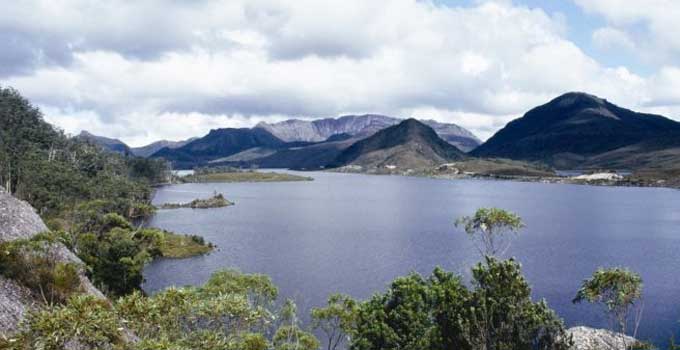
Tasmania is a small island state, with excellent water and wind resources. We’re powered mostly by an extensive hydropower system developed over the last hundred years – supplemented with newer wind developments. We’re connected to Australia’s National Electricity Market by an interconnector running across Bass Strait to the mainland. This has allowed us to trade in the national market for some time now, but as thermal generation progressively retires and Australia embraces greater proportions of variable renewables, the future national market will be vastly different. It will be characterised by low-cost variable renewable energy sources firmed by dispatchable storage and generation.
With Tasmania’s fantastic natural resources, established hydropower system and expertise, we want to be the ‘Battery of the Nation’, offering the generation and the storage and system support needed to help Australia achieve a clean, reliable, affordable energy future. Our Battery of the Nation vision is shaping up to be one of the most credible, competitive and coordinated solutions, able to be built in stages, aligned to market drivers.
In a nutshell, the Battery of the Nation means generating more renewable energy from our hydropower and wind assets, developing more storage solutions in the form of pumped hydro and building more interconnection to the mainland so that we can get our product to the national market to quickly and reliably support variable generation.
With the support of funding from the Australian Renewable Energy Agency (ARENA), we’ve been making progress towards this vision on a number of fronts.
Connecting the battery
Batteries aren’t much use if they’re not connected, so we need more interconnection to mainland Australia to get the power to where it’s needed. The initial business case for a new, second interconnector between Tasmania and mainland Australia shows it stacks up, and federal funding has recently been secured to fast track this 1200 MW interconnection project, known as Marinus Link.
Priming the pump
Around the world, significant investment is being made in new technologies such as grid-scale batteries and solar thermal projects, yet pumped hydro remains the most viable technology for longer term storage (greater than eight hours). Our state has significant pumped hydro potential and our existing hydropower assets offer excellent potential to repurpose and create cost-effective pumped hydro. We’re filtering down the possible pumped hydro options to identify around 2500 MW of future potential. The three most promising sites offer between 12 and 31 hours of storage and would cost around AUD 1.5 million / MW to develop. Further feasibility investigations will identify which one of these three will be the preferred option that can be ready to take advantage of more interconnection.
Redeveloping existing assets
We are also focusing on how to get the most out of our existing hydropower assets by repurposing and futureproofing them for a transitioning electricity market. The Tarraleah scheme in Tasmania’s central highlands was commissioned in the 1930s and our studies have been considering whether the scheme should be progressively refurbished or redeveloped. Redevelopment would more than double the scheme’s capacity from 104 MW to up to 220 MW – contributing to Battery of the Nation targets. By converting the station to flexible and fully dispatchable operation, instead of just baseload, it could flexibly boost output at times of high market demand and provide the ancillary services likely to be increasingly valued in the market. It is also expected to have flow-on benefits for the entire cascade of power stations below it.
We are also continuing major refurbishment and upgrades of other existing hydropower assets so that we can get more generation, efficiency and longevity from these assets to support our plan to become the Battery of the Nation.
Benefits for our island and the nation
The Battery of the Nation vision offers economies of scale and diversity by combining flexible, reliable renewable energy resources with cost-competitive, large-scale storage that can be built in stages, aligned to market drivers.
Battery of the Nation is designed to serve and support our local and national communities. Across the nation it will contribute to achieving lower power prices, reliable and secure energy supply, and meeting sustainability targets. It will also offer specific benefits to Tasmania through energy security and economic stimulus.
Battery of the Nation is a bold and bright vision to unlock our potential to contribute to the nation. It’s an example of how to reimagine hydropower and storage for the new market paradigms of a shifting energy future.
Safer dams are a matter of priority
Examples from around the world demonstrate the devastating consequences of dam failures. Safety must be every dam owner’s key concern, but how should action be prioritised across a large portfolio of dams?
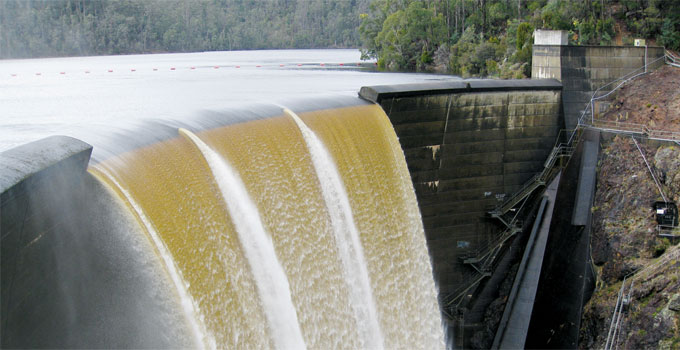
To prioritise effort and resources to achieve the best safety result across a whole portfolio of dams, you need a portfolio risk assessment (PRA). A PRA determines the risk position of the dams based on known information, identifies any information gaps, develops a strategy to close these gaps, and then determines the most effective actions to decrease any risks.
APPLYING PRA TO A LARGE AND COMPLEX PORTFOLIO
Entura has supported dam owners and water managers across the Indo-Pacific region with PRAs, but our most extensive application of the PRA process has involved the 54 large dams of our parent company, Hydro Tasmania.
Hydro Tasmania is Australia’s largest water manager and is committed to ensuring that the risk of a dam failure is very, very low across the entire portfolio. Across so many dams, clear priorities are needed to focus dam safety efforts and human and financial resources.
It has now been 20 years since Hydro Tasmania’s PRA journey began in 1999, so it’s timely to reflect on its outcomes.
With so many dams of greatly varying types, ages and heights, the PRA across Hydro Tasmania’s dams was always going to be complex, and needed to be staged. The first step was a small pilot study on five selected dams that represented the range of potential risks within the broader portfolio.
During the pilot study, the five steps of Entura’s PRA process were defined:
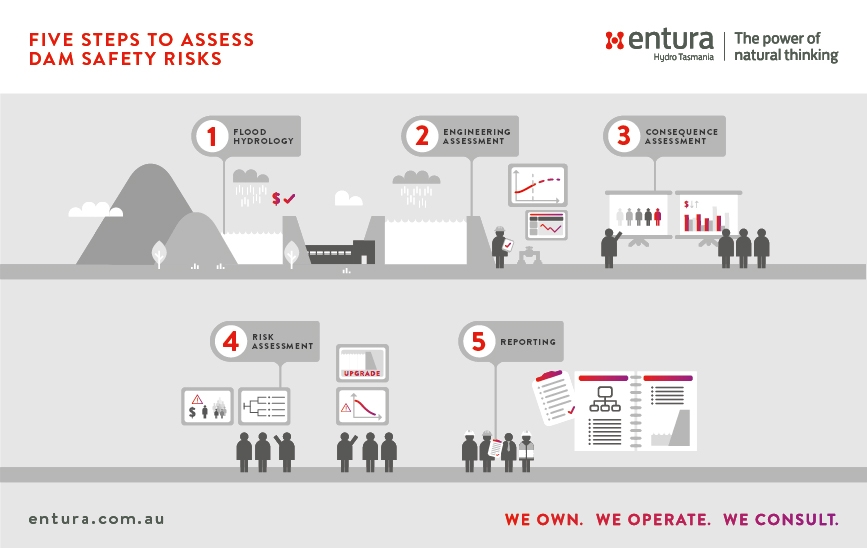
This methodology was applied across Hydro Tasmania’s dams portfolio, and an average of eight dams were added to the review each year.
By 2005, the initial ‘baseline’ assessment of the full portfolio was complete. The focus of the dam safety program has now moved to investigation and implementation of upgrades, and the communication of outcomes to senior management.
The PRA process has increased the focus on potential failure modes and risk as drivers of the dam safety program and as the basis for deciding priorities for allocating operational and capital resources.
DETERMINING PRIORITIES THROUGH A RISK FRAMEWORK
Entura’s PRA process reviews the consequences of failure of a dam by looking at the impact that it may have on downstream populations and infrastructure. The engineering assessment considers the effects on dams of extreme events such as floods and earthquakes, taking into account the specific site conditions. Combining the chance of failure and the resulting consequence determines the level of risk.
Hydro Tasmania assesses, prioritises and mitigates risks across the business using an integrated business risk management program, and the dam PRA feeds into this overall risk management approach. A dam’s assessed risk rating across common tolerance criteria drives the risk management response. The assessed dam risks are plotted together on a chart to provide a risk profile for the whole portfolio. This allows dam safety risks to be compared, understood and communicated readily throughout the business in a similar way to all other business risks.
The initial objective of the dam safety program is to reduce all the risks categorised as ‘high’ or ‘extreme’ as soon as practical , and then to continue with a program of investigations and capital works to diminish risks even further. Actions for dams lying in the higher risk zones did not wait for completion of the PRA, but were initiated as soon as risks were identified.
Some cost-effective and expedient risk-mitigation was achieved by identifying and implementing ‘quick wins’. These early actions reduced the overall portfolio risk while more complex mitigation plans were being developed. In some cases the ‘quick win’ actions have even provided the ultimate solution. In other cases, more major works have been required.
PROGRESSING THE DAM SAFETY JOURNEY
The PRA process has substantially benefited Hydro Tasmania’s dam safety program, by improving understanding of the dam portfolio, underpinning a strong strategic plan for addressing risks, improving surveillance and monitoring, and considerably strengthening dam safety emergency planning and warning.
However, this isn’t the end of the dam safety journey. Knowledge of any dam is never complete, and it is critical for dam owners to remain aware that not every failure mode may necessarily have been identified in a baseline study that relies on existing information. There may still be a level of uncertainty about the ‘unknowns’.
For Hydro Tasmania’s PRA, identifying these uncertainties enabled development of a prioritised list of investigations necessary across the portfolio. These detailed investigations have been critical to the development of the dam safety program, by confirming any potential failure modes identified in the PRA.
The list of potential failure modes of a dam portfolio must be rigorously and regularly reviewed, and investigations to reduce uncertainty about the portfolio should be ongoing. New methods and techniques for analysis are being developed all the time, and it is important to understand how these may change existing risk assessments. As well, the safety and risk-level of a dam can change as dams age, or when there are changes to the way the dam is managed.
It is also important to realise that the capital works program for dam safety risk reduction across a portfolio must remain flexible and be actively managed to respond to new or changed risks, new developments in the field of dam engineering, shifts in business priorities, delays to projects, and new developments in risk management.
The sheer number and variety of types, ages and consequence categories of Hydro Tasmania’s dams made Hydro Tasmania’s PRA a challenging process, but the benefits are substantial. The baseline study completed in 2005 is not the end of this journey, which continues to prioritise actions, reduce risks and enhance safety across the portfolio.
If you would like to discuss how we can assist you with assessing your dam risks, developing a resource-effective and comprehensive dam safety program, or applying the same PRA process to other key assets, please contact Paul Southcott, Richard Herweynen or Phillip Ellerton.
About the author
Paul Southcott is a specialist civil engineer at Entura. He has more than 32 years of professional expertise in civil and dam engineering, as well as expertise in geotechnical, foundation, structural, hydraulic and hydropower engineering. Paul’s dam engineering experience spans geotechnical and hydrological investigation; feasibility and options studies; concept, preliminary and detailed design; engineering assessment, consequence assessment and risk assessment; safety reviews; monitoring and surveillance; and emergency planning. He has extensive experience in dam risk assessment including as project manager for Hydro Tasmania’s, Taswater’s and SAWater’s portfolio risk assessment projects. He was a member of the ANCOLD committee that issued the Guideline on Consequence Categories for Dams in 2012 and is currently a member of the ANCOLD committee drafting the new Guideline on Geotechnical Investigations for Dams.
MORE THOUGHT LEADERSHIP ARTICLES
Are you an asset manager or an ‘asset guesser’?
In the hydropower sector, we’re all trying to do more with less. And as hydropower assets age, there’s always more to be done.
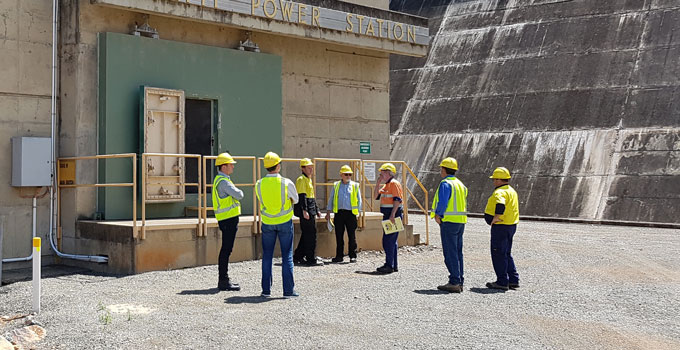
Gut feelings and guesswork won’t be enough if you want to make the best use of your asset management budget and keep your assets safe, reliable and profitable.
Today, ‘asset management’ is a much more sophisticated practice than twenty to thirty years ago. Back then, we’d refurbish or replace components at fixed time intervals (whether the work was needed or not), hoping that this would prevent or reduce breakdowns and forced outages. In most cases, this sort of scheduled maintenance was based on original equipment manufacturers (OEM) recommendations, best guesses or a mixture of both with very little evidence of root causes of actual or potential failures identified.
This maintenance attitude led to repeated failures. It also resulted in short-term planning. And, because of a lack of good evidence that current maintenance approaches were achieving direct positive business returns either in plant or financial performance, it increased the pressure to reduce maintenance budgets.
Asset management today
Hydropower assets are increasing globally, both in number and in size. So too, our knowledge of hydro assets continues to strengthen. We have much better understanding and insights now into how and why these assets wear out, how they behave, why they fail, and the ways in which they respond to various operating conditions and environments.
Operating conditions are constantly changing due to variables in the energy market, power purchase agreements, increasing expectations of customers, changing technologies and regulatory requirements, and more. So asset management needs to be flexible and to respond to the evolving context.
Today, ‘asset management’ is a trendy term – but there’s a very broad spectrum of practice across the hydropower industry, and it is a long path from basic approaches through to achievement of superior methods and strategies.
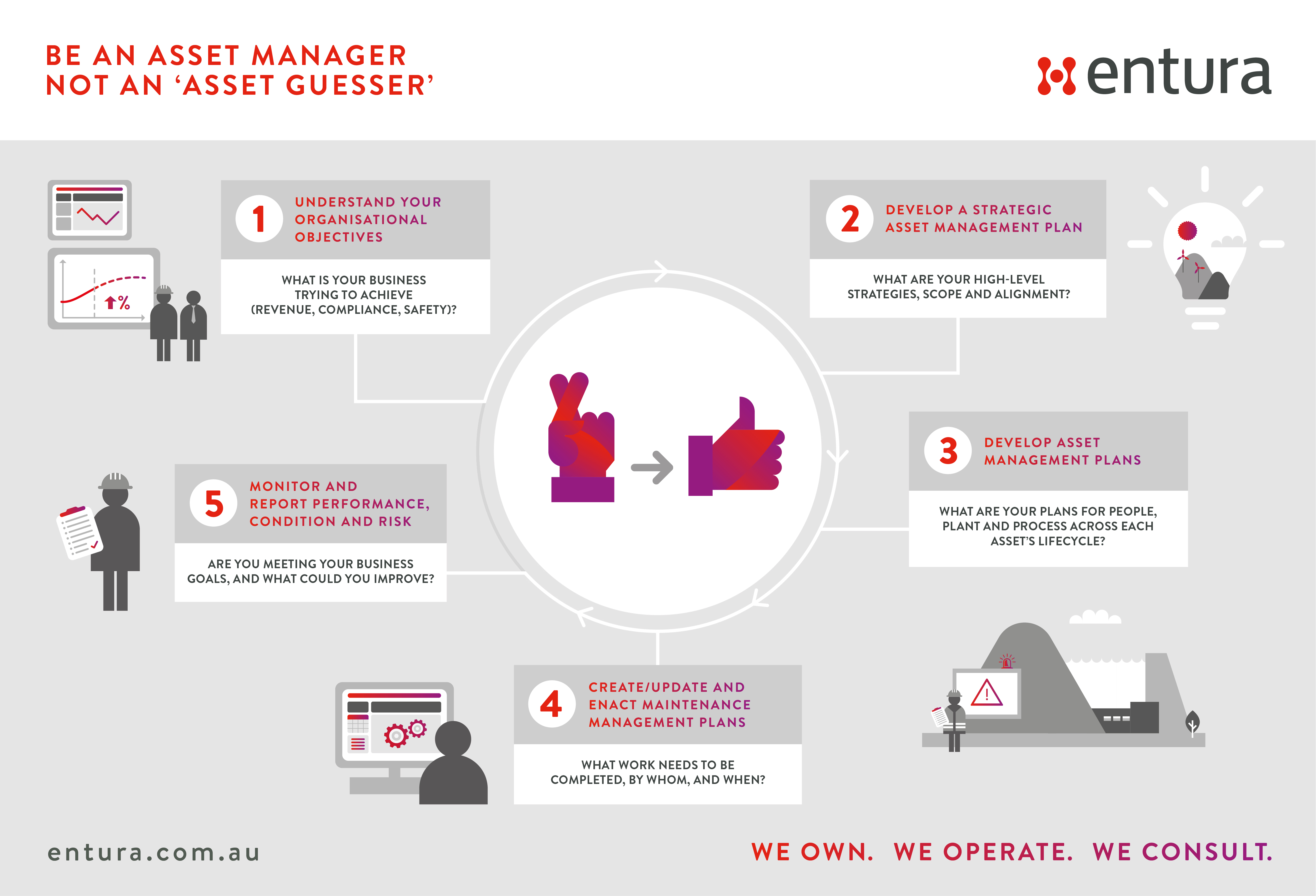
Click to download infographic
To achieve the lowest lifecycle costs for assets, as well as to minimise forced outages and breakdowns, power and water businesses need to see asset management as a crucial component of risk management and business strategy. It also needs to be viewed as an incremental journey of improvement, supported by processes and structures based on standards.
Ideally, your asset management policy, strategy, plans and activities should be based on the ISO/AS 55000 series of standards. The ISO 55000 standard series encourages aligning asset management with your broader organisational objectives, context and plans – and recommends that you regularly revisit this to be sure that alignment is maintained. This can now filter through your asset management policy and strategic asset management plan (SAMP), and be embedded in the reality of implementing your asset management plans.
In other words, your asset management policy provides direction which is aligned to your organisational context; your SAMP translates this; and your asset management plans act as the catalyst to create and sustain change in leadership, culture and asset management practice.
People, plant and process
Alignment with the principles of the ISO/AS 55000 standard series are fundamental to achieving the lowest lifecycle costs for hydropower assets. For success in your business you need to consider not only the physical asset but the entire delivery process, you need to understand what is required in each of three ‘P’s – people, plant and process – and you need an implementation plan to get you there.
Without people, we don’t have plant. Having the right people involved, right from conception, can make the difference between successful projects with years of profitability and projects that face years of increased expenditure and issues to manage. Ensuring that the right people have the right skills, training and competencies to carry out the right maintenance at the right time is paramount to achieving the plant performance you desire.
When it comes to plant, we recognise that, ultimately, all assets have a finite life – but our increasing knowledge of asset behaviour can help us to design components better for longer life and for greater cost-effectiveness and efficiency. By developing and implementing the right asset management techniques, you will increase the likelihood of your assets being profitable, reliable, available and safely operated – and staying that way. A strategic investment in asset management will more than pay for itself through increased benefits and decreased risks.
Turning to the ‘process’ element, we should recognise the importance of assessing, organising, planning, budgeting and reporting on the work effort – but there’s a need to ‘keep the processes real’. In other words, don’t implement processes for the sake of it, nor to try to address or mask problems in other areas that would be better to rectify than to over-manage. Processes should support the integration of the broader organisational context into operations and maintenance and then help to assess and report on effectiveness and performance.
By bringing people, plant and process together, and aligning asset management with your business vision and decision-making, you are far more likely to be able to get the best out of your valuable assets. And you’ll achieve a culture of continuous improvement and proactive, prioritised action – leaving no more room for reactivity and guesswork.
If you would like to discuss how Entura can assist you with assessing and managing your hydropower plants or other power or water assets to minimise risk and maximise efficiency and useful life, please contact Leigh Smith on +61 419 884 318.
About the author
Leigh Smith is a specialist consultant with extensive experience and proven ability in asset management, condition assessment, risk management and project management in the power sector, particularly hydropower. He has over three decades of practical experience with hydropower assets and has successfully delivered and project managed many major projects in Australia and internationally. Leigh has produced numerous asset management plans to support financial modelling and feasibility of major hydropower projects, as well as detailed 30-year asset management and maintenance plans that have been critical to the progression of projects around the world.
MORE THOUGHT LEADERSHIP ARTICLES
Rethinking the role of hydropower in Australia
Although hydropower is older than wind and solar generation and battery storage, its role in Australia and around the world has never been more important.
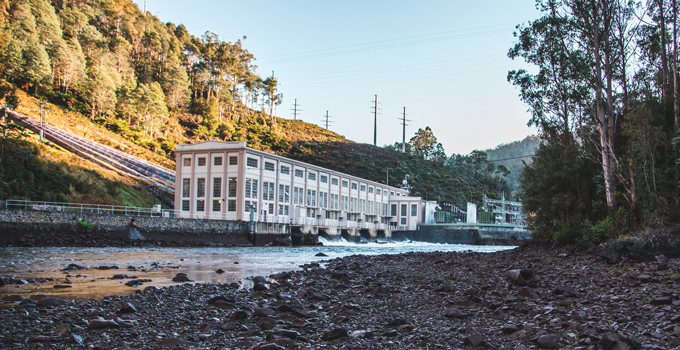
Hydropower is still by far the largest contributor to the world’s total generation of renewable energy. The fact that this old technology is still very much alive today shows that hydropower can stand the test of time and help us meet the challenges of the future.
As the proportions of solar and wind generation rapidly rise, and as we see a gradual retirement of existing thermal generation and reduced construction of new thermal generation, the role for hydropower – both in Australia and internationally – continues to broaden and build.
New opportunities for hydropower
There’s no need to see rapidly emerging and increasing new technologies as a threat to hydropower. This isn’t a winner-takes-all environment. Rather, new opportunities are emerging for hydropower as an enabler of integrated renewable developments by providing the storage needed to smooth the intermittency of weather-dependent renewables – creating ‘dispatchable’ renewable energy.
In the last couple of years, particularly since blackouts in South Australia in 2016 and nationwide rises in electricity costs, debate about energy affordability, sustainability and reliability has become both mainstream and continuous. The pressure has never been greater to find the cheapest, cleanest power that is available whenever and wherever it is needed.
It is well known that traditional hydro schemes can provide baseload power or peaking power, grid stability services, and availability to fill in the gaps when intermittent renewables aren’t generating. However, the recent resurgence in interest in pumped hydro offers something extra: the ability to use excess available generation from wind and solar to pump water uphill into storage so that it can be used for electricity generation later – and this is why it can be described as a ‘battery’.
But how does pumped hydro compare with ‘actual’ batteries? Will rapid improvements in battery technology displace pumped hydro as a preferred storage solution? Technology is advancing very quickly in batteries, but I’m convinced that there are still some major differentiators that create space for pumped hydro.
One advantage is that we have a greater understanding of pumped hydro’s lifecycle costs and sustainability, whereas there are still a number of uncertainties in this respect for newer technologies such as batteries.
Also, critically, while batteries may be a good solution for low-power, short-term storage, they are not yet capable of providing the frequency and voltage regulation required by a grid with a high proportion of intermittent renewables. Batteries also typically cannot supply the significant level of output over a longer duration that pumped hydro energy storage or traditional hydropower can make possible.
Pumped hydro and modified traditional hydropower solutions will be needed for smoothing daily variability as wind and solar plants expand in number and size. And it is really only traditional hydropower with large reservoirs that will be able to provide the multi-day storage needed in extreme events of both low wind and low solar.
Achieving full dispatchability of combined wind and solar PV power will depend on utilising pumped hydro storage and existing hydropower storages to their full potential.
If the future of both traditional hydropower and pumped hydro is strong, why have no new pumped hydro projects been built in Australia in thirty years? What is needed to not only get it going in Australia, but also to make sure we get it right?
I believe that three crucial elements to realising hydropower’s future and ‘getting pumped hydro right’ will be identifying the most viable sites, developing a sound business case, and ensuring that we invest in the skills and capacity we’re going to urgently need in the future.
Identifying the most viable sites
A critical element for pumped hydro success is identifying a viable project – where the right site and the best design can come together into an optimal mix of capacity and cost. Entura has done a lot of work in this area, and we have developed a methodology to filter the many hundreds of potential pumped hydro sites across Australia down to the most ideal.
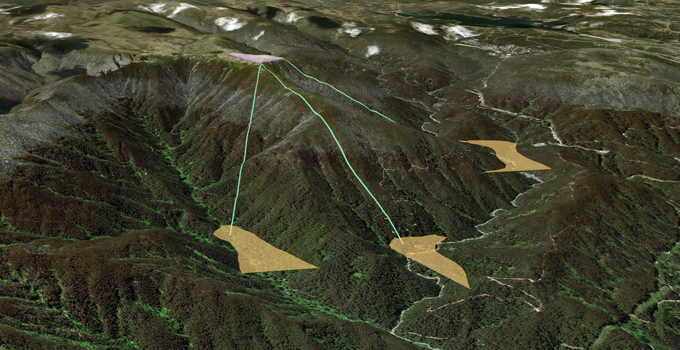
This methodology has enabled us to develop a real-world, relevant and practical pumped hydro atlas of Australia identifying project opportunities from many thousands of theoretical possibilities.
Our atlas has already been used to shortlist potential pumped hydro sites for the Battery of the Nation initiative in Tasmania, and it identifies many more promising sites and opportunities for developers in states such as South Australia, New South Wales and Queensland. And the nation has room for many more batteries.
Building a robust business case
We’ve often said that a project won’t get over the line on the base of technical viability and environmental benefits – in the current market, the dollar wins. So pumped hydro needs some level of predictability in its revenue streams. As the dynamics of arbitrage change, we need to explore a range of other revenue opportunities. And that’s a complex forecasting challenge.
Part of the solution may be price insurance and a value placed on providing network support services and firming. Another part is behind-the-meter generation and integration – such as in the Kidston project, in which pumped hydro is coupled with a large-scale solar farm, and potentially wind generation, to form a renewable energy hub.
Investing in capacity development
To me, a third critical component is investing in talent, skills and capacity. This is a global issue as much as an Australian one. To prepare our industry to adapt to change as well as to drive further change in the sector we will need to harness talent and upskill and transition workforces.
This is the kind of strategic whole-of-business workforce planning that we encourage our clients to adopt, and it will be crucial over coming years and decades.
I am excited about the future of both traditional hydropower and pumped hydro. I firmly believe that if we value hydropower as a key player in the future mix of technologies in our energy markets, we can solve the energy trilemma at home and around the world.
About the author
Tammy Chu is Entura’s Managing Director. She leads Entura’s business strategy, performance and services to clients, and is part of Hydro Tasmania’s Leadership Group. Tammy joined the business in 2000 and has held a range of positions at Entura, from Technical Professional to Project Manager, Business Development Manager and Water and Environment Group Manager.
As a civil engineer, Tammy specialised in the design and construction of mini-hydro and hydropower systems, project management, hydropower investigations, prefeasibility and feasibility studies, environmental assessments and approvals, resource investigations and resource water management.
Tammy is a member of the Board of the International Hydropower Association. She was the first female and now past president of the Tasmanian Division of Engineers Australia, and was an Engineers Australia National Congress representative.
Tammy holds a Master of Business and Administration from Chifley Business School, is a Fellow of Engineers Australia, and a graduate of the Australian Institute of Company Directors.
MORE THOUGHT LEADERSHIP ARTICLES
Can the sedimentation problem be solved?
Sedimentation is a problem for water storages, particularly in Asia. It is a major concern for all communities and industries that depend on water storages for water, food and energy security.
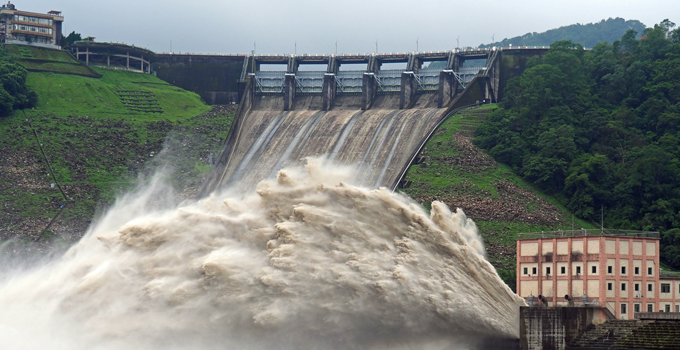
As sediment builds up over time, the storage capacity of a water reservoir will reduce. If we can effectively prevent, manage and reduce sedimentation, more water can be stored, which is critical for a sustainable future in a world experiencing increasing population, industry and climate pressures.
Loss of storage is certainly damaging to the performance of hydropower schemes, but it’s not the only sedimentation-related problem for hydropower developers and operators. High levels of sediment, whether in storages or flowing through run-of-river hydropower schemes, can seriously damage expensive hydro-mechanical equipment, causing significant operations and maintenance issues and costly outages.
It is clear, then, that planners, developers and operators need to consider how to minimise and mitigate sedimentation in all water storage projects, but particularly if the project is in a region that yields a large amount of sediment.
As with any problem, prevention is better than cure. Although, in some cases, prevention isn’t possible, or the problem already exists, so ‘curative’ options need to be explored.
Prevention
The best prevention of sedimentation problems begins at the source – in other words, the catchment area of the river. If we can reduce the sediment yield from the watershed, we can reduce the sedimentation issues in our reservoirs, increasing the life of the available storages. Most of the sediment that reaches a water resource project site is due to rainfall and run-off erosion and transportation of material by the river’s flow. When the sediment reaches a reservoir, it becomes trapped and builds up over time, reducing the amount of water that can be stored.
The quantity of sediment will be heavily influenced by the rate of erosion within the catchment, which depends on interactions among factors such as climate, soil, geology, topography, ground cover, land use and human activity. Some of these factors and interactions cannot be controlled, but human-related aspects affecting erosion and sediment yield can be predicted and managed through an integrated catchment management plan. Such a plan would require significant efforts to counter factors such as agriculture, mining, construction and deforestation, and include attention to revegetation and erosion prevention. Identifying and mitigating impacts in areas susceptible to the geological risk of landslides is another important part of the plan, whether this is around the reservoir rim or within the main catchment of the reservoir, as these areas of instability will affect sediment inflows.
Beyond this catchment-level reduction of sediment yield, planners and designers need to consider how to reduce the inflow of sediment into the particular reservoir, therefore maintaining the storage. Local or project-specific preventative approaches require accurately estimating the sedimentation rate during planning and design – through careful attention to measuring sediment concentration and the capacity inflow ratio – and, based on this estimate, considering building structures upstream of the main reservoir to either trap sediment or encourage sediment to bypass the reservoir. Sediment can be trapped before reaching the main reservoir with a series of weirs or ‘check dams’ upstream of the reservoir, yet these will only be effective until such time as they fill with sediment.
Intervention
The next option is to keep the sediment moving, either through the reservoir or past the reservoir, so the amount that is deposited in the reservoir is minimised. In many cases, the main transport of sediment is in flood water; thus, flood waters can be channelled past the reservoir using bypass structures, or can be allowed to pass through the dam at high velocity (known as sluicing). An important disadvantage of bypassing and sluicing of flood waters is the loss of a significant amount of water that otherwise could have been captured in the storage. As a result, it is most applicable in reservoirs with a smaller capacity in comparison to the total inflow.
Due to the very high cost of creating bypass conduits, bypassing the full length of a reservoir is rare, and would only be considered in special circumstances or where other methods are not effective. If the reservoir is located on a horseshoe bend of the river, a sediment bypass structure may be cost-effective due to its reduced length. Therefore the unique characteristics of the site need to be taken into account when developing the initial concept for the project, looking for opportunities created by the topography.
Sluicing involves discharging high flows through the dam structure during periods of high inflow to the reservoir, to allow sediment to be transported through the reservoir as rapidly as possible while minimising sedimentation. Sluicing is performed by lowering the reservoir storage prior to high-discharge sediment-laden floods. This approach requires relatively large capacity outlets to be incorporated into the dam design to enable the discharge of appropriately large flows at low reservoir levels to maintain the required velocities to transport sediment. This is achieved through low-level under-sluice gates, or tall crest gates, or both.
To understand how a reservoir will behave, appropriate investigations are needed in the planning stage to accurately determine the sediment characteristics, inflow and distribution in the reservoir. This data can then be used to model the flow and deposition of sediment within the reservoir, using sophisticated hydraulic modelling software. These models can be used to fully understand the problem, and to test solutions – helping to determine the appropriate location and capacity of low-level outlets, develop operating rules that will work for the particular reservoir, set the intake invert to avoid future problems, and develop an overall concept for the dam that works – all of which will contribute to avoiding future problems.
The sediment problem becomes particularly worrisome for run-of-river hydropower plants located in rivers which typically carry a high level of sediment, such as rivers flowing from the Himalayas. To protect against damage to equipment, desilting arrangements such as desilting tanks and chambers are generally provided, normally immediately downstream of the intake structure to the water conveyance system, whether a canal or a tunnel, along with modifications to equipment, such as coatings to better resist abrasion.
Remediation
The aim of remediation is to recover the original storage volume of the reservoir. If sediment has built up in a reservoir in the absence of, or despite, preventative measures, the options are now limited to reducing sediment levels through hydraulic methods (flushing through reservoir drawdown) or mechanical methods (excavation or dredging). The advantages of hydraulic methods are that they tend to be cheaper and easier, using water currents or flows to force sediments through gates and outlets close to the reservoir bed. Nevertheless, these methods may release large amounts of valuable water through the emptying of the reservoir, which may not be desirable during either dry conditions, or where the storage volume is very large in comparison to the annual inflow.
Mechanical methods, such as dredging and excavation, are typically very expensive and only practical on certain reservoirs, and therefore seen as a last resort. Dredging can either be via hydraulic pumps (for finer sediment) or mechanical grabs (for coarser sediment) on barges. Due to its expense, it is often only used to remove sediment from specific areas near the intake structure of a dam. If a reservoir can be completely drawn down, which is not practical for many reservoirs, accumulated sediment can be removed through scrapers or excavators and dump trucks.
Finally, there may be the potential to add new storage to the existing reservoir by raising the dam. The practicalities of this will need to be evaluated through a feasibility study process, as is normally adopted for a new dam.
The right solution depends on good information
In many cases, managing sedimentation will require a combination of strategies and technologies, such as reducing the sediment yield at the catchment level, reducing inflows of sediments into storages using appropriate structures and technologies, operating storages effectively during flood conditions, and actively managing storage levels and operating rules to allow sluicing and flushing.
Many of the sedimentation problems experienced around the world were either not predicted or significantly underestimated during design. To avoid this situation, continuous, adequate and accurate monitoring data is needed, as well as appropriate modelling and projections that take current and potential future conditions into account. Solutions that have been tested via appropriate modelling are much more likely to meet performance requirements and to avoid future risks.
The rate of sediment deposition is heavily influenced by the sediment concentration and the capacity inflow ratio, so careful estimation of these two parameters is very important in identifying the seriousness of a sedimentation problem. In existing large reservoirs, sediment management will benefit from supplementing conventional hydrographic surveys with the adoption of improved survey methods and remote-sensing techniques. The resulting data will enable more reliable estimation of sedimentation rates.
Better measurement, modelling and estimation of sediment – for existing storages as well as future reservoirs – will provide the insights we need to improve sediment planning and management. The right combination of sedimentation estimation, prevention, intervention and remediation will be critical for the long-term health of our water storages and a sustainable future.
If you would like to find out more about how Entura can help you develop a sustainable water storage solution or respond to sedimentation challenges, contact Shekhar Prince on +61 412 402 110.
About the author
Richard Herweynen is Entura’s Technical Director, Water. Richard has three decades of experience in dam and hydropower engineering, and has worked throughout the Indo-Pacific region on both dam and hydropower projects, covering all aspects including investigations, feasibility studies, detailed design, construction liaison, operation and maintenance and risk assessment for both new and existing projects. Richard has been part of a number of recent expert review panels for major water projects. He participated in the ANCOLD working group for concrete gravity dams and is the Chairman of the ICOLD technical committee on engineering activities in the planning process for water resources projects. Richard has won many engineering excellence and innovation awards (including Engineers Australia’s Professional Engineer of the Year 2012 – Tasmanian Division), and has published more than 30 technical papers on dam engineering.


 +61 412 402 110