
Three principles for planning better dams

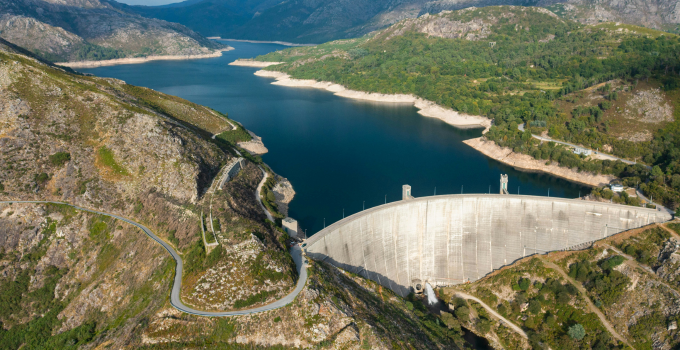
Dams are critical infrastructure in a world shaped by climate uncertainty, growing populations and rising pressure on water, food and energy systems. Storage is central to water security, climate resilience and the renewable energy transition. But the focus cannot simply be on building more infrastructure. The challenge is to identify and develop the right dams in the right places, with the right planning to manage impacts and produce long-lasting value.
This theme resonated strongly at the recent ICOLD conference in Guadalajara, Mexico. Throughout discussions on water planning, environmental impacts and sustainability, one point stood out: the quality of a dam project is largely shaped long before detailed design gets underway. By the time a project is technically mature (i.e. the arrangement has been fixed), some of the most important opportunities to improve outcomes have already passed.
In practice, 3 planning principles matter most.
1. Start with the river basin, not the individual project
The best dam planning begins at basin scale. Before comparing individual sites or refining layouts, it is essential to understand the wider river system, competing water demands, environmental constraints and social context. A Strategic Environmental Assessment (SEA) helps provide that broader view by evaluating environmental, social and economic effects early in the planning process, when there is still flexibility to shape decisions.
This matters because some parts of a basin are more suitable for development than others. Some areas carry high environmental or social value and should be avoided. Others may present lower overall risk and therefore provide a more sustainable pathway for development. Basin-scale planning helps identify this early. It also supports better application of the hierarchy for mitigating impacts – from most to least preferred: avoid (best!), minimise, rectify, reduce, offset (only as a last resort).
For project proponents, this kind of early strategic assessment can increase sustainability while also reducing conflict, supporting more robust approvals pathways and giving decision-makers greater confidence that the project is in the right place.
2. Choose projects using a broad decision lens
Once lower-risk opportunities have been identified, the challenge becomes deciding which project should move forward. This decision shouldn’t be based on economics alone. The most successful projects are usually those selected through a structured multicriteria assessment that considers technical feasibility, financial performance, environmental risk, social impact, safety and long-term resilience together.
A funnel provides a useful analogy. There may be many possible project options at first. Through an iterative process of evaluation and comparison, the range narrows until only the strongest candidate remains. The value of this process depends on whether the criteria reflect the full picture of project success.
The Hydropower Sustainability Alliance’s HydroSelect tool supports this kind of early-stage thinking. It considers 12 sustainability factors such as societal contribution, water quality, sedimentation, dam safety, downstream flows, biodiversity, cultural heritage, resettlement and livelihood impacts, and climate change. Although developed for hydropower, the tool is relevant to all dams: the best project is not necessarily the cheapest or fastest to develop; it’s the one that stands up best when all risks and benefits are weighed up.
This kind of screening is particularly valuable for identifying red flags before they become too difficult to resolve.
3. Recognise that impact is greatest in the early phases
The planning and concept stages have the greatest influence on a project’s long-term outcomes. This is when decisions about site selection, dam type, reservoir level, spillway configuration, operational rules and mitigation measures are still open to improvement. Once the project moves into later phases, changes become more constrained and often more costly to implement.
Multidisciplinary planning is very important for better outcomes. Engineers should work alongside environmental scientists, ecologists, social specialists, geologists, sediment experts, hydrologists and dam safety practitioners from the conceptual stages of the overall general arrangement. A collaborative approach allows potential impacts to be identified early and addressed right from the start.
The benefits of multidisciplinary planning can flow into successful multipurpose projects, where a dam can deliver even greater value beyond its primary purpose. A better understanding of habitat and land use in the reservoir as well as downstream will enable better decisions about final reservoir level, operating regimes and spillway arrangements to manage floods safety. Early knowledge of sediment behaviour and downstream needs will shape flushing provisions and operational rules. Better understanding of environmental flow requirements and fish migration will improve outlet works and the design of successful fish passages. The earlier and broader the understanding, the better the ultimate decisions.
Dam safety must, of course, be prioritised at this stage. Decisions about dam type should be based on a deep understanding of the hazards the dam may be exposed to during its life and by considering all the potential failure mechanisms and the societal risks. While appropriate surveillance (both visual inspections and instrumentation monitoring) remains essential throughout operations, the foundations of a safe dam are laid during planning and concept development.
Better planning yields better outcomes
Large dams can be controversial, particularly when their environmental and social impacts have not been well understood or well managed. This is why good planning matters so much. If we start with basin-scale thinking, compare options using a broad range of criteria, and make the most of the early project phases with multidisciplinary expertise, we have a far better chance of delivering infrastructure that is safe, defensible and genuinely valuable over the long term. It’s a pathway to achieving the right dams, in the right places, with the right outcomes.
ABOUT THE AUTHOR
Richard Herweynen is Entura’s Technical Director, Water. He has more than 3 decades of experience in dam and hydropower engineering, working throughout the Indo-Pacific region on both dam and hydropower projects. His experience covers all aspects including investigations, feasibility studies, detailed design, construction liaison, operation and maintenance, and risk assessment for both new and existing projects. Richard has been part of a number of expert review panels for major water projects. He participated in the ANCOLD working group for concrete gravity dams and was the Chairman of the ICOLD technical committee on engineering activities in the planning process for water resources projects. Richard has won many engineering excellence and innovation awards (including Engineers Australia’s Professional Engineer of the Year 2012 – Tasmanian Division), and has published more than 30 technical papers on dam engineering.
11 June, 2026


 +61 429 705 127